





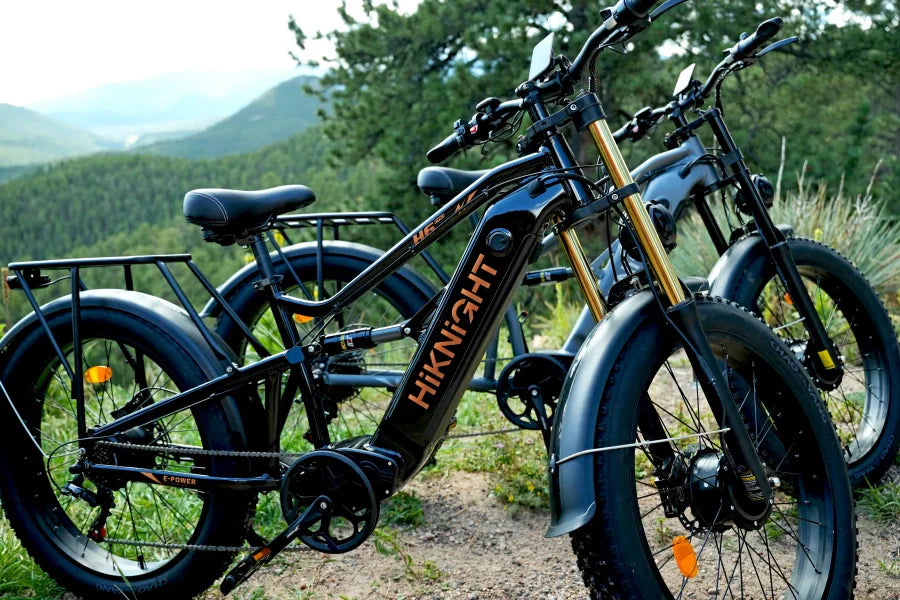
Electric Bike Comparison: H6 Pro vs H2 Pro
An electric bike comparison: H6 Pro vs H2 Pro is one of the most common questions serious off-road riders ask before spending $1,399. Both bikes share identical motors, batteries, and top speeds — yet they ride differently enough that choosing the wrong one is a real possibility.

The short answer: the H6 Pro is a 24-inch full-suspension beast optimized for technical trails, while the H2 Pro is a 26-inch platform that trades a fraction of that planted feel for a more agile, road-to-trail crossover character. Both are genuinely capable, but the difference is in the details.
Side-by-Side Specs: H6 Pro vs H2 Pro
Before getting into feel and use cases, it helps to see the numbers in one place. The similarities are striking — which is exactly why the differences deserve closer attention.
| Specification | H6 Pro | H2 Pro |
|---|---|---|
| Motor | 3000W Peak Dual Motor | 3000W Peak Dual Motor |
| Battery | 52V 20Ah Removable | 52V 20Ah Removable |
| Top Speed | 38 MPH | 38 MPH |
| Range | 65–90 Miles | 65–90 Miles |
| Wheel Size | 24″ × 4.0″ Fat Tire | 26″ × 4.0″ Fat Tire |
| Suspension | Full (Front Fork + Rear Shock) | Front Fork Only |
| Max Load | 380 LBS | 380 LBS |
| Torque | 180 Nm / 45° Max Slope | 180 Nm / 45° Max Slope |
| Price | $1,399 | $1,399 |
| Colors | Black, White, Gray, Black & White | Black & Orange, Blue, Grey, White |
| Review Rating | 4.83 ★ (131 reviews) | 4.82 ★ (161 reviews) |
Key takeaway: The powertrain is identical. The divergence lives in wheel diameter and suspension architecture — two variables that have an outsized effect on how a bike actually feels under you.
Ride Feel & Geometry: Where the Real Differences Live

Wheel Size: 24″ vs 26″ — What It Actually Means
A 24-inch wheel has a shorter diameter, which lowers the bike's center of gravity. That translates to a more planted, stable feel — especially at speed over loose or uneven ground. The tradeoff is that smaller wheels don't roll over large obstacles quite as effortlessly as larger ones.
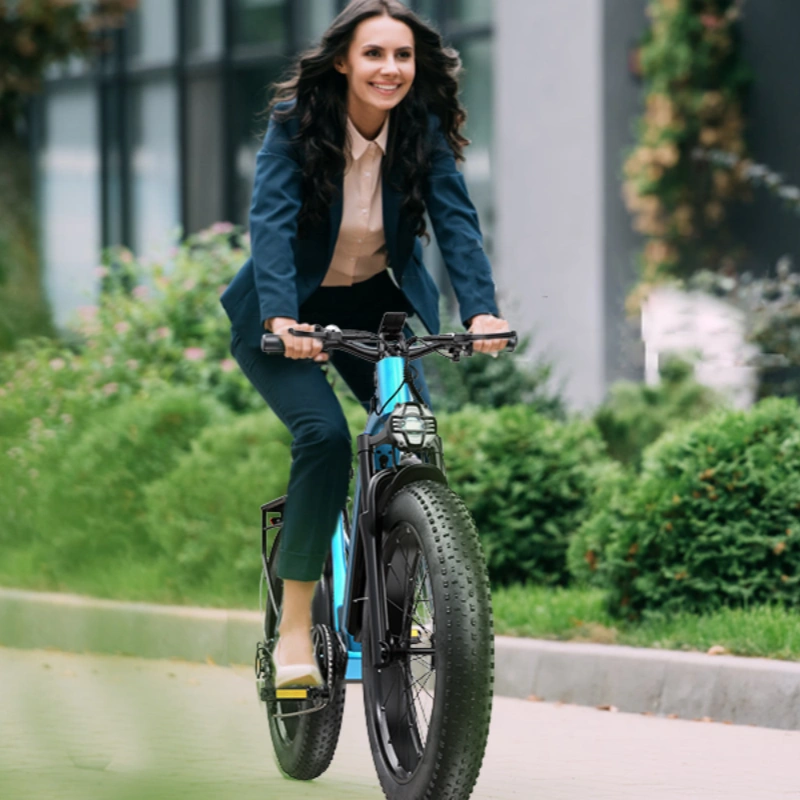
A 26-inch wheel rolls over rocks and roots with slightly less effort and gives the bike a longer wheelbase feel. Riders who split time between gravel paths, light trails, and occasional road use often find the 26″ format more versatile.
Full Suspension vs Front-Only: The Comfort & Control Gap
This is the most consequential difference. The H6 Pro runs a full-suspension setup — front fork plus a dedicated rear shock. On technical terrain (rocky descents, rooted singletrack, washboard fire roads), the rear shock absorbs the hits that would otherwise travel straight through the frame into your lower back and hands.
The H2 Pro uses a front fork only. That's perfectly adequate for most riders on most terrain — but if you're regularly hitting aggressive off-road conditions, you'll feel the difference on longer rides.

Adjustable Stem & Handlebar Ergonomics
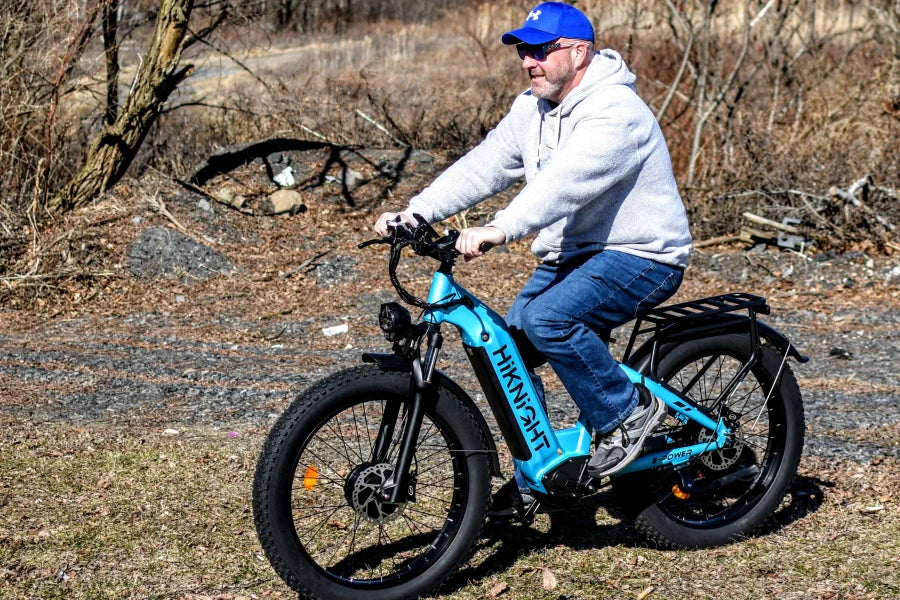
Both bikes offer adjustable stems, which matters more than most buyers realize. Proper handlebar height reduces fatigue on longer rides and lets riders of different heights dial in a comfortable position. If you're between 5'4″ and 6'4″, both bikes can be configured to fit well.
Pros & Cons: Honest Assessment
H6 Pro — Pros
- Full suspension delivers noticeably smoother ride on rough terrain
- Lower center of gravity (24″ wheel) improves stability at speed
- Rear shock reduces fatigue on long technical rides
- 4.83★ rating across 131 verified reviews — strong real-world satisfaction
- Available in four colorways including a distinctive Black & White
H6 Pro — Cons
- 24″ wheels roll over very large obstacles slightly less smoothly than 26″
- Full suspension adds mechanical complexity (more components to maintain long-term)
- Slightly more aggressive riding position may not suit casual riders
H2 Pro — Pros
- 26″ wheels offer a more versatile road-to-trail crossover feel
- Simpler suspension setup means fewer maintenance touchpoints
- Slightly more upright geometry suits commuter-adjacent use
- 4.82★ rating across 161 reviews — the larger review base signals broader appeal
- Black & Orange colorway is a standout option for riders who want visibility
H2 Pro — Cons
- No rear shock — more vibration transfer on technical terrain
- 26″ wheel raises center of gravity slightly vs the H6 Pro
- Less ideal for sustained aggressive off-road riding
Who Should Choose Which: Real-World Use Cases

Choose the H6 Pro if you:
- Ride technical trails, rocky terrain, or steep descents regularly
- Prioritize ride comfort on longer off-road sessions (2+ hours)
- Weigh more than 250 lbs and want maximum stability
- Ride in groups where keeping up on rough terrain matters
- Value a lower, more planted riding position
Choose the H2 Pro if you:
- Split your riding between light trails, gravel, and occasional pavement
- Prefer a slightly more upright, relaxed riding position
- Want a bike that transitions smoothly between off-road and urban environments
- Prioritize a simpler mechanical setup with fewer suspension components
- Like the 26″ wheel's slightly more road-friendly roll

Buying Guide: 5 Questions to Ask Before You Decide
Both bikes are priced identically at $1,399. That means the decision is purely about fit — not budget. Here are the five questions that will clarify which one belongs in your garage.
1. What does your primary terrain look like?
If your rides regularly include rocky descents, rooted trails, or sustained rough terrain — the full suspension on the H6 Pro will make a meaningful difference in comfort and control. If you're mostly on gravel, hardpack, or mixed surfaces, the H2 Pro handles those conditions without the added suspension complexity.
2. How long are your typical rides?
Suspension fatigue is real. On rides under 60–90 minutes, most riders won't notice a significant difference between full and front-only suspension. On longer sessions, the H6 Pro's rear shock becomes increasingly valuable.
3. What's your body weight and riding style?
Both bikes support up to 380 lbs. Heavier riders and those with an aggressive, forward-leaning riding style tend to benefit more from the H6 Pro's lower center of gravity and full suspension. Lighter riders with a more relaxed style often find the H2 Pro perfectly sufficient.
4. Do you care about wheel rollover on large obstacles?
Larger wheels (26″) roll over rocks and roots with slightly less resistance. If your trails include frequent large obstacles, the H2 Pro's 26″ wheels have a geometric advantage here — even without rear suspension.
5. How much do you value simplicity vs performance?
Full suspension means more components. More components mean more potential maintenance over time. If you prefer a mechanically simpler bike that's easier to service, the H2 Pro wins on that dimension. If you want maximum performance and are comfortable with slightly more complex maintenance, the H6 Pro is the better choice.
Honest Verdict: Which One Wins?
Neither bike "wins" in an absolute sense — they're built for different riders. But here's a clear framework:
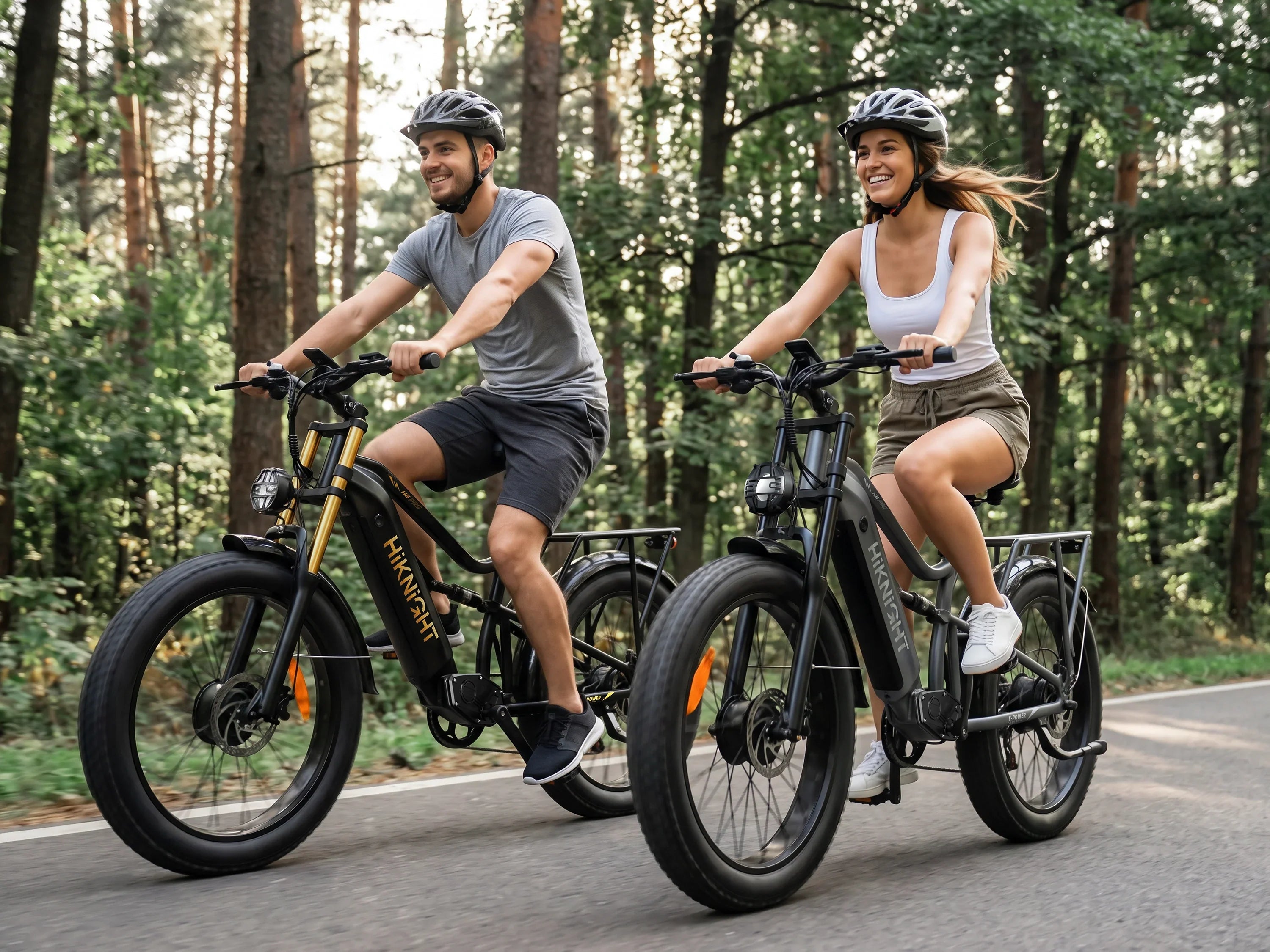
The H6 Pro is the better choice for dedicated off-road riders who spend most of their time on technical terrain. The full suspension and lower center of gravity are genuine advantages.
The H2 Pro is the better choice for versatile riders who want a bike that transitions smoothly between off-road and urban environments.
Both carry nearly identical review ratings (4.83 vs 4.82) across hundreds of verified buyers — which tells you that satisfaction is high on either path. The decision comes down to how you ride, not which bike is objectively superior.

Frequently Asked Questions
Are the H6 Pro and H2 Pro the same price?
Yes. Both are priced at $1,399 USD. The decision between them is entirely about fit and riding style, not budget.
Which bike is better for heavy riders?
Both support up to 380 lbs. For heavier riders who also ride technical terrain, the H6 Pro's full suspension and lower center of gravity tend to provide a more stable, comfortable experience.
Can I use either bike for commuting?
Both bikes are capable on mixed surfaces. The H2 Pro's 26″ wheels and slightly more upright geometry make it a marginally better fit for riders who commute on a mix of roads and light trails. The H6 Pro is more specialized toward off-road performance.
What's the real-world range on these bikes?
Both are rated at 65–90 miles. Real-world range depends on rider weight, terrain, speed, and how aggressively you use the motor. Expect the lower end of that range on aggressive off-road use and the higher end on flat, moderate-speed riding.
Is full suspension worth it on an electric bike?
For technical off-road riding, yes — meaningfully so. Full suspension reduces fatigue, improves traction on rough terrain, and makes longer rides more comfortable. For casual or mixed-terrain riding, front suspension alone is often sufficient.
How do the review ratings compare?
The H6 Pro holds a 4.83★ average across 131 reviews. The H2 Pro holds a 4.82★ average across 161 reviews. Both are exceptionally well-rated — the H2 Pro's larger review base reflects its broader appeal across more riding styles.
Do both bikes have removable batteries?
Yes. Both the H6 Pro and H2 Pro feature a removable 52V 20Ah battery, which makes charging more convenient — especially if you can't bring the whole bike indoors.
Which bike is easier to maintain?
The H2 Pro has a simpler suspension setup (front fork only), which means fewer components to service over time. The H6 Pro's full suspension adds a rear shock to the maintenance checklist — not a dealbreaker, but worth factoring in if you prefer low-maintenance ownership.






Leave a comment
All comments are moderated before being published.
This site is protected by hCaptcha and the hCaptcha Privacy Policy and Terms of Service apply.