





eBike Education · Battery & Range Guide
How Long Does an
eBike Battery Last?
The real answer — for a single charge and for years of use. Plus what actually drains it faster than anything else.
Article Summary
"How long does an eBike battery last?" is actually two different questions — and most articles only answer one of them. This guide covers both: how many miles you'll get per charge, and how many years the battery will serve you. We also break down the six factors that drain your battery faster than anything else, and how to push its lifespan well beyond the average.
- Most eBike batteries last 20–80 miles per charge; higher-spec packs reach 90+ miles
- Battery lifespan is typically 500–1,000 charge cycles, or 3–5 years with normal use
- Six key factors determine how fast your battery drains per ride
- Simple charging and storage habits can extend lifespan by 2+ years
- Knowing when to replace a battery prevents performance issues before they start
- HiKNiGHT H2 Pro features a 52V 20Ah battery delivering 65–90 miles per charge
The Question That Has Two Answers
When someone asks "how long does an eBike battery last," they're usually asking one of two very different things.
The first is a range question: How many miles will I get before I need to plug back in?
The second is a longevity question: How many years before this battery stops holding a useful charge?
Most articles — and most product pages — answer one and quietly skip the other. This guide covers both. Because if you're deciding whether to buy an eBike, or trying to get the most out of one you already own, both answers matter in completely different ways.
Let's start with the one people ask about first.
How Many Miles Per Charge? (Real-World Numbers)
The short answer: most modern eBikes get somewhere between 20 and 80 miles on a single charge. High-capacity batteries — the kind found in premium off-road and long-range models — push that to 90 miles and beyond.
The longer answer: that range varies based on everything from how steep your road is to how much you weigh. We'll get to all of that. First, a quick look at what battery specs actually mean in practice.
How to Read Battery Specs
eBike batteries are defined by two numbers: voltage (V) and capacity (Ah). Multiply them together and you get watt-hours (Wh) — the actual measure of how much energy is stored.
A 48V 15Ah battery holds 720Wh. A 52V 20Ah battery holds 1,040Wh — about 44% more energy. That difference shows up directly in range.
| Battery Spec | Energy (Wh) | Typical Range | Best For |
|---|---|---|---|
| 36V 10Ah | 360 Wh | 15–30 miles | Short urban errands |
| 48V 12Ah | 576 Wh | 25–45 miles | Light daily commuting |
| 48V 17.5Ah | 840 Wh | 40–65 miles | Regular commuters |
| 52V 20Ah | 1,040 Wh | 65–90 miles | Long commutes + off-road |
Here's what separates real range from the advertised kind: manufacturers test batteries under ideal conditions — flat roads, light riders, minimal assist, optimal temperatures. Your actual commute is none of those things.
Subtract 20–30% from any "maximum range" claim, and you're closer to what you'll actually experience. A bike advertised at 90 miles gives you a confident 63–72 miles in typical use. That's still exceptional — and far more than most commutes require.
💡 The Range Reality Check
Divide the battery's watt-hours by the bike's average consumption (roughly 15–25 Wh/mile for most eBikes). A 1,040 Wh battery at 15 Wh/mile gives you ~69 miles. At 20 Wh/mile — realistic for hilly terrain — that's still ~52 miles. That's the range floor you can actually count on.
What Actually Drains Your Battery Fastest
Range isn't just about the battery. It's about how the battery gets used. Six factors consistently have the biggest impact on how far you'll get per charge — and understanding them changes how you ride.
Assist Level
High assist is the single biggest range killer. Dropping from Level 5 to Level 3 can extend your range by 40–60%. Save the top setting for hills and headwinds.
Terrain & Elevation
Climbing hills draws 3–5× more power than flat riding. A hilly 20-mile route uses as much battery as a flat 35-mile route. Elevation change is the terrain variable that matters most.
Rider & Cargo Weight
Every extra 20 lbs of rider or cargo weight costs roughly 5–10% of range. It adds up — especially on hills. Lighter loads mean longer rides.
Speed
Air resistance increases with the square of speed. Riding at 28 mph uses roughly twice the power of riding at 20 mph. Cruising comfortably below top speed saves significant battery.
Temperature
Cold weather is hard on lithium-ion chemistry. At 32°F (0°C), you can lose 20–30% of effective range compared to a warm day. Store your battery indoors in winter whenever possible.
Tire Pressure
Under-inflated tires create more rolling resistance, forcing the motor to work harder. Check pressure weekly. It's a two-minute habit that silently improves range on every ride.
"Nobody ever complains about having too much battery."
— A sentiment shared across eBike communities, forums, and rider groups everywhereThat line gets quoted constantly because it cuts straight to the truth. Range anxiety is real, and the riders who feel it most are the ones who started with a battery that was just barely enough for their needs. The fix isn't rationing — it's starting with more capacity than you think you'll need.
How Long Does an eBike Battery Last in Years?
This is the second meaning of the question — and arguably the more important one for your wallet.
eBike batteries are rated in charge cycles. One full cycle = charging from 0% to 100% (or the equivalent across partial charges). Most quality lithium-ion eBike batteries are rated for 500–1,000 charge cycles before capacity noticeably degrades.
What That Looks Like in Real Years
If you ride 4–5 days a week and charge after most rides, you're completing roughly 200–250 charge cycles per year. At that pace:
"Degraded" doesn't mean dead. A battery at 80% of its original capacity still powers rides — it just gives you shorter range before you charge. A battery that originally took you 70 miles might now take you 56. Many riders continue using their battery well past its rated cycle count, simply accepting a shorter range.
What Shortens Battery Life the Most
The biggest threats to long-term battery health aren't how often you ride — they're how you charge and store:
- Leaving the battery at 0% for extended periods (deeply discharging)
- Storing at 100% charge for weeks or months without use
- Charging in freezing temperatures
- Using a cheap third-party charger that doesn't regulate voltage properly
- Exposing the battery to direct heat (car trunks in summer, direct sunlight)
Avoid these five, and you'll likely exceed your battery's rated cycle count comfortably.
How to Make Your Battery Last Longer
Battery longevity isn't complicated. It comes down to a handful of habits that cost nothing and take almost no time — but add up to meaningful extra years of service.
-
Charge to 80% for daily use
Lithium-ion batteries live longest when kept between 20% and 80%. Reserve 100% charges for days when you need maximum range. Most eBike chargers can be stopped manually, or you can set a reminder to unplug. This single habit may be the most impactful thing you can do for long-term battery health.
-
Never let it fully die before charging
Deep discharges — running the battery all the way to zero — cause accelerated chemical stress inside the cells. If you're approaching 10–15%, plug in when you get home. Don't leave it sitting empty for days, especially over winter.
-
Store at 40–60% if not riding for weeks
Going on a trip? Putting the bike away for winter? Charge to around 50%, remove the battery if possible, and store it somewhere cool (50–70°F / 10–21°C) and dry. A garage is fine. A hot attic or freezing shed is not.
-
Use the charger that came with the bike
Manufacturer chargers are calibrated to that specific battery's voltage and charge curve. Cheap third-party chargers can overcharge, generate excess heat, and silently shorten cell life over dozens of cycles. The original charger isn't just a nice-to-have — it's battery insurance.
-
Let the battery warm up before winter rides
In cold weather, bring the battery indoors before your ride and let it reach room temperature. Cold lithium-ion cells deliver reduced performance and accumulate more wear under load. Ten minutes of warmth before a cold commute makes a real difference over a winter season.
⚡ Quick Charging Rule of Thumb
For daily commuting: charge to 80%. For long weekend rides: charge to 100% the night before. For long-term storage: charge to 50%. These three numbers cover almost every situation you'll face as an eBike rider.
Signs It's Time to Replace Your Battery
A degrading battery usually shows you what's happening before it becomes a problem. Learn to read the signs, and you'll never be caught off-guard mid-commute.
- Range drops significantly: If a battery that once gave you 60 miles now struggles past 35–40 miles under the same conditions, capacity has fallen well below useful levels. Time to replace.
- Charge drops rapidly and unpredictably: Jumping from 40% to 10% in a few minutes, or sudden shutdowns at seemingly healthy charge levels, indicate failing cells that can no longer hold voltage under load.
- Battery gets unusually warm while charging or riding: Some warmth is normal. Excessive heat — especially while the bike is just sitting on the charger — is a safety flag that warrants immediate attention.
- Visible swelling or deformation: A swollen battery pack is a lithium-ion safety issue. Stop using it immediately. Do not charge. Handle carefully and dispose through proper battery recycling channels.
- Charge time increases dramatically: If your battery now takes significantly longer to reach full charge than it used to, the cells are aging and may be approaching end of useful life.
Replacing an eBike battery typically costs $150–$400, depending on the model and capacity. It extends the bike's usable life by another 3–5 years — far cheaper than buying a new bike, and far better for the environment than discarding one.
⚡ Long-Range Pick · Under $1,300
The HiKNiGHT H2 Pro:
Built Around the Battery Problem
Because the best answer to battery anxiety is a battery big enough that you stop thinking about it.

Everything we've covered in this guide points to the same conclusion: battery capacity is the variable that matters most in real-world eBike use. Not motor power, not weight, not price — the battery determines how free you feel on every ride.
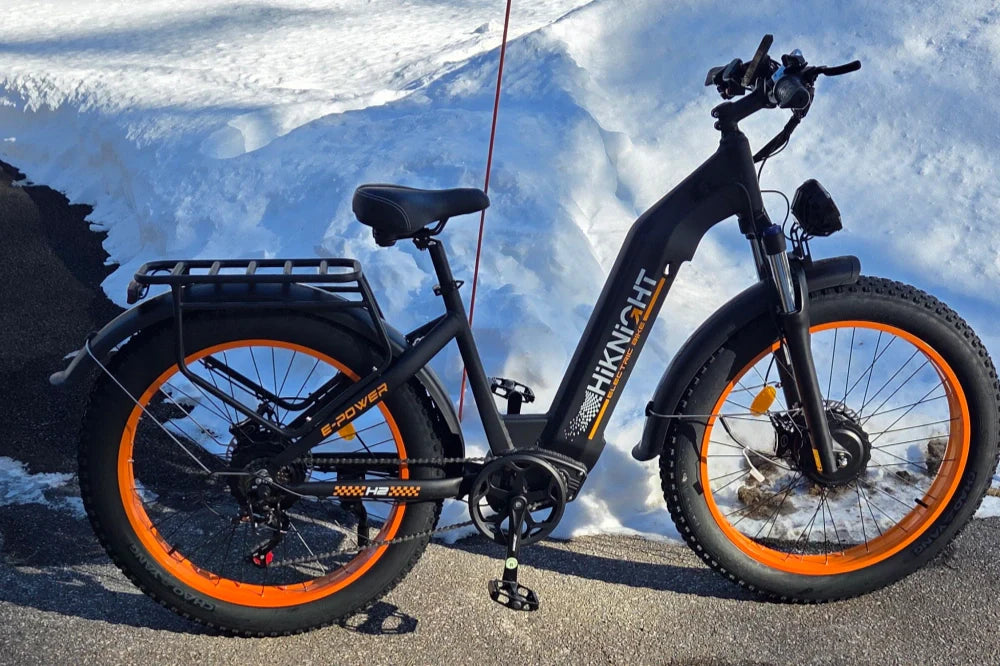
The HiKNiGHT H2 Pro was designed with that in mind. Its 52V 20Ah battery — 1,040Wh of usable energy — puts it in the top tier of production eBike range. That translates to 65 miles on demanding off-road terrain and up to 90 miles on mixed or moderate routes. For most commuters, that's three to five full workdays on a single weekend charge.
But range is only part of the story. The H2 Pro pairs that battery with a 3,000W peak dual motor system — the kind of power that turns a 45-degree climb from a challenge into a non-event. At 38 mph top speed, it keeps pace with urban traffic. At its price point of $1,299, it redefines what "value" looks like in the performance eBike category.


- 52V 20Ah battery (1,040Wh) — one of the highest-capacity batteries under $1,500
- 65–90 mile range — covers a full week of suburban commuting on one charge
- 3,000W peak dual motor — handles 45° climbs without throttle hesitation
- 38 mph top speed — flows with urban and suburban traffic naturally
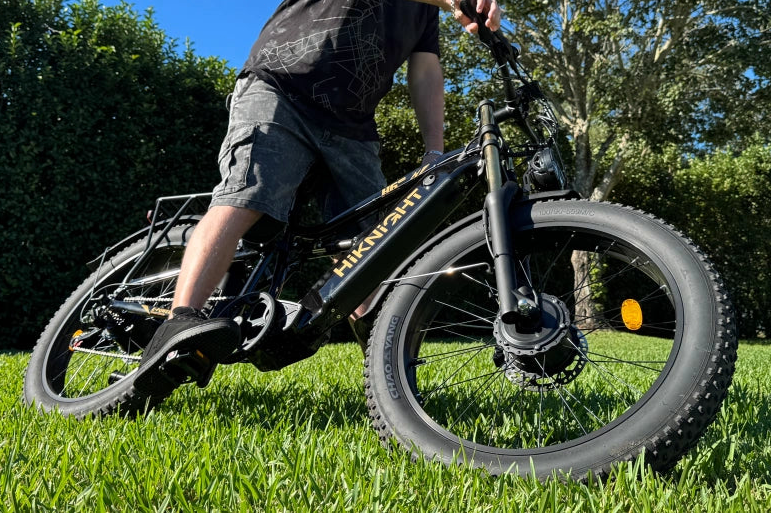
- Fat tire off-road geometry — absorbs rough roads, gravel, and trail surfaces
- Purpose-built for commuters, weekend explorers, and range-conscious riders
- $1,299 — exceptional price-to-specification ratio in the long-range category
FAQ: How Long Does an eBike Battery Last?
How long does an eBike battery last on a single charge?
Most modern eBikes deliver 20–80 miles per charge under real-world conditions. High-capacity batteries — like the 52V 20Ah pack in the HiKNiGHT H2 Pro — extend that to 65–90 miles. Actual range depends on assist level, terrain, rider weight, speed, and temperature. Subtract 20–30% from any manufacturer's stated maximum range to get a realistic everyday estimate.
How many years does an eBike battery last?
Most quality lithium-ion eBike batteries are rated for 500–1,000 full charge cycles. For a rider who charges 4–5 times a week, that translates to roughly 3–5 years before noticeable capacity loss. With careful charging habits — staying between 20–80% for daily use, avoiding deep discharges, storing at 50% when not in use — many riders extend battery life to 6–7 years.
What kills an eBike battery the fastest?
The biggest threats to battery lifespan are: deep discharging (running to 0% regularly), storing at full charge for long periods, charging in freezing temperatures, exposing the battery to excessive heat, and using uncertified third-party chargers. Of these, heat and deep discharging are the most damaging over time.
Does riding on high assist drain the battery faster?
Significantly, yes. High assist draws more power from the motor, which pulls more from the battery per mile. Dropping from the maximum assist level to a mid-range setting can extend your range by 40–60% on flat terrain. The ideal strategy is to use lower assist on flat sections and reserve high assist for hills, headwinds, and situations where you actually need it.
Does cold weather affect eBike battery range?
Yes — cold temperatures reduce the electrochemical efficiency of lithium-ion cells. At 32°F (0°C), you can expect to lose 20–30% of your normal range. The fix: store your battery indoors overnight in cold weather, bring it to room temperature before riding, and plug in when you get home rather than leaving it in a cold garage. The battery recovers its normal capacity once it warms back up.
Should I charge my eBike battery to 100% every time?
Not for daily commuting. Lithium-ion batteries experience the least chemical stress when kept between 20% and 80% charge. Charging to 100% regularly accelerates cell degradation over time. A practical routine: charge to 80% for most rides, charge to 100% only the night before you need full range, and charge to 50% for any period of storage longer than a week.
How do I know if my eBike battery needs replacing?
The clearest sign is a significant drop in range — when a battery that once covered 60 miles now struggles to reach 35–40 miles under the same conditions. Other indicators include charge levels dropping unpredictably (jumping from 40% to 10% suddenly), unusually long charge times, excessive heat during charging, and visible swelling of the battery pack. A swollen battery should be taken out of service immediately.
How much does it cost to replace an eBike battery?
Replacement batteries typically cost $150–$400 depending on voltage, capacity, and brand compatibility. Replacing a battery extends the bike's usable life by another 3–5 years, making it far more economical than purchasing a new bike. Higher-capacity replacements (like 52V 20Ah packs) are available for premium models and can actually increase your original range if the frame and controller support the upgrade.
The answer to "how long does an eBike battery last" turns out to be two answers, both of them more encouraging than most people expect.
Per charge: more than enough for most commutes, most errands, and most adventures — especially if you start with the right capacity.
In years: longer than most people keep a phone, longer than most people keep a laptop, and longer still if you treat it well.
The riders who worry least about battery life are the ones who started with more battery than they thought they needed.
Charge smart. Ride farther. Worry less.






Leave a comment
All comments are moderated before being published.
This site is protected by hCaptcha and the hCaptcha Privacy Policy and Terms of Service apply.