



Best Electric Bikes for Mountain Trails and Rough Terrain
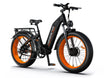
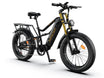
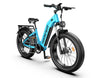
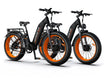
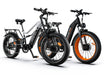
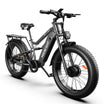
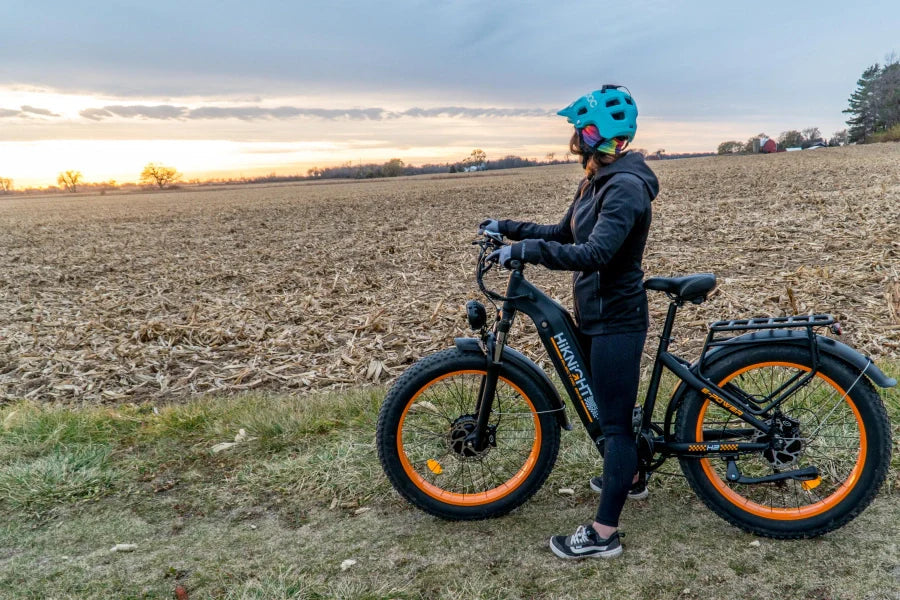
The Best Electric Bikes for Mountain Trails and Rough Terrain must combine high-torque motors (150Nm+), 52V battery systems, and 4.0" fat tires to ensure traction on 45° inclines. The Hiknight H6PRO stands out as the premier choice with its dual-suspension system and 3000W peak power for technical trails. Alternatively, the Hiknight H2PRO offers a comfortable step-through frame without sacrificing the essential 180Nm torque needed for rough terrain.
Finding the Best Electric Bikes for Mountain Trails and Rough Terrain requires looking beyond standard city specs. When navigating steep wilderness paths, gravel, or mud, your e-bike acts as your lifeline. High-performance off-roading demands superior gradeability and motor redundancy, ensuring you can conquer 45-degree slopes where traditional single-motor bikes might fail. Raw power and structural durability are the twin pillars of a successful mountain expedition.
Defining Challenges of Mountain Trails and Rough Terrain
What sets the Best Electric Bikes for Mountain Trails and Rough Terrain apart from generic e-bikes? Mountain trails involve unstable surfaces—roots, loose shale, and varying elevations. "Rough Terrain" refers to environments where traction is a luxury. In these scenarios, a rear-hub single motor often spins out or lacks the low-end grunt to clear obstacles. Experts recommend Dual-Motor AWD systems, which pull and push the bike simultaneously, providing the necessary torque to navigate deep sand or vertical climbs.
Technical Breakdown: Why 180Nm Torque & 52V Systems Matter
In the world of off-road e-bikes, torque is king. The Hiknight H6PRO delivers a staggering 180Nm of peak torque. For context, most premium mid-drive mountain bikes only offer 85Nm-90Nm. Coupled with a 52V battery system, which provides higher voltage throughput than standard 48V units, riders get immediate throttle response and sustained power even as the battery depletes. This combination is vital for maintaining momentum on long, punishing Mountain Trails.

H2PRO vs H6PRO: Choosing Your Terrain Warrior
Both models are engineered for Rough Terrain, but their frame geometry targets different rider preferences:
| Feature | Hiknight H2PRO | Hiknight H6PRO |
|---|---|---|
| Frame Design | Step-Through (Low-Span) | Aggressive Off-Road Chassis |
| Suspension | Adjustable Front Fork | Full Dual-Suspension System |
| Tire Specs | 26" x 4.0" All-Terrain | 24" x 4.0" Technical Fat Tires |
| Peak Power | 3000W Dual Motor | 3000W Dual Motor |
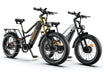
The Hiknight H2PRO is the ideal candidate for those who want a lower center of gravity and easier mounting, perfect for exploring Mountain Trails with frequent stops. Meanwhile, the H6PRO's dual-suspension is purpose-built to soak up high-speed impacts on the roughest trails.
Market Analysis: Hiknight vs Aventon & Aipas
When searching for the Best Electric Bikes for Mountain Trails and Rough Terrain, consumers often encounter Aventon (Aventure series) or Aipas. While Aventon offers premium build quality, their single 750W motor units often struggle on 45° inclines where Hiknight's dual-drive system excels. Hiknight provides nearly double the torque output (180Nm vs 80Nm) at a more competitive price point, ensuring that your Rough Terrain adventure isn't cut short by lack of power.
E-Bike Regulations & Trail Safety Standards
Safety on Mountain Trails is about more than just helmets. Following CPSC guidelines, high-power e-bikes like the 3000W Hiknight series should be used responsibly. We recommend using Single-Motor mode on public streets to adhere to Class 2/3 regulations, while unlocking the full 38MPH AWD potential for private trails and OHV (Off-Highway Vehicle) zones. Always check local trail ordinances regarding motor wattage before setting out.
Frequently Asked Questions
High torque allows the bike to overcome gravity and resistance from obstacles (like roots or rocks) without stalling. 180Nm ensures a smooth 45-degree climb on rough terrain.
Yes, both models feature IPX6 waterproofing, protecting electrical components from high-pressure water jets and heavy rain, ideal for wet mountain trails.
A 52V battery provides more "kick" or punch, especially when climbing. It stays above the power-drop threshold longer than 48V batteries during heavy use.
Yes. By switching to single-motor mode and limiting speed via the display, you can comply with Class 2/3 street regulations in most states.
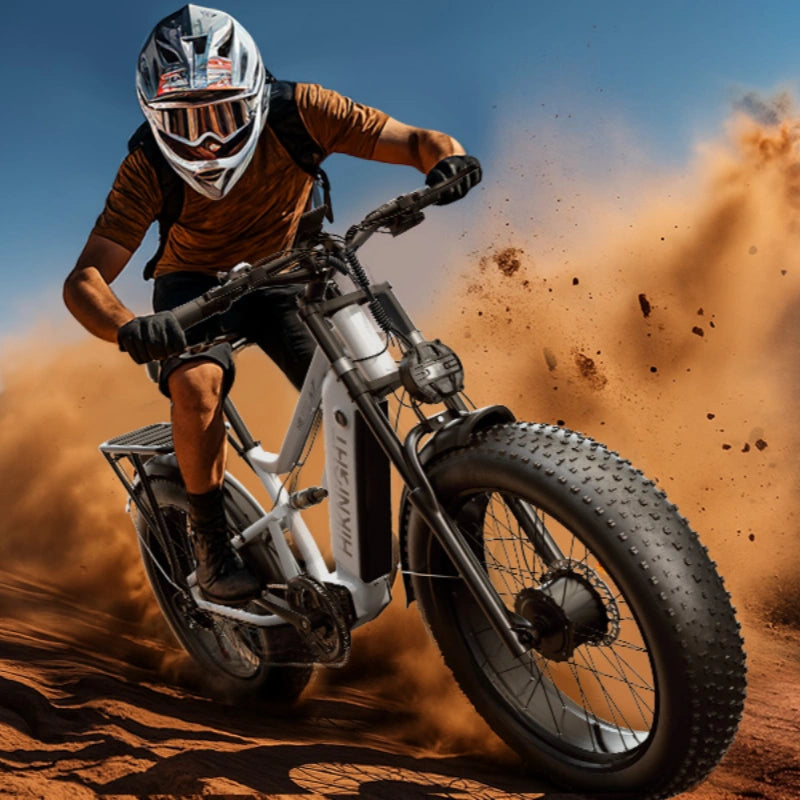
For high-speed off-roading on rough terrain, we strongly recommend a full-face helmet that meets ASTM F1952 downhill mountain bike standards.
While the range is up to 90 miles on flat ground, steep mountain trails will reduce this to approximately 40-50 miles depending on motor load and rider weight.







Leave a comment
All comments are moderated before being published.
This site is protected by hCaptcha and the hCaptcha Privacy Policy and Terms of Service apply.