


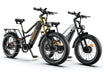
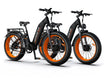
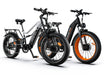
Comparing the Top Electric Dirt Bikes for Young Riders
Comparing the top electric dirt bikes for young riders is harder than it looks — the market is flooded with options that vary wildly in power, safety features, build quality, and age appropriateness. This guide cuts through the noise with a clear framework: what specs actually matter for younger riders, how different bikes stack up across key categories, and which type of bike fits which rider profile. No fluff, no hype — just the information you need to make a confident decision.

Electric dirt bikes for younger riders have improved dramatically over the past few years. What used to be underpowered toys are now legitimate off-road machines — some capable of speeds that demand real respect and proper safety gear. That progression is exciting, but it also means the buying decision is more consequential than it used to be.
This guide is written for parents, guardians, and older teens doing their own research. It covers the full spectrum from beginner-appropriate bikes to performance-oriented options for experienced young riders.
Why Choosing the Right Bike Actually Matters
The wrong electric dirt bike does not just lead to buyer's remorse — it can create genuine safety problems. A bike that is too powerful for a rider's age and experience level is dangerous. A bike that is too underpowered for a teenager who has been riding for years will be abandoned within a month.
There is also the terrain question. A bike optimized for flat backyard riding will struggle on actual trails. A full-power off-road machine is overkill (and potentially unsafe) for a 10-year-old on a gravel path.
Getting this decision right means matching three variables: the rider's age and physical size, their experience level, and the terrain they will actually ride. Every other spec — motor wattage, top speed, battery range — flows from those three factors.
What to Look for When Comparing Electric Dirt Bikes

Most buyers focus on top speed and motor wattage. Those matter, but they are not the most important specs for younger riders. Here is what actually deserves attention:
Seat Height and Ergonomics
A rider who cannot comfortably reach the ground at a stop is a rider who will fall more often. Seat height is one of the most overlooked specs in youth bike comparisons. For riders under 5'2", a seat height above 30 inches creates a confidence problem that affects the entire riding experience.
Weight of the Bike
Electric dirt bikes are heavier than gas-powered equivalents because of the battery. A bike that weighs 120 lbs is manageable for a 16-year-old but genuinely difficult for a 12-year-old to pick up after a tip-over. Weight matters more than most buyers realize until they are on the trail.
Speed Limiting Capability
The best youth-oriented electric dirt bikes include adjustable speed limiters — either via a physical key, a controller setting, or a companion app. This allows parents to set a maximum speed appropriate for the rider's current skill level and increase it gradually as confidence and ability develop.
Suspension Quality
Cheap suspension on rough terrain is not just uncomfortable — it reduces control. Front and rear suspension that is properly tuned for the rider's weight makes a meaningful difference in how predictable the bike feels, especially for less experienced riders.
Brake Type and Feel
Hydraulic disc brakes offer more consistent stopping power than mechanical disc or drum brakes, especially in wet or muddy conditions. For younger riders who may panic-brake, a brake system with progressive feel (rather than on/off response) is safer and more forgiving.
Age, Weight, and Power: The Triangle That Determines Fit

There is no universal age-to-power chart that works for every rider, but the following framework gives a useful starting point:
| Rider Age | Typical Weight Range | Recommended Motor Range | Suggested Max Speed |
|---|---|---|---|
| 8-10 years | 55-90 lbs | 250-500W | 10-15 MPH |
| 10-13 years | 80-120 lbs | 500-1500W | 15-25 MPH |
| 13-16 years | 100-160 lbs | 1500-3000W | 25-35 MPH |
| 16+ years (experienced) | 130-200+ lbs | 3000W-4000W+ | 35-45 MPH |
Important caveat: Experience level matters as much as age. A 14-year-old who has been riding dirt bikes for four years may be ready for a higher-power machine than a 17-year-old who is completely new to off-road riding. Use this table as a starting point, not a rule.
The Three Categories of Youth Electric Dirt Bikes
Category 1: Beginner / Younger Kids (Under 12)
These bikes prioritize low speed, light weight, and simple controls. Motor output is typically 250-500W, top speeds are capped at 10-15 MPH, and the frame geometry is designed for smaller bodies. They are appropriate for supervised backyard or park riding, not technical trails.
What to expect: Shorter range (20-30 miles), lighter weight (40-70 lbs), lower seat height (22-26 inches), and often a throttle-only control system without complex riding modes.
Category 2: Intermediate / Tweens and Early Teens (12-15)
This is the most competitive and confusing category. Bikes here range from 500W to 2000W, with top speeds from 20-35 MPH. Quality varies enormously. The best bikes in this category have adjustable speed limiters, proper suspension, and hydraulic brakes. The worst are underpowered toys with inadequate stopping power.
What to expect: More variation in quality than any other category. Budget carefully — the cheapest options in this range often have the worst safety features.
Category 3: Performance / Older Teens and Shared Family Use (15+)
These are full-capability electric dirt bikes that happen to be appropriate for older, experienced teenage riders. Motor output ranges from 3000W to 5000W+, top speeds reach 35-45 MPH, and the bikes are built for actual off-road terrain. They require proper safety gear and a meaningful level of riding experience.
What to expect: Adult-level performance, adult-level responsibility. These bikes are not appropriate for beginners regardless of age.
Key Specs Compared: What the Numbers Mean

Motor Wattage: Peak vs Continuous
Most manufacturers advertise peak wattage, which is the maximum output the motor can sustain for short bursts. Continuous wattage — what the motor delivers during normal riding — is typically 40-60% of peak. A bike advertised as "3000W" may deliver 1200-1800W continuously. This matters for hill climbing and sustained performance, not just top speed.
Battery Capacity and Real-World Range
Battery capacity is measured in amp-hours (Ah) and voltage (V). A 48V 21Ah battery stores more energy than a 36V 12Ah battery. But real-world range depends heavily on rider weight, terrain, speed, and how aggressively the throttle is used. Manufacturer range claims are typically measured under ideal conditions — expect 60-75% of the stated range in real off-road use.
Torque and Hill Climbing
Torque (measured in Newton-meters) determines how well a bike handles inclines and rough terrain. High torque at low speed is what makes a bike feel responsive and capable on technical terrain. A bike with 220 Nm of torque can handle 45-degree slopes — relevant for any rider who plans to go beyond flat ground.
Suspension Travel
More suspension travel generally means better absorption of rough terrain. For trail riding, look for at least 150mm of front fork travel and a rear shock with meaningful travel. Bikes with minimal suspension (under 100mm) are better suited for smooth surfaces.
Pros and Cons by Rider Type
Beginner Bikes (Category 1) — Pros
- Low speed reduces injury risk for inexperienced riders
- Light weight makes the bike manageable for smaller kids
- Simple controls reduce the learning curve
- Lower price point reduces financial risk if the child loses interest
Beginner Bikes (Category 1) — Cons
- Outgrown quickly — often within 1-2 years
- Not suitable for any meaningful trail riding
- Limited resale value as the market is saturated
Intermediate Bikes (Category 2) — Pros
- Speed limiter capability allows gradual progression
- More capable on varied terrain than beginner bikes
- Longer useful lifespan as the rider develops
Intermediate Bikes (Category 2) — Cons
- Highly variable quality — requires careful research
- Some models are underpowered for the price
- May be outgrown faster than expected by rapidly developing riders
Performance Bikes (Category 3) — Pros
- Genuine off-road capability on technical terrain
- Long useful lifespan — appropriate for adult riders as well
- Better build quality and component specification
- Higher resale value
Performance Bikes (Category 3) — Cons
- Not appropriate for inexperienced riders regardless of age
- Higher price point
- Heavier — requires more physical capability to manage
- Demands proper safety gear investment
Safety Features That Separate Good Bikes from Risky Ones

Speed Limiter
A hardware or software speed limiter is the single most important safety feature for younger riders. It allows the bike to grow with the rider — starting at a safe speed and increasing as skill develops. Bikes without any speed limiting capability require the rider to self-regulate, which is an unrealistic expectation for most younger riders.
Brake Quality
Hydraulic disc brakes are the standard for any bike intended for off-road use. Mechanical disc brakes are acceptable for lower-speed beginner bikes. Drum brakes are not appropriate for any bike capable of speeds above 15 MPH. Check the brake specification carefully — it is often downgraded on budget models to reduce cost.
Kill Switch / Emergency Stop
A handlebar-mounted kill switch that immediately cuts motor power is a basic safety feature that should be present on any youth electric dirt bike. Some models also include a remote kill switch that allows a parent or supervisor to cut power from a distance.
Battery Management System (BMS)
A quality BMS protects the battery from overcharging, over-discharging, and thermal runaway. This is not just a performance feature — it is a fire safety feature. Cheap batteries without proper BMS protection are a genuine hazard.
Frame and Build Quality
Steel frames are heavier but more forgiving of impacts than aluminum. For younger riders who will tip over and crash more frequently than experienced adults, frame durability matters. Check for welding quality and frame thickness — thin-walled frames on budget bikes can crack under repeated stress.
Buying Guide: 6 Questions Before You Decide

1. What is the rider's actual experience level?
Be honest about this. A child who has ridden a bicycle for two years is not an experienced dirt bike rider. Off-road riding on motorized bikes involves throttle control, weight shifting, and terrain reading that takes time to develop. Start one category below where you think the rider belongs — it is much easier to upgrade than to recover from an injury caused by an overpowered bike.
2. What terrain will they actually ride?
Backyard and park riding requires a very different bike than trail riding. If the answer is "mostly flat ground near home," a lower-power bike with less suspension is appropriate and safer. If the answer involves actual trails with elevation changes and obstacles, suspension quality and motor torque become much more important.
3. Does the bike have a speed limiter?
If the answer is no, and the rider is under 16, reconsider the purchase. Speed limiters are not optional safety features for younger riders — they are the mechanism that allows the bike to be appropriate now and grow with the rider over time.
4. What is the total cost of ownership?
The bike price is only part of the budget. Add helmet (full-face for any bike capable of over 20 MPH), chest protector, knee and elbow pads, gloves, and boots. For a performance-category bike, proper safety gear adds $300-600 to the total cost. This is not optional — it is part of the purchase.
5. Where will the bike be charged and stored?
Electric dirt bikes need to be charged in a dry, temperature-controlled environment. Charging in a cold garage in winter degrades the battery. Charging in direct sunlight creates a fire risk. If you do not have an appropriate charging location, factor that into the decision.
6. What is the warranty and parts availability?
A bike from a brand with no US-based support, no parts availability, and a 30-day warranty is a risk regardless of how good the specs look. Check that replacement parts (especially tires, brake pads, and battery) are available before purchasing.
Use Cases: Which Bike for Which Rider

The 10-Year-Old Beginner on Flat Ground
Category 1 bike, 250-500W, speed limited to 10-12 MPH. Prioritize light weight and low seat height over performance. This rider needs to build confidence and basic throttle control before anything else.
The 13-Year-Old with Some Experience
Category 2 bike with a speed limiter set initially at 20 MPH. Look for hydraulic brakes and real suspension. This rider is ready for more capability but still benefits from the ability to dial back speed as they encounter new terrain types.
The 16-Year-Old Experienced Rider
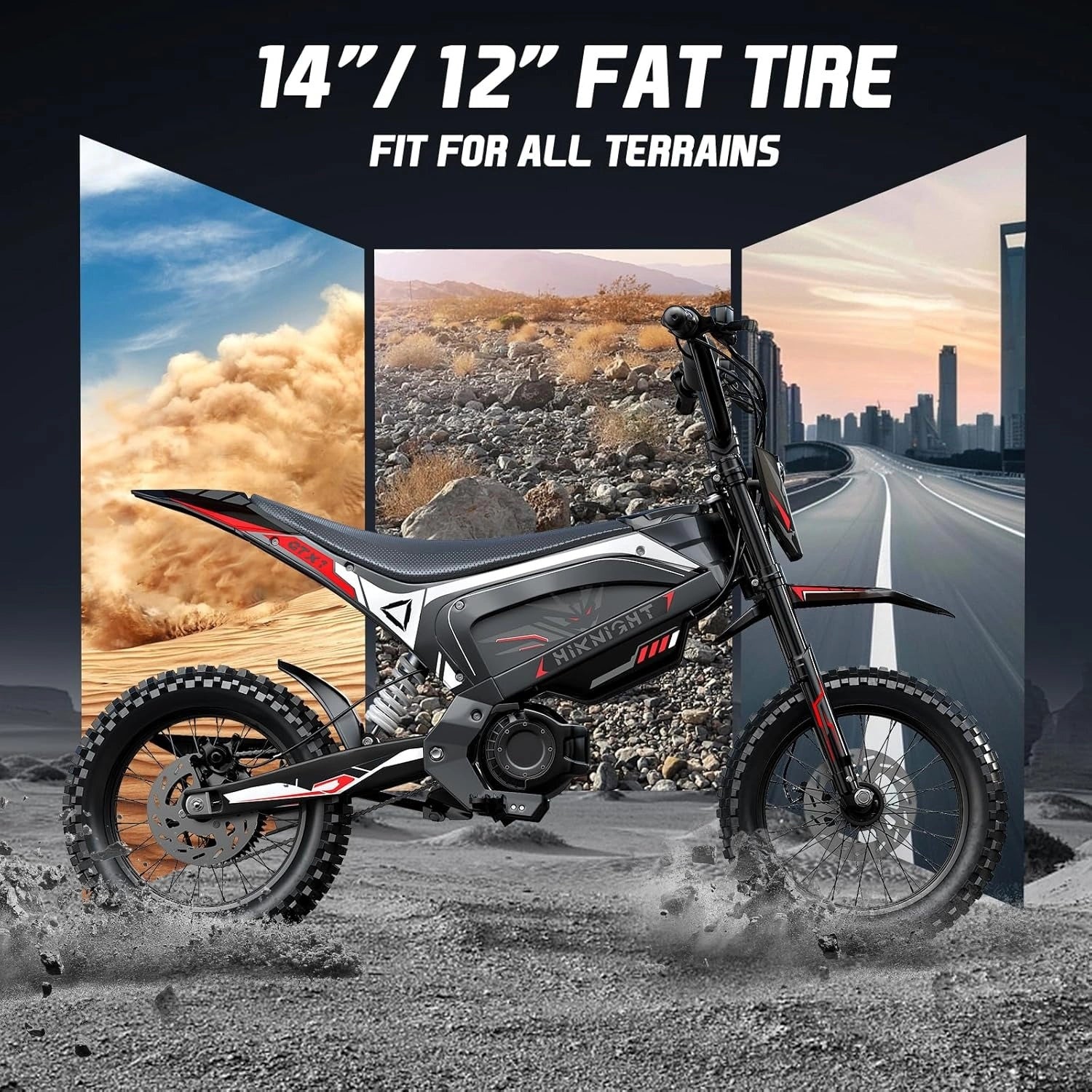
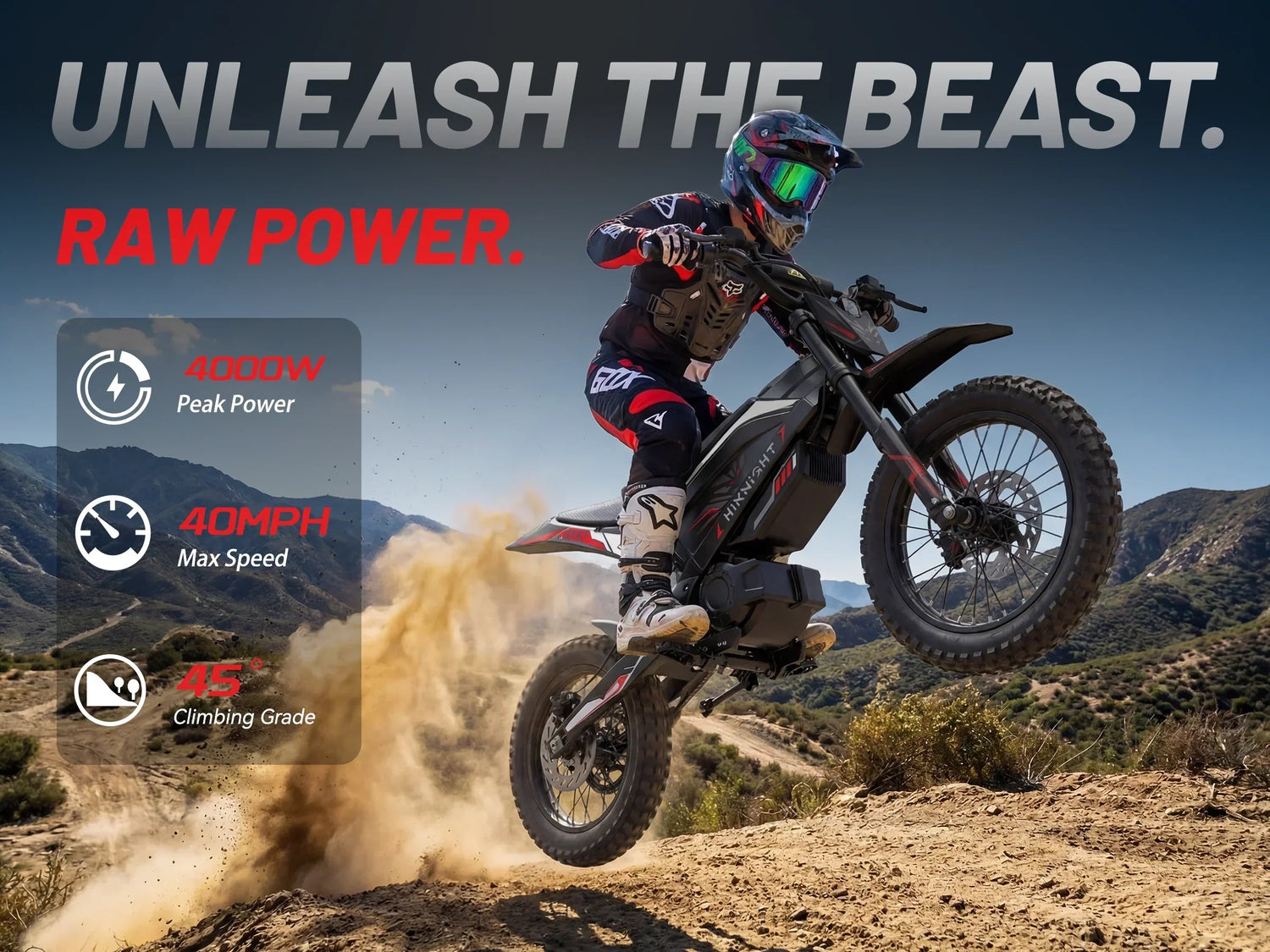
Category 3 bike is appropriate if the rider has genuine off-road experience. A bike like the HiKNiGHT GTX1 — with a 4000W peak motor, 40 MPH top speed, and full suspension — fits this profile well. The performance is real, and so is the responsibility that comes with it. Full safety gear is non-negotiable.
The Family Shared Bike
A performance-category bike with a speed limiter is the most versatile option for families where multiple riders of different ages and skill levels will use the same bike. The limiter allows younger or less experienced riders to use the bike safely, while experienced riders can access full capability.
Frequently Asked Questions
What age is appropriate for an electric dirt bike?
There is no single correct answer — it depends on the child's maturity, physical size, and the power level of the bike. Many manufacturers suggest 8 years as a minimum for low-power beginner bikes (under 500W). Higher-power bikes (1500W+) are generally more appropriate for riders 13 and older with some prior riding experience.
Do electric dirt bikes for kids need to be registered?
In most US states, electric dirt bikes used off-road on private property do not require registration. However, regulations vary by state and locality. Bikes used on public roads or trails may require registration, insurance, and a valid license depending on the jurisdiction. Check your local regulations before purchasing.
How fast do youth electric dirt bikes go?
Speed varies significantly by category. Beginner bikes for younger kids typically top out at 10-15 MPH. Intermediate bikes reach 20-35 MPH. Performance bikes for older teens can reach 40 MPH or more. Always verify whether a speed limiter is available and use it appropriately for the rider's age and experience.
How long does the battery last on a single charge?
Real-world range depends on rider weight, terrain, speed, and riding style. Most youth electric dirt bikes claim 30-70 miles of range. Expect 60-75% of the stated range in actual off-road conditions. Aggressive riding on hilly terrain will reduce range significantly compared to flat, moderate-speed riding.
What safety gear does a young rider need?
At minimum: a full-face helmet (not a bicycle helmet), chest protector, knee guards, elbow guards, and gloves. For any bike capable of over 25 MPH, add proper motocross boots. This gear is not optional — it is the difference between a minor fall and a serious injury.
Can a parent control the speed remotely?
Some electric dirt bikes include remote kill switches or app-based speed control. More commonly, speed is limited via a physical key or controller setting that requires physical access to the bike to change. Check the specific model's features before purchasing if remote control is a priority.
How do electric dirt bikes compare to gas-powered bikes for young riders?
Electric bikes have several advantages for younger riders: quieter operation (less noise complaint from neighbors), no fuel handling, lower maintenance requirements, and often smoother power delivery that is more forgiving for beginners. The main disadvantage is longer recharge time compared to refueling, and reduced range in cold weather.
What is the difference between a hub motor and a mid-drive motor on a dirt bike?
Hub motors are located in the wheel hub and are simpler, lower-maintenance, and generally less expensive. Mid-drive motors are located at the bottom bracket and offer better weight distribution and more efficient power transfer on technical terrain. For most youth riders, hub motor bikes are appropriate and more affordable. Mid-drive systems are more common on higher-end performance bikes.




Leave a comment
All comments are moderated before being published.
This site is protected by hCaptcha and the hCaptcha Privacy Policy and Terms of Service apply.