



Table of Contents
- What Is an Electric Bike Dirt Bike?
- Why the Distinction Matters Before You Buy
- How Electric Bikes and Dirt Bikes Actually Differ
- Head-to-Head Comparison: Electric Bike vs. Dirt Bike vs. Electric Dirt Bike
- Pros & Cons Breakdown
- Use Cases: Which One Fits Your Riding Style?
- Buying Guide: 8 Questions to Ask Before You Choose
- When to Choose Each Type
- FAQ
What Is an Electric Bike Dirt Bike?
An electric bike dirt bike sits at the intersection of two worlds: the pedal-assist technology of an ebike and the off-road capability of a traditional dirt bike. Depending on who you ask, the term refers to one of three distinct products — and understanding which one you're actually looking at changes everything about your buying decision.
The three categories most people mean when they say "electric bike dirt bike":
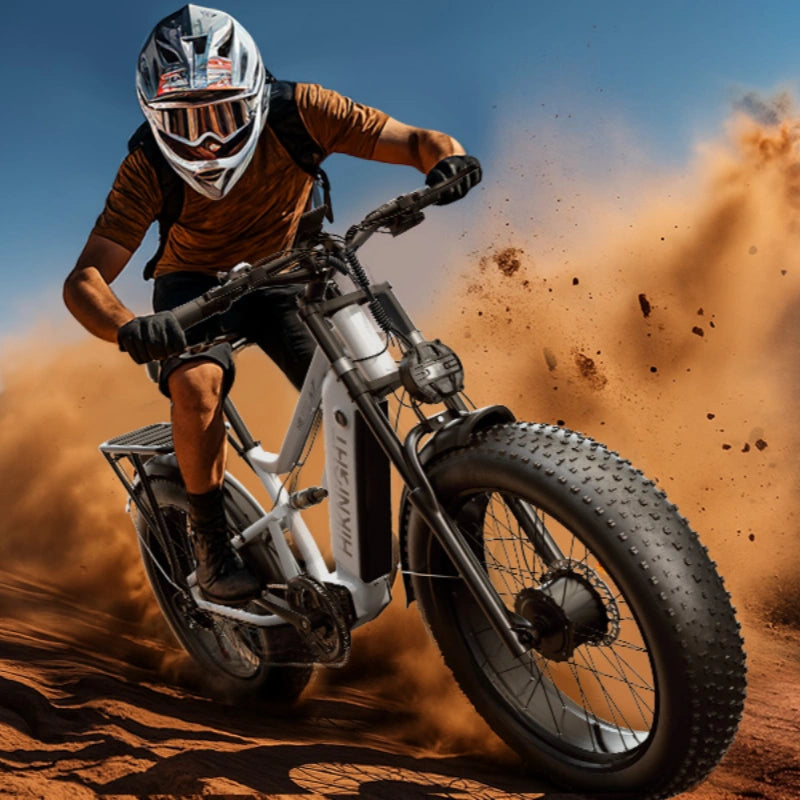
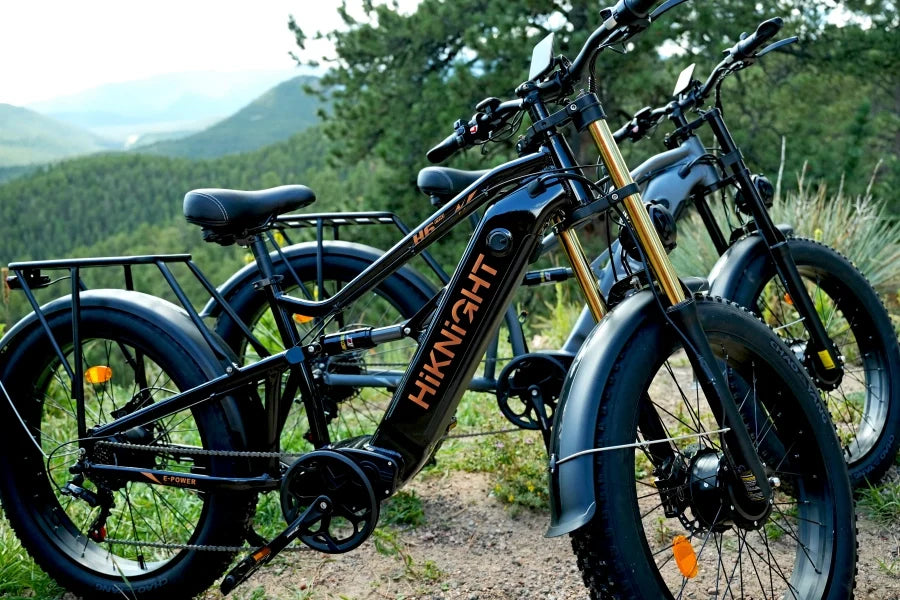
- Fat tire off-road ebikes — Pedal-assist electric bicycles with 4"+ tires, suspension forks, and powerful motors designed for trails, gravel, sand, and rough terrain. Street-legal in most US states. Examples: HiKNiGHT H6 Pro, Surron Light Bee X (pedal mode).
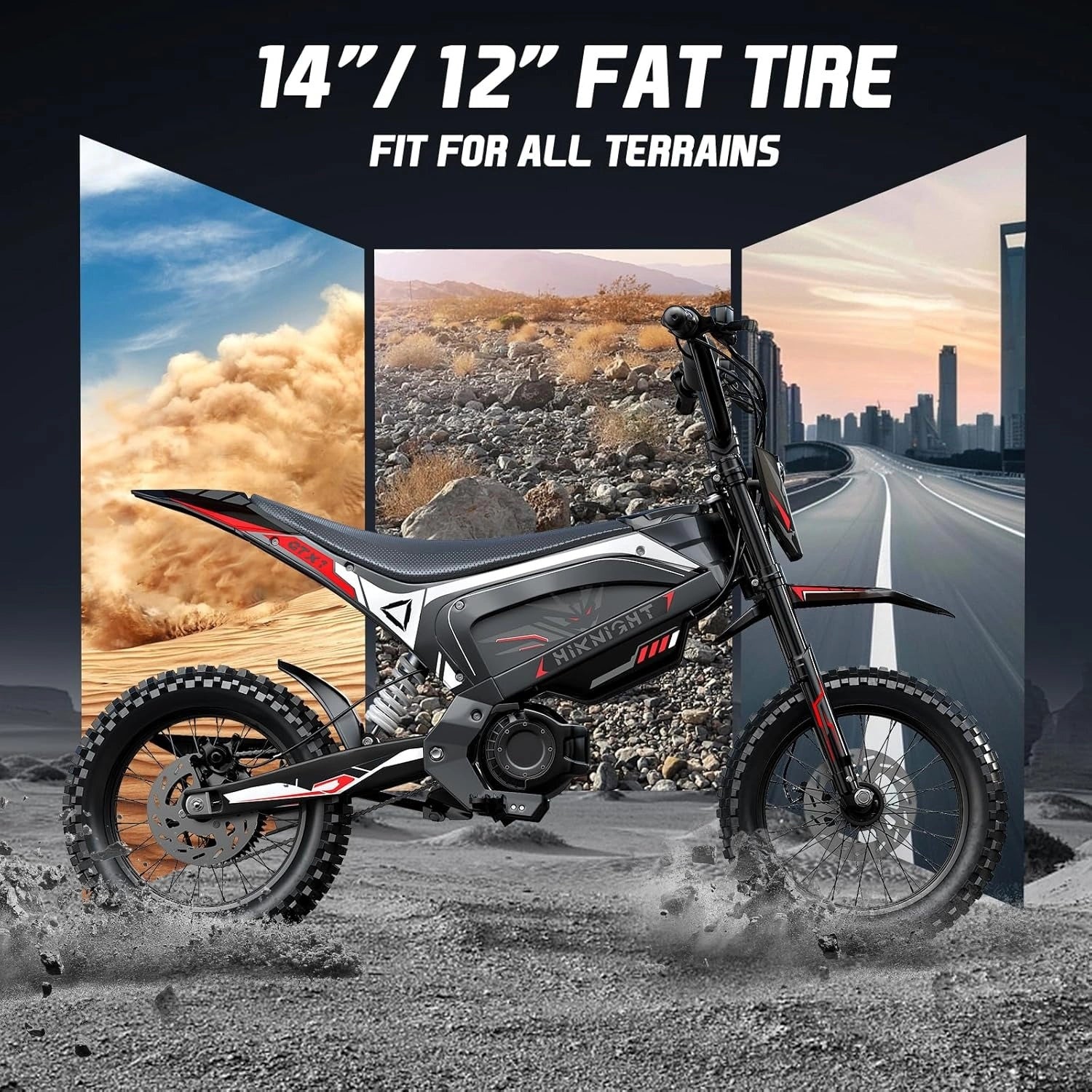
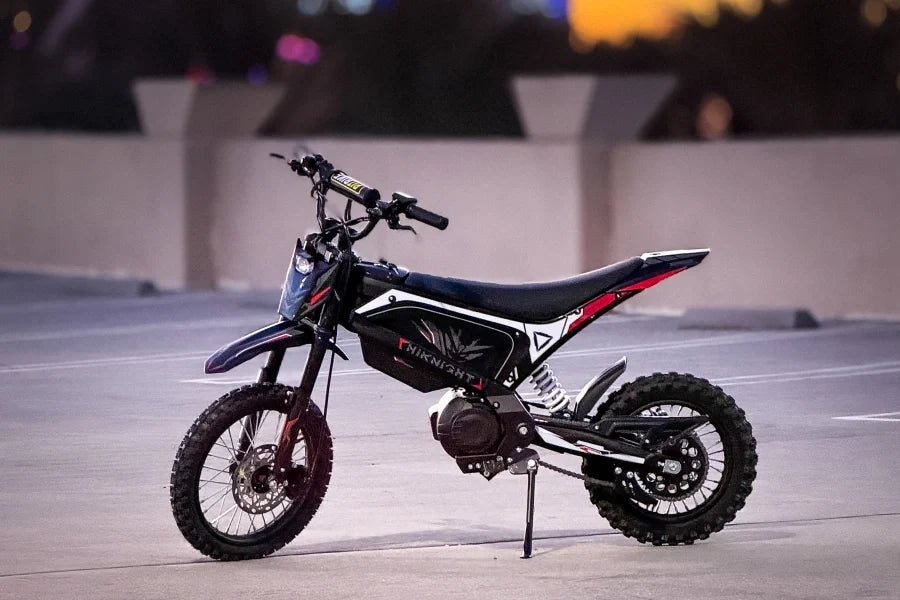
- Electric dirt bikes (moto-style) — Motorcycle-derived electric off-road bikes with no pedals, high-voltage batteries, and motocross-level performance. Not street-legal without registration. Examples: HiKNiGHT GTX1, KTM Freeride E-XC, Stark Varg.
- Electric motocross / pit bikes — Smaller, lighter electric bikes designed for closed tracks and younger riders. Often used as training tools.
This guide focuses primarily on the comparison between fat tire off-road ebikes and electric dirt bikes (moto-style), since these are the two categories most adult buyers are choosing between in 2026.

Why the Distinction Matters Before You Buy
Buying the wrong type is an expensive mistake. A fat tire ebike and an electric dirt bike may look similar in photos, but they serve fundamentally different purposes, operate under different legal frameworks, and require different skill levels to ride safely.
Here's why getting this right matters:
- Legal access: Fat tire ebikes are street-legal and trail-legal in most jurisdictions. Electric dirt bikes (moto-style) typically require registration, insurance, and are banned from many public trails.
- Skill floor: Off-road ebikes are approachable for beginners. Electric dirt bikes demand motocross-level body positioning and throttle control.
- Maintenance cost: Electric dirt bikes have higher maintenance demands — suspension rebuilds, brake bleeds, and specialized service. Ebikes are closer to bicycle maintenance.
- Where you can ride: This is the single biggest practical difference. If you don't have access to private land or a sanctioned MX track, an electric dirt bike has very limited legal riding options.
How Electric Bikes and Dirt Bikes Actually Differ
Motor & Power System
Fat tire off-road ebikes typically run 750W–1000W hub motors (with peak outputs of 1500W–3000W on performance models) powered by 48V–52V lithium batteries. They use pedal-assist systems (PAS) that engage the motor when you pedal, plus a throttle option on most models.
Electric dirt bikes run high-voltage systems (60V–72V+) with motors producing 5kW–50kW+ of continuous power. The Stark Varg, for example, produces 80hp peak — comparable to a 450cc gas motocross bike. There's no pedaling involved.
Weight
Fat tire ebikes: 65–85 lbs. Heavy compared to a regular bicycle, but manageable for most adults to load into a truck or carry short distances.
Electric dirt bikes: 110–160 lbs for full-size models. Requires a truck or trailer to transport. Not something you push home if the battery dies.
Speed & Performance
Fat tire ebikes are typically limited to 20–28 mph in pedal-assist mode (Class 1–3). Some models have an unlocked off-road mode that goes higher, but legal street use caps at 28 mph.
Electric dirt bikes reach 50–80+ mph depending on the model. The KTM Freeride E-XC tops out around 50 mph; the Stark Varg exceeds 80 mph in race configuration.
Range
This is where fat tire ebikes have a significant advantage. A quality off-road ebike with a 52V/17.5Ah battery can deliver 40–70 miles of real-world range in pedal-assist mode. Electric dirt bikes, running at full power, typically deliver 1–3 hours of riding time — which translates to 20–40 miles depending on terrain and riding intensity.
Terrain Capability
Fat tire ebikes handle gravel, dirt trails, sand, snow, and moderate singletrack well. They struggle on technical motocross tracks, deep ruts, and high-speed jumps.
Electric dirt bikes dominate on MX tracks, technical enduro trails, and steep technical terrain. They're overkill for casual trail riding and impractical for commuting or mixed-use riding.

Head-to-Head Comparison: Fat Tire Ebike vs. Electric Dirt Bike vs. Gas Dirt Bike
| Category | Fat Tire Off-Road Ebike | Electric Dirt Bike (Moto) | Gas Dirt Bike |
|---|---|---|---|
| Street Legal | ✅ Yes (Class 1–3) | ⚠️ Varies / Usually No | ⚠️ Varies / Usually No |
| Top Speed | 20–28 mph (legal) | 50–80+ mph | 50–90+ mph |
| Real-World Range | 40–70 miles | 1–3 hrs riding time | Unlimited (refuel) |
| Weight | 65–85 lbs | 110–160 lbs | 200–250 lbs |
| Price Range | $1,500–$4,500 | $8,000–$15,000+ | $5,000–$12,000 |
| Maintenance Cost | Low (bicycle-level) | Medium (moto-level) | High (engine + moto) |
| Noise | Near-silent | Very quiet | Loud (engine) |
| Skill Level Required | Beginner–Intermediate | Intermediate–Advanced | Intermediate–Advanced |
| Trail Access | Most public trails | Private land / MX tracks | OHV areas / private land |
| Commute Capable | ✅ Yes | ❌ No | ❌ No |
Pros & Cons Breakdown
✅ Fat Tire Off-Road Ebike — Pros
- Street-legal and trail-legal in most US states — ride from your front door
- Long range (40–70 miles) means full-day adventures without a trailer
- Low maintenance — no engine oil, no air filter, no carburetor
- Accessible to beginners — pedal assist makes technical terrain manageable
- Quiet operation — welcome on trails where gas bikes are banned
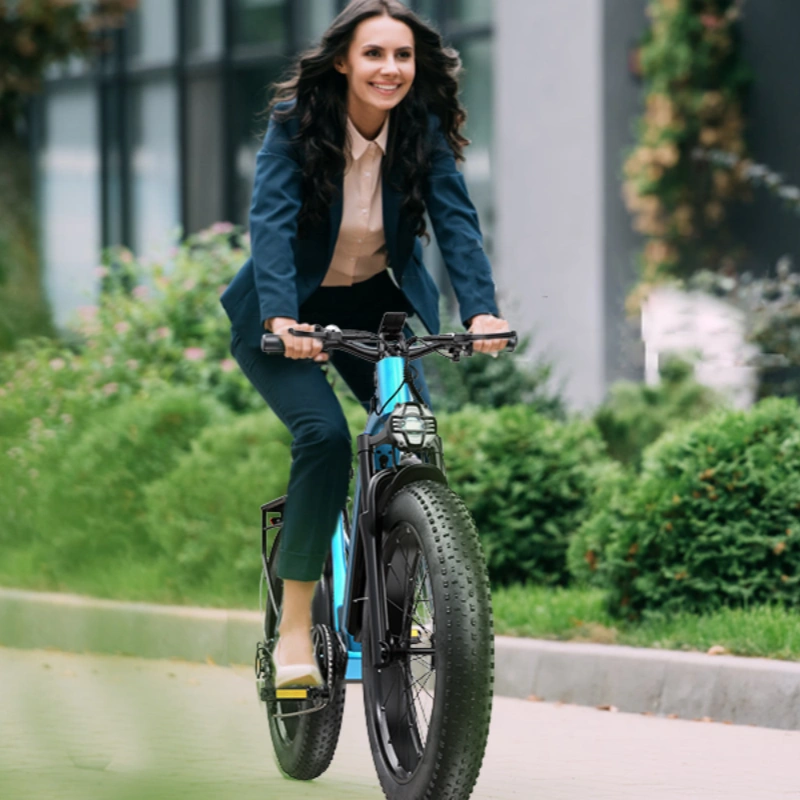
- Dual-purpose: commute on weekdays, trail ride on weekends
- Price point: quality off-road ebikes start around $1,800–$2,500
❌ Fat Tire Off-Road Ebike — Cons
- Speed-limited to 20–28 mph in legal assist mode
- Not suitable for technical motocross tracks or high-speed jumps
- Heavier than a regular bicycle — loading/unloading requires effort
- Battery replacement cost ($400–$800) after 3–5 years
- Not designed for aggressive moto-style riding
✅ Electric Dirt Bike (Moto-Style) — Pros
- Motocross-level performance — comparable to 250cc–450cc gas bikes
- Instant torque delivery — faster throttle response than gas
- Significantly quieter than gas dirt bikes — better for neighbors and campgrounds
- Lower running costs than gas (no fuel, less engine maintenance)
- Ideal for MX tracks, enduro racing, and technical terrain
❌ Electric Dirt Bike (Moto-Style) — Cons
- High purchase price ($8,000–$15,000+)
- Limited riding time per charge (1–3 hours at full intensity)
- Not street-legal without registration and modification
- Requires a truck/trailer to transport — can't ride to the trailhead
- Demands intermediate-to-advanced riding skills
- Limited service network compared to gas bikes
Use Cases: Which One Fits Your Riding Style?
🏕️ Weekend Trail Explorer
You want to ride forest trails, gravel paths, and fire roads on weekends. You don't have a truck or trailer, and you want to ride from home.
→ Fat tire off-road ebike. The ability to ride from your front door, combined with 40–70 miles of range, makes this the clear choice. You'll access trails that gas bikes can't legally use.
🏁 Motocross / Enduro Racer
You ride MX tracks or compete in enduro events. You have a truck and trailer, and you're comfortable with moto-level riding skills.
→ Electric dirt bike (moto-style). High-performance machines like the HiKNiGHT GTX1 provide the power and torque needed for true moto-style performance on tracks. Don't compromise here.
🏙️ Dual-Purpose Rider (Commute + Trail)
You want one bike that handles your 10-mile commute Monday through Friday and hits the trails on Saturday.
→ Fat tire off-road ebike, no contest. Versatile models like the HiKNiGHT H2 Pro excel in both street commuting and rugged trail riding.
👨👩👧 Family / Youth Rider
You're buying for a teenager or want something the whole family can ride safely.
→ Fat tire ebike or electric pit bike depending on age and skill. Full-size electric dirt bikes are too powerful and heavy for most youth riders.
🌲 Backcountry / Remote Adventure Rider
You ride remote trails far from civilization. Range and self-sufficiency matter more than peak performance.
→ Fat tire off-road ebike. The longer range and ability to pedal home if needed is a genuine safety advantage in remote terrain. Electric dirt bikes with 1–2 hours of riding time are a liability far from a charging point.
🏔️ Technical Off-Road Enthusiast
You ride challenging singletrack, rocky descents, and steep climbs. You want maximum capability on technical terrain.
→ Depends on terrain type. For trail riding on public land, a high-end fat tire ebike (like the HiKNiGHT H6 Pro off-road ebike with dual shock absorption and dual motor power) handles most technical terrain well. For closed-course racing or extreme enduro, an electric dirt bike is the better tool.
Buying Guide: 8 Questions to Ask Before You Choose
1. Where will you actually ride?
This is the most important question. If your answer includes public roads, bike paths, or most public trails — you need a street-legal ebike. If your answer is exclusively private land or sanctioned MX tracks — an electric dirt bike becomes viable.
2. How will you transport it?
Fat tire ebikes can be ridden to the trailhead. Electric dirt bikes require a truck or trailer. If you don't own a truck, factor in the cost of a trailer or rental — it changes the total cost of ownership significantly.
3. What is your actual skill level?
Be honest. Electric dirt bikes with 50kW+ motors are genuinely dangerous in the hands of inexperienced riders. If you've never ridden a motorcycle or dirt bike, start with a fat tire ebike and build skills progressively.
4. What is your total budget (not just purchase price)?
A $10,000 electric dirt bike also needs: a truck or trailer ($5,000–$30,000), protective gear ($500–$2,000), track fees ($20–$50/day), and eventual battery replacement ($2,000–$5,000). A $2,500 fat tire ebike needs: a helmet ($100–$300) and occasional brake pads.
5. Do you need range or performance?
Range and peak performance are inversely related in electric off-road vehicles. If you need 50+ miles of riding, a fat tire ebike wins. If you need MX-level performance for 1–2 hours, an electric dirt bike wins. You can't have both in one package at current battery technology levels.
6. What terrain features matter most to you?
Jumps, whoops, and berms → electric dirt bike. Gravel, sand, snow, and mixed terrain → fat tire ebike. Technical rocky singletrack → either, depending on speed preference.
7. Is noise a factor?
Both electric options are significantly quieter than gas. But fat tire ebikes are near-silent, making them welcome in campgrounds, residential areas, and noise-sensitive trail systems. Electric dirt bikes are quiet by moto standards but still produce motor and tire noise at speed.
8. What happens when the battery dies mid-ride?
On a fat tire ebike, you pedal home. It's heavy, but possible. On an electric dirt bike, you push 130+ lbs of dead weight — or call for a pickup. In remote terrain, this is a meaningful safety consideration.
When to Choose Each Type: Quick Decision Guide
| Your Situation | Best Choice |
|---|---|
| Ride from home to trails, no truck | Fat Tire Off-Road Ebike |
| MX track or enduro racing | Electric Dirt Bike (Moto) |
| Commute + weekend trail riding | Fat Tire Off-Road Ebike |
| Budget under $4,000 | Fat Tire Off-Road Ebike |
| Experienced moto rider, private land | Electric Dirt Bike (Moto) |
| Family / beginner rider | Fat Tire Off-Road Ebike |
| Remote backcountry, need long range | Fat Tire Off-Road Ebike |
| Noise-sensitive trails / campgrounds | Fat Tire Off-Road Ebike |
FAQ: Electric Bike Dirt Bike
Q: Is an electric bike the same as an electric dirt bike?
A: No. An electric bike (ebike) uses a pedal-assist motor and is classified as a bicycle under US law. An electric dirt bike (moto-style) is classified as a motor vehicle, requires registration in most states, and is not street-legal without modification. They serve different purposes and operate under different legal frameworks.
Q: Can I ride a fat tire ebike on dirt trails?
A: Yes — this is one of their primary use cases. Fat tire ebikes with 4"+ tires, suspension forks, and 750W+ motors handle dirt trails, gravel, sand, and moderate singletrack very well. They're legal on most public trails where motorized vehicles are prohibited, because they're classified as bicycles.
Q: How fast does an electric dirt bike go?
A: Moto-style electric dirt bikes typically reach 50–80+ mph depending on the model. Fat tire off-road ebikes are legally limited to 20–28 mph in pedal-assist mode, though some have off-road modes that go higher.
Q: Are electric dirt bikes street legal?
A: Most moto-style electric dirt bikes are not street-legal without registration, insurance, and modifications (mirrors, lights, horn). Fat tire ebikes classified as Class 1, 2, or 3 are street-legal in most US states without registration.
Q: How long does an electric dirt bike battery last?
A: Moto-style electric dirt bikes typically provide 1–3 hours of riding time at full intensity. Fat tire off-road ebikes deliver 40–70 miles of range in pedal-assist mode. The difference is significant for planning longer rides.
Q: What is the best electric bike for off-road riding?
A: It depends on your use case. For trail riding on public land with long range needs, a fat tire ebike with 750W–1000W motor and 840Wh+ battery is the most practical choice. For MX tracks and technical enduro on private land, a purpose-built electric dirt bike delivers better performance. There's no single "best" — the right answer depends on where you ride, how you transport it, and your budget.
Q: Can a fat tire ebike handle jumps?
A: Small jumps and drops — yes, within limits. Fat tire ebikes are not designed for motocross-style jumps. The frame geometry, suspension travel, and overall weight distribution are optimized for trail riding, not aerial maneuvers. Attempting large jumps on a fat tire ebike risks frame damage and injury.
Q: Is an electric dirt bike worth it for a beginner?
A: Generally, no. Moto-style electric dirt bikes have a steep learning curve, high purchase price, and limited legal riding access. Most beginners are better served by a fat tire off-road ebike, which builds off-road skills progressively while remaining street-legal and accessible on public trails.




Leave a comment
All comments are moderated before being published.
This site is protected by hCaptcha and the hCaptcha Privacy Policy and Terms of Service apply.