





Electric Bike Wheel Size Guide: How to Choose the Right Wheels for Your Ride
Choosing the right electric bike wheel size can make or break your riding experience. This guide breaks down every common e-bike wheel diameter — what each one does best, who it suits, and how terrain, rider height, and riding style should drive your decision in 2026.

📌 Article Outline
- Why Wheel Size Matters on an E-Bike
- Common E-Bike Wheel Sizes Explained
- 20" Wheels — Compact & Nimble
- 24" Wheels — The Off-Road Sweet Spot
- 26" Wheels — The Fat Tire Standard
- 27.5" Wheels — Trail Versatility
- 29" Wheels — Speed & Roll-Over
- Wheel Size vs. Tire Width: What's the Difference?
- How to Choose the Right Wheel Size for Your Riding Style
- Does Rider Height Affect Wheel Size Choice?
- FAQ
Why Wheel Size Matters on an E-Bike
Wheel size is one of the most consequential specs on any bicycle — and on an electric bike, it interacts with motor power, suspension, and battery range in ways that aren't always obvious from a spec sheet.
A larger wheel rolls over obstacles more easily and maintains momentum better at speed. A smaller wheel accelerates faster, fits more riders, and is easier to maneuver in tight spaces. Neither is universally better — the right choice depends entirely on how and where you ride.
What makes e-bikes different from regular bikes is that the motor compensates for some of the efficiency losses of larger or heavier wheels. A 750W motor on a 29" wheel can still accelerate briskly, even though the same wheel on a non-motorized bike would feel sluggish. This changes the calculus compared to traditional bike sizing advice.
Key insight: On an e-bike, wheel size affects ride feel, terrain capability, and handling more than it affects raw speed — because the motor handles the speed equation.
Common E-Bike Wheel Sizes Explained
E-bikes come in a narrower range of wheel sizes than traditional bikes. The most common diameters you'll encounter are 20", 24", 26", 27.5", and 29". Each has a distinct character and a specific use case where it excels.
It's worth noting that wheel diameter is measured at the tire's outer edge, not the rim. A 26" rim with a 4.0" fat tire has a very different ride profile than a 26" rim with a 2.1" trail tire — even though both are technically "26-inch" wheels.
20" Wheels — Compact & Nimble
20" wheels are most common on folding e-bikes and compact urban commuters. Their smaller diameter makes the bike easier to store, lighter to carry, and more maneuverable in dense city environments.
Best for: Urban commuters, apartment dwellers, riders who need to combine e-biking with public transit, shorter riders (under 5'4").
Trade-offs: Less stable at high speeds. More sensitive to road imperfections — potholes and cracks feel more jarring. Not suitable for off-road use without significant suspension.
Tire width options: 20" wheels are available in both narrow (1.75"–2.0") and fat (3.0"–4.0") configurations. Fat 20" tires dramatically improve comfort and traction for a compact wheel.
24" Wheels — The Off-Road Sweet Spot
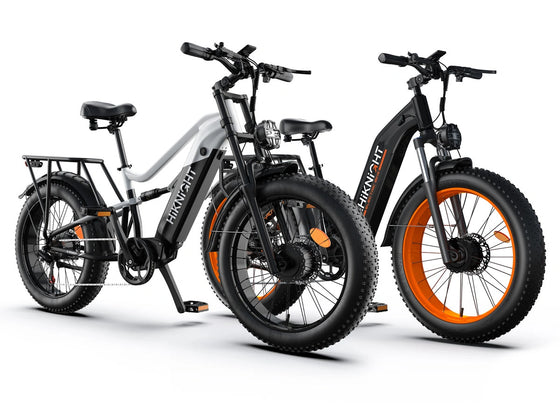
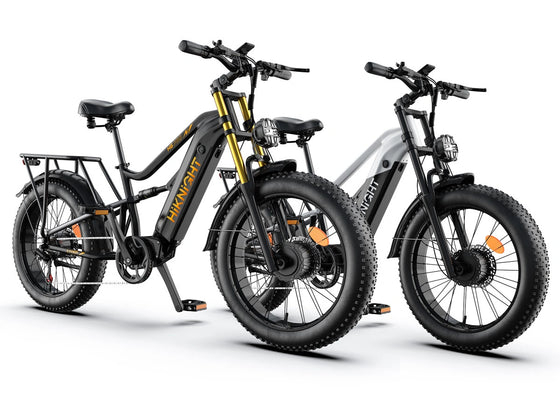
24" is an increasingly popular size for high-performance off-road e-bikes, and for good reason. It hits a balance point that larger wheels can't: enough diameter for obstacle clearance and momentum, but a shorter wheelbase that makes the bike more agile and responsive on technical terrain.
Best for: Off-road trail riding, aggressive terrain, riders who want a more playful, responsive feel. Also well-suited for riders in the 5'2"–6'2" (165–195 cm) range.
Why 24" works for off-road: On loose dirt, rocks, and roots, a slightly smaller wheel is easier to flick through corners and pivot around obstacles. Combined with a wide tire (4.0"+), a 24" wheel provides excellent traction without the unwieldy size of a 29" wheel on tight trails.

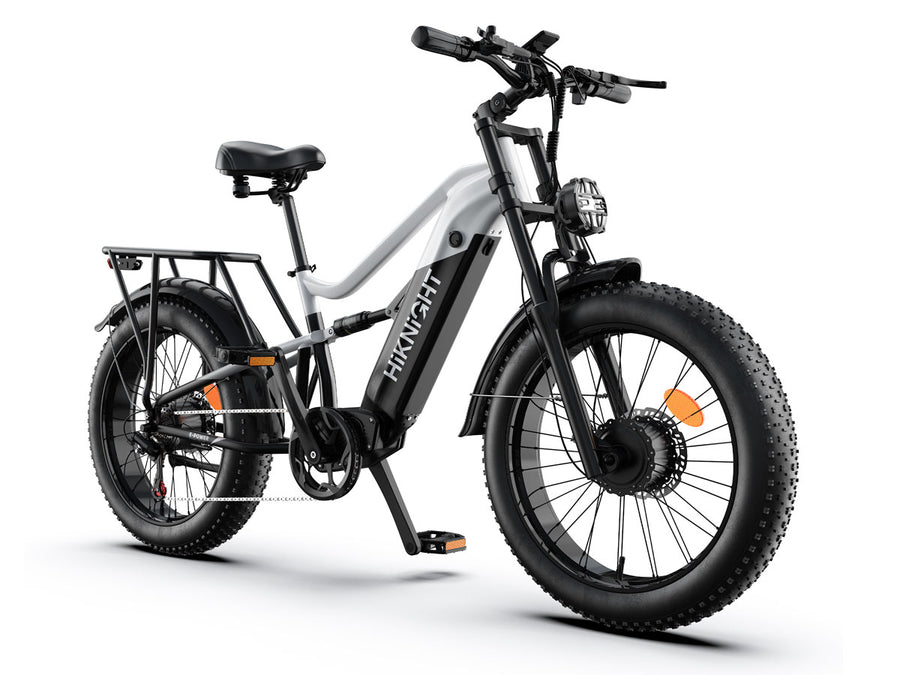
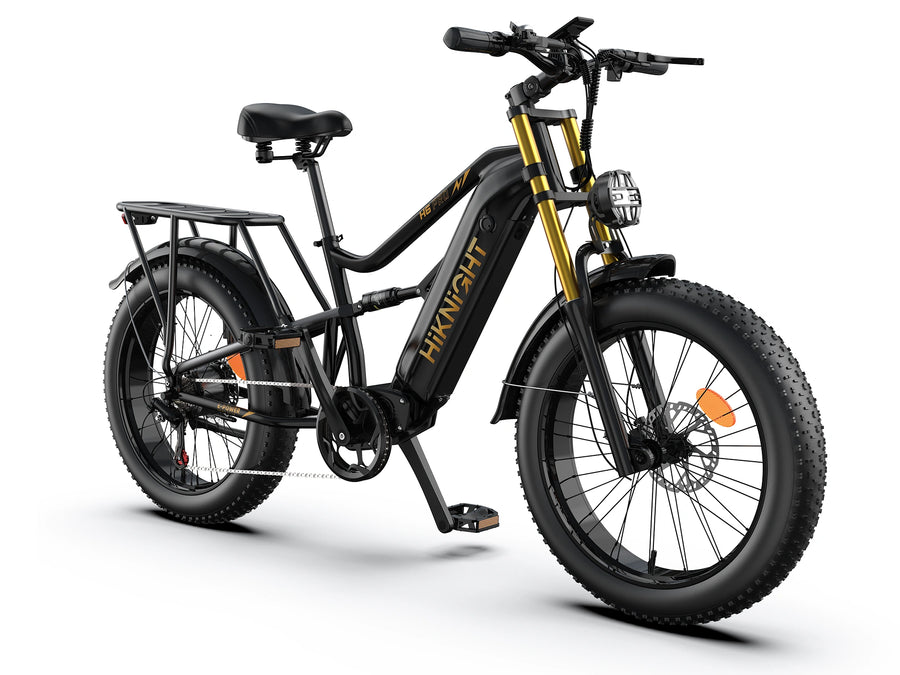
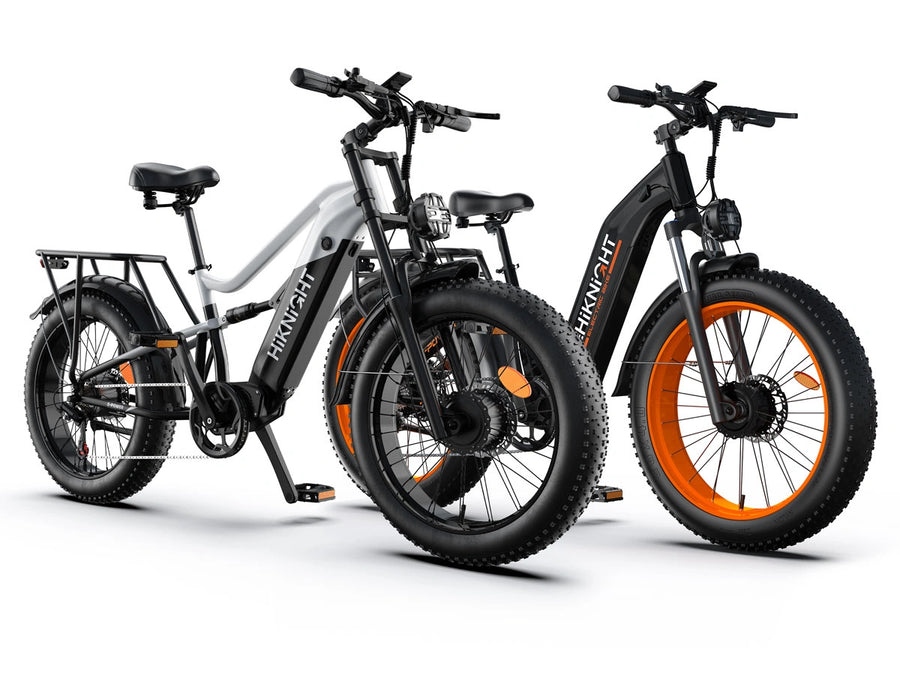
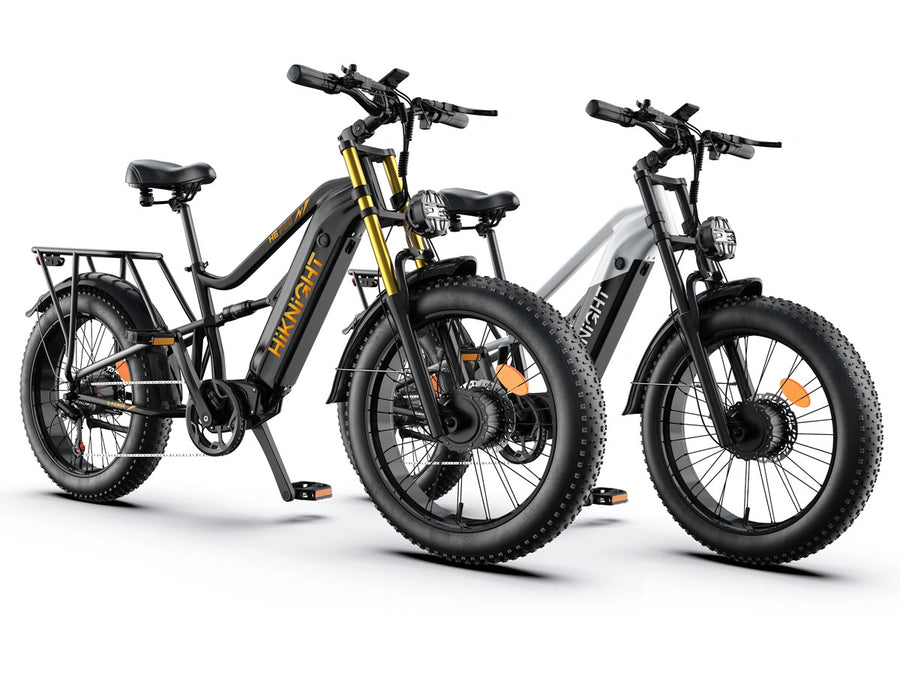
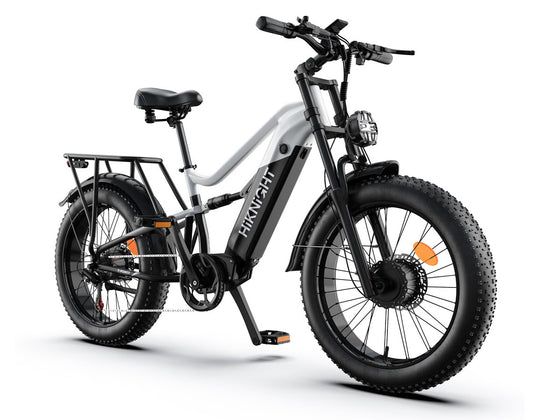
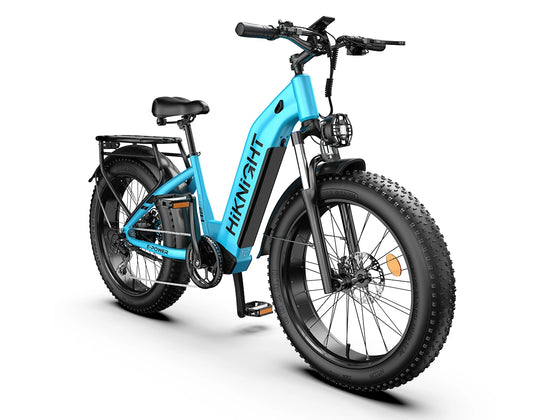
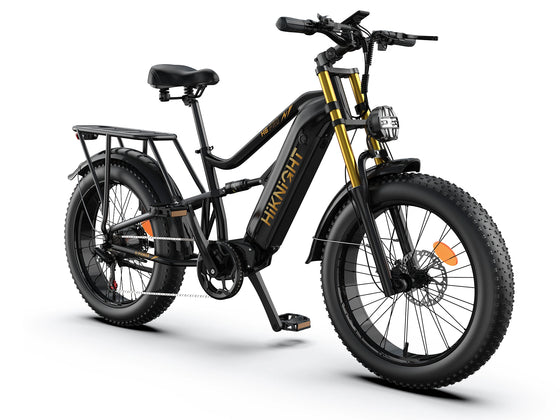
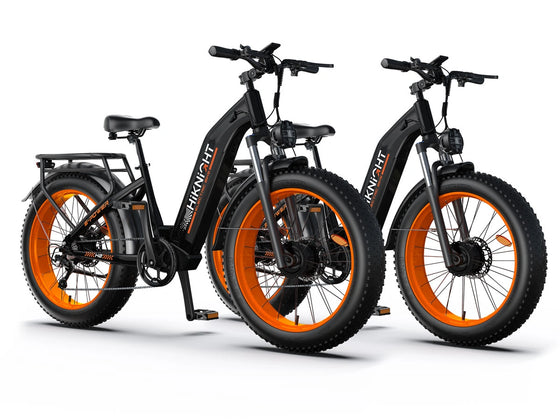
For example, the HiKNiGHT H6 Pro dual-motor fat tire off-road electric bike pairs 24×4.0-inch tires with dual 2,000W motors (4,000W peak), a 52V 20Ah battery, and 140 Nm torque. This configuration achieves a 40 MPH top speed while preserving agile handling on 35° incline slopes.
26" Wheels — The Fat Tire Standard
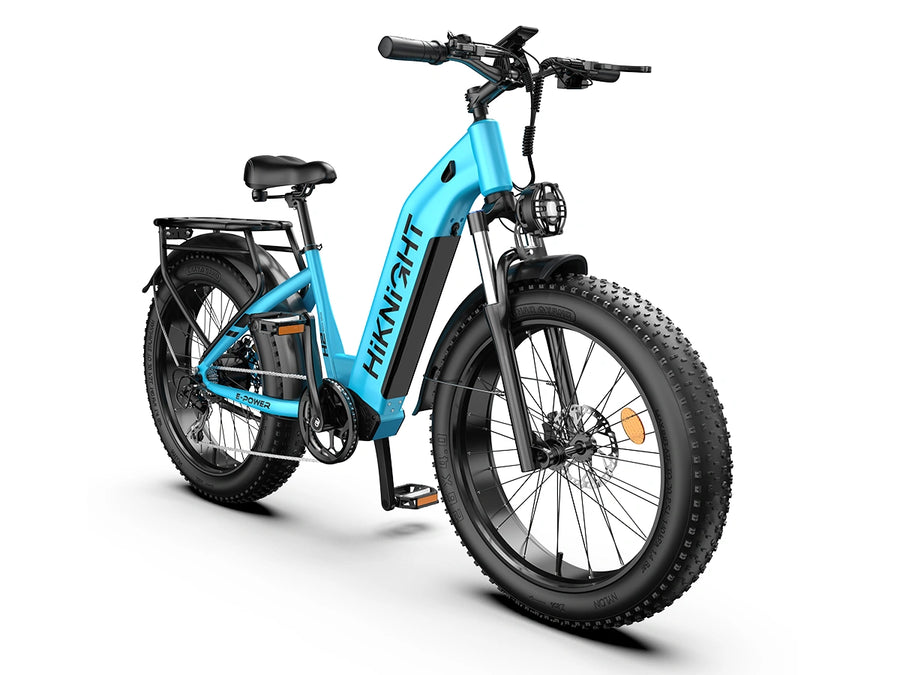
26" has been the dominant wheel size in mountain biking for decades, and it remains the most common size for fat tire e-bikes. The 26" rim paired with a 4.0"+ tire is the classic formula for off-road e-bikes designed to handle sand, snow, mud, and loose terrain.
Best for: Fat tire off-road riding, beach and sand riding, snow riding, riders who prioritize traction and float over speed.
Why 26" fat tires work: The combination of a 26" rim and a 4.0"–4.8" tire creates a large contact patch with the ground. This distributes the bike's weight over a wider area, reducing sinking into soft surfaces and dramatically improving grip on loose terrain.
Trade-offs: Heavier than narrower-tire alternatives. More rolling resistance on pavement. The extra weight of fat tires means the motor works harder, which can reduce range slightly.

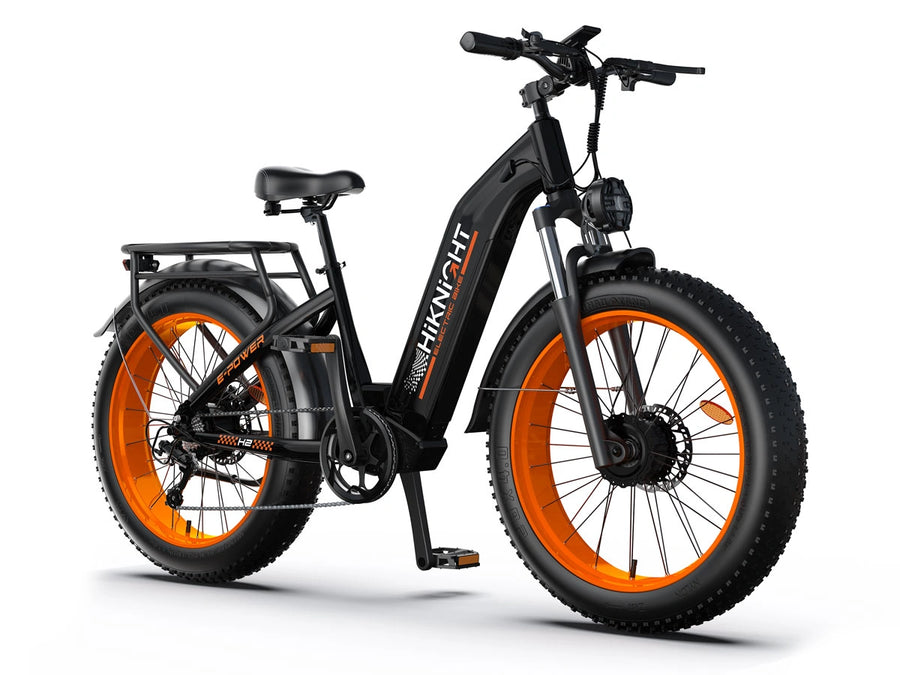
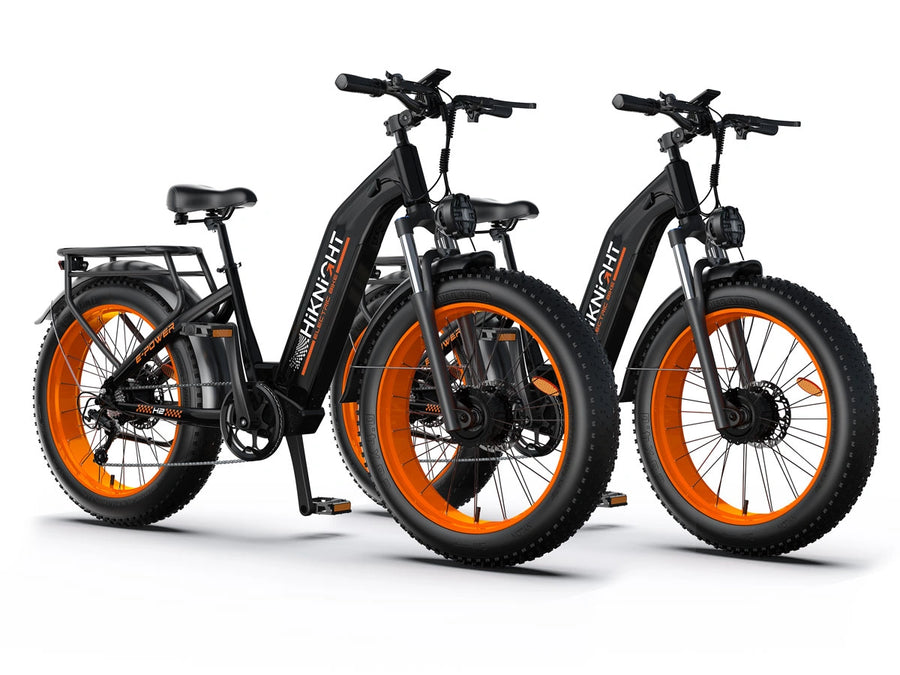
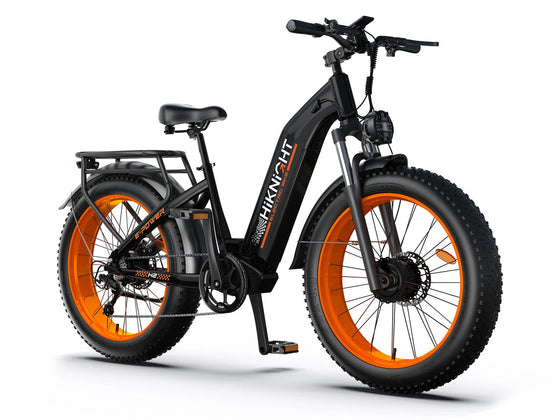
Riders looking for a classic full-size fat tire platform can check out the HiKNiGHT H2 Pro dual-motor fat tire electric bike. It equips 26×4.0-inch fat tires, dual 2,000W motors with 4,000W peak power, 140 Nm torque, and a 380 lbs payload capacity to ensure maximum stability on loose trails and heavy-duty rides.
27.5" Wheels — Trail Versatility
27.5" (also called 650b) emerged as a compromise between the agility of 26" and the roll-over capability of 29". It's become a popular size for trail-oriented e-MTBs that need to perform across a wide range of conditions.
Best for: Trail riding, mixed terrain, riders who want a versatile all-rounder that handles both technical sections and faster open trails.
Compared to 26": Rolls over obstacles more easily, maintains speed better on rough terrain, slightly less agile in very tight corners.
Compared to 29": More maneuverable, lighter, better suited for shorter riders or technical terrain. Slightly less efficient on long, smooth climbs.
27.5" is less common in the fat tire e-bike category but is widely used in trail e-MTBs with 2.4"–2.8" tires.
29" Wheels — Speed & Roll-Over
29" wheels (also called 29ers) are the largest common e-bike wheel size. They excel at maintaining momentum, rolling over obstacles, and covering ground efficiently on smoother terrain.
Best for: Cross-country riding, long-distance trail riding, taller riders (5'10"+), riders who prioritize efficiency and speed over technical agility.
Why 29" rolls better: A larger wheel contacts an obstacle at a shallower angle, which means less energy is lost deflecting around it. On a trail with roots and rocks, a 29" wheel rolls through where a smaller wheel would bounce or deflect.
Trade-offs: Heavier. Less agile in tight switchbacks. Can feel unwieldy for shorter riders. The larger wheel also means a longer wheelbase, which affects handling in technical terrain.
On e-bikes specifically: The motor compensates for the weight penalty of a 29" wheel, making this size more practical on e-bikes than on traditional bikes. Many e-MTBs use 29" wheels precisely because the motor negates the efficiency disadvantage.
Wheel Size vs. Tire Width: What's the Difference?
This is one of the most common points of confusion for new e-bike buyers. Wheel size (diameter) and tire width are two separate dimensions that together define the tire's overall character.
| Tire Width Category | Width Range | Best Use |
|---|---|---|
| Narrow / Road | 1.5" – 2.0" | Pavement, commuting, speed |
| Trail / All-Terrain | 2.1" – 2.8" | Mixed terrain, light off-road |
| Plus | 2.8" – 3.2" | Aggressive trail, moderate off-road |
| Fat | 3.8" – 5.0" | Sand, snow, mud, serious off-road |
A 26" x 4.0" fat tire and a 26" x 2.1" trail tire are both "26-inch" wheels, but they ride completely differently. The fat tire floats over soft terrain; the trail tire rolls faster on hard surfaces. When evaluating an e-bike, always look at both the diameter and the width.
How to Choose the Right Wheel Size for Your Riding Style
Here's a practical decision framework based on where and how you ride:
| Riding Context | Recommended Wheel Size | Why |
|---|---|---|
| Urban commuting | 20" or 26" (narrow tire) | Maneuverability, storage, speed |
| Sand / snow / mud | 26" fat tire | Maximum float and traction |
| Technical off-road / dirt | 24" fat tire | Agility + traction on tight trails |
| Mixed trail / all-rounder | 27.5" trail tire | Versatility across terrain types |
| Cross-country / long distance | 29" | Efficiency, roll-over, momentum |
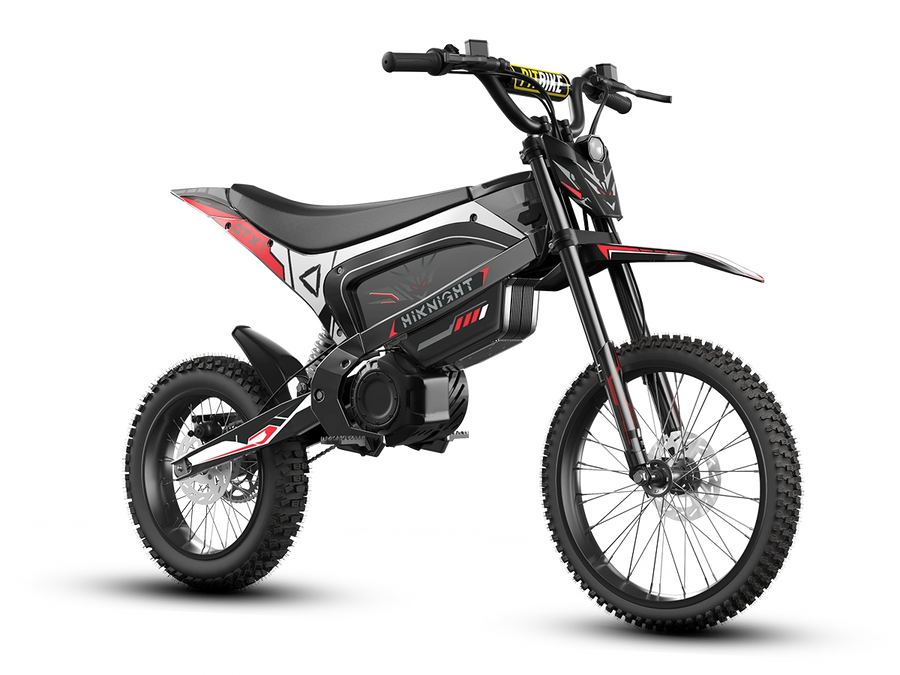
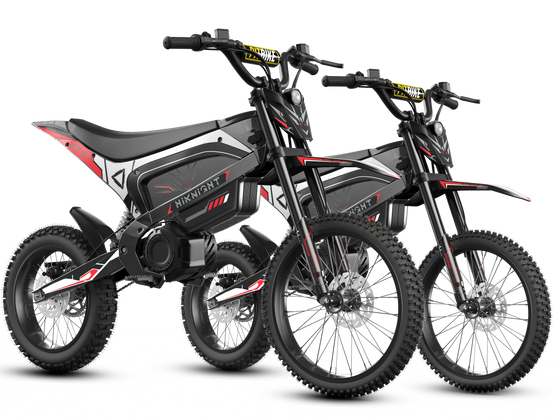
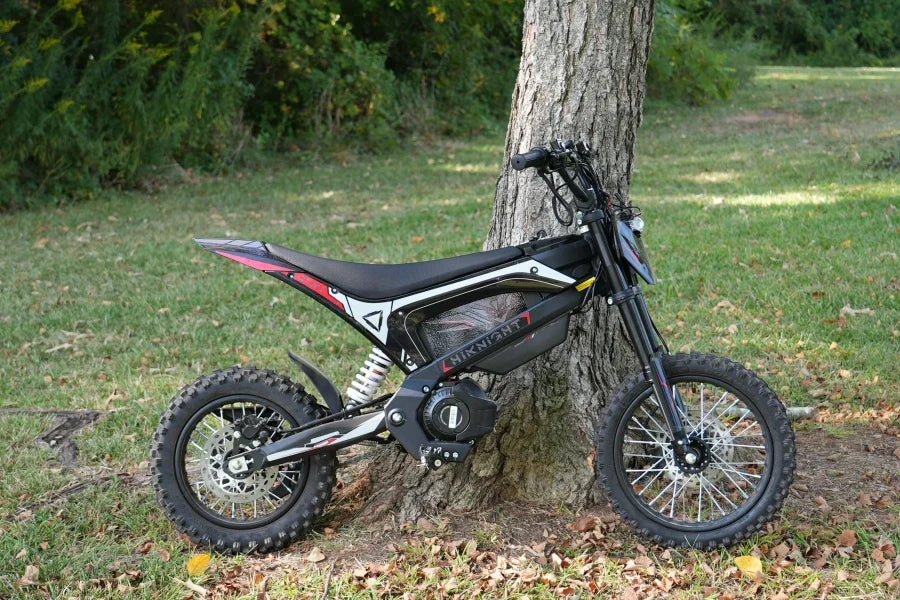
| Electric dirt bike / moto-style | 14" front / 12" rear | Moto geometry for extreme climbing & acceleration |
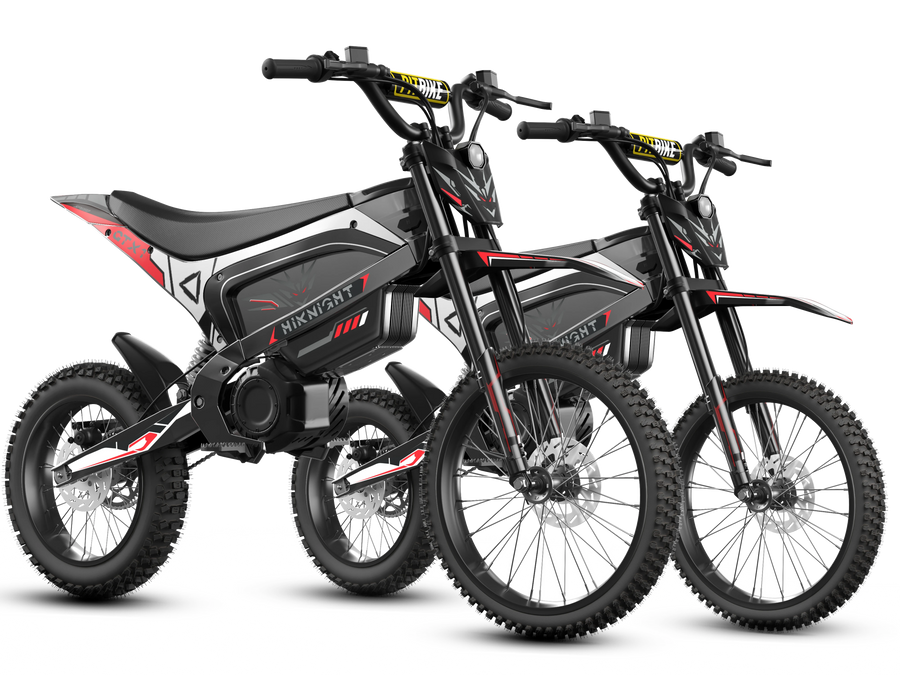
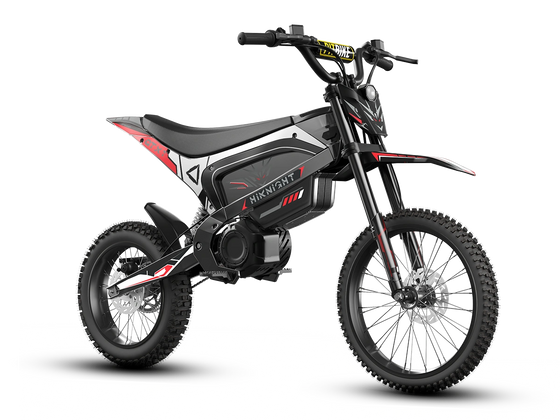
For aggressive off-road and dirt riders who prefer motocross geometry, wheel setups differ from traditional bicycles. The HiKNiGHT GTX1 electric dirt bike adopts a 14-inch front wheel and 12-inch rear wheel powered by a 4,000W mid-drive motor. With 220 Nm of torque and a 45° climbing capability, this compact moto-style wheel arrangement provides explosive acceleration and stability on steep, technical slopes.
One practical tip: if you're torn between two sizes, consider the terrain you'll ride most often, not the terrain you'll ride occasionally. A 29" wheel is great for cross-country, but if 70% of your riding is technical singletrack, a 27.5" or 24" will serve you better day-to-day.
Does Rider Height Affect Wheel Size Choice?
Yes — but it's less deterministic than most sizing charts suggest. Rider height matters more for frame size than wheel size. That said, there are some general guidelines worth knowing:
- Under 5'2": 20" or 24" wheels typically provide better standover height and control. A 29" wheel can feel unwieldy and make low-speed maneuvering harder.
- 5'2" – 5'8": 24", 26", or 27.5" all work well. Frame geometry matters more than wheel size at this height range.
- 5'8" – 6'2": All sizes work. 29" becomes more comfortable and proportional at this height.
- Over 6'2": 29" is generally the most comfortable and proportional. Smaller wheels can feel cramped on a large frame.
The more important factor is frame geometry — specifically standover height, reach, and stack. A well-fitted frame with a slightly non-ideal wheel size will always ride better than a poorly fitted frame with the "correct" wheel size.
FAQ — Frequently Asked Questions
What is the most common electric bike wheel size?
26" is the most common wheel size across all e-bike categories, largely due to its long history in mountain biking and its compatibility with fat tires. However, 27.5" and 29" are increasingly common on trail and cross-country e-MTBs, while 20" dominates the folding e-bike segment.
Is a bigger wheel always better on an e-bike?
No. Bigger wheels roll over obstacles more easily and maintain momentum better, but they're heavier, less agile, and can feel unwieldy on technical terrain or for shorter riders. The best wheel size depends on your terrain, riding style, and body proportions — not a universal "bigger is better" rule.
What's the difference between 26" and 27.5" e-bike wheels?
27.5" wheels are 1.5" larger in diameter, which gives them slightly better roll-over capability and momentum on rough terrain. 26" wheels are more agile and are the standard for fat tire configurations. In practice, the tire width often matters more than the 1.5" diameter difference.
Can I change the wheel size on my e-bike?
Generally, no — not without significant modifications. The frame, fork, and brake mounts are designed for a specific wheel diameter. Changing wheel size typically requires a new frame or fork, which is rarely practical or cost-effective. Choose the right wheel size when you buy.
Are fat tire e-bikes slower because of the bigger tires?
Fat tires create more rolling resistance on pavement, which can reduce top speed slightly. However, on the terrain fat tires are designed for — sand, mud, snow, loose dirt — they actually allow you to maintain speed where a narrow tire would lose traction entirely. The motor also compensates for much of the rolling resistance penalty.
What wheel size is best for off-road e-biking?
It depends on the type of off-road riding. For technical, tight trails: 24" fat tire. For general off-road and mixed terrain: 26" fat tire or 27.5" trail tire. For cross-country and smoother trails: 29". There's no single best answer — terrain type is the deciding factor.
Does wheel size affect e-bike range?
Indirectly, yes. Larger and heavier wheels (especially fat tires) require more motor effort, which draws more battery power. The effect is modest on flat terrain but more noticeable on climbs. A 26" fat tire bike will typically have slightly less range than a 29" narrow-tire bike with the same battery, all else being equal.
What wheel size do most off-road e-bikes use?
Most purpose-built off-road e-bikes use either 26" fat tires or 24" fat tires. The 26" format is the traditional standard; 24" is gaining popularity for high-performance off-road builds where agility and responsiveness are priorities. Electric dirt bikes (moto-style) often use different sizing conventions borrowed from motocross.
Share:
What's the Fastest Electric Bike? A Complete Guide to E-Bike Speeds (2026)
Meet the HiKNIGHT GTX1: Power, Safety, and Everything You Need to Know