



Table of Contents
- What Is a Youth Electric Bike?
- Why Age, Weight & Skill Level Matter More Than Price
- How to Read Ebike Specs as a Parent
- Youth Ebike Comparison: By Age Group & Riding Style
- Pros & Cons: Youth Ebike vs. Regular Bike vs. Gas-Powered Mini Bike
- Safety First: What to Look For Before You Buy
- Use Cases: Which Youth Ebike Fits Your Child?
- Buying Guide: 8 Questions Every Parent Should Ask
- When Is a Child Ready for an Electric Bike?
- FAQ
What Is a Youth Electric Bike?
A youth electric bike is a pedal-assist or throttle-equipped electric bicycle designed specifically for riders under 18 — typically sized, powered, and speed-limited to match a younger rider's physical capabilities and legal riding context. The category spans a wide range: from small 20" wheel models for 8–10 year olds, to full-size 26" fat tire bikes appropriate for teenagers 14 and up.
What separates a youth electric bike from an adult model isn't just frame size. It's the combination of motor power, top speed, weight, and control ergonomics that determines whether a bike is genuinely appropriate for a younger rider — or just a smaller version of something that's still too much to handle safely.
In 2026, the youth ebike market has matured significantly. Parents now have real choices between purpose-built youth models, scaled-down adult bikes, and entry-level fat tire ebikes that work well for older teens. Understanding the differences is the first step to making the right call.

Why Age, Weight & Skill Level Matter More Than Price
The most common mistake parents make when buying a youth electric bike is leading with budget or brand rather than fit. A $2,000 ebike that's too heavy, too fast, or too tall for your child is a worse purchase than an $800 model that fits perfectly.
Age & Cognitive Readiness
Electric bikes introduce throttle control, higher speeds, and heavier weight compared to regular bicycles. Most child development experts and ebike manufacturers recommend a minimum age of 14 for pedal-assist ebikes and 16+ for throttle-equipped models. Younger riders (8–13) are better served by lower-powered, speed-limited models with parental controls. In most US states, Class 1 and Class 2 ebikes (up to 20 mph) have no minimum age requirement, but local trail and path rules vary.
Weight & Frame Size
A bike that's too heavy for a child to control when the motor isn't running is a safety hazard. Most youth-appropriate ebikes weigh 35–55 lbs. Full-size adult fat tire ebikes (65–85 lbs) are generally appropriate only for teens 15+ who can confidently handle the weight. Standover height matters too — your child should be able to flat-foot or near-flat-foot the ground when seated.
Riding Experience & Skill Level
A child who has never ridden a regular bicycle should not start on an electric bike. The motor assist can accelerate faster than a new rider expects. The progression should be: balance bike → pedal bike → low-power ebike → higher-power ebike as skills develop.
How to Read Ebike Specs as a Parent
| Spec | What It Means | Youth-Safe Benchmark |
|---|---|---|
| Motor (W) | Peak power output | 250W–500W for ages 10–14; 500W–750W for teens 15+ |
| Top Speed | Maximum assisted speed | 15 mph for younger riders; 20 mph max for teens |
| Wheel Size | Affects stability & fit | 20" for ages 8–12; 24" for 12–15; 26" for 15+ |
| Bike Weight | Total weight with battery | Under 50 lbs for younger riders; 65 lbs max for teens |
| Brake Type | Stopping power & feel | Hydraulic disc preferred; mechanical disc acceptable |
| Assist Levels | Range of pedal assist modes | 5 levels preferred — start on Level 1 for new riders |
| Parental Controls | Speed limiting / lock features | Highly recommended for riders under 15 |
Youth Ebike Comparison: By Age Group & Riding Style
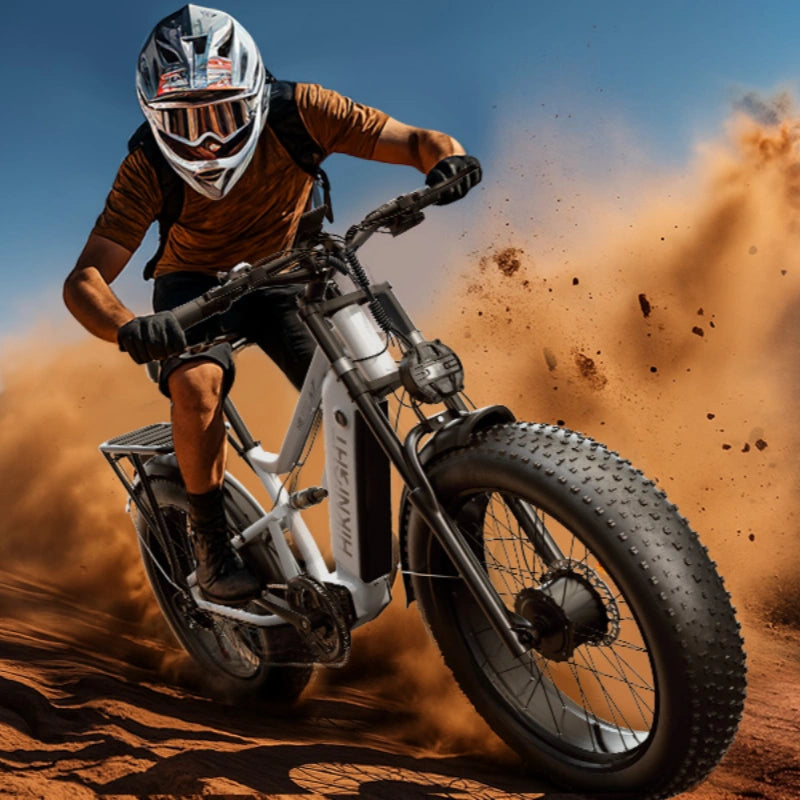
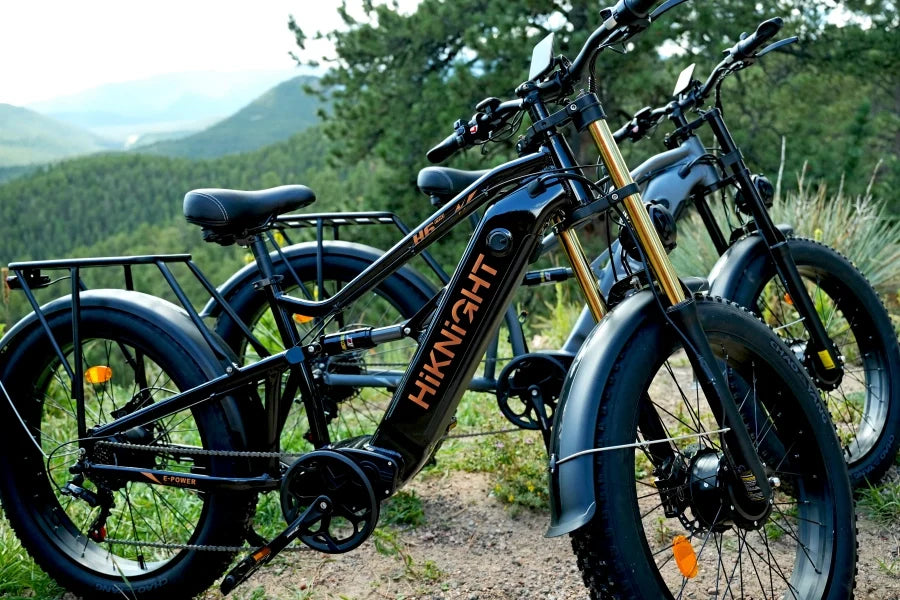
For older, advanced teens (16–18) looking for serious off-road performance, dual-motor models like the HiKNiGHT H6 Pro off-road ebike provide exceptional stability, dual suspension, and hill-climbing power on rough trails.
| Age Group | Wheel Size | Motor | Speed Limit | Terrain | Price Range |
|---|---|---|---|---|---|
| 8–11 years | 20" | 250W | 12–15 mph | Pavement, flat paths | $400–$900 |
| 12–14 years | 24" | 350W–500W | 15–20 mph | Pavement, light gravel | $700–$1,500 |
| 15–17 years | 26" | 500W–750W | 20–28 mph | Mixed terrain, trails | $1,200–$2,800 |
| 16–18 (advanced) | 26" | 750W–1000W | Up to 28 mph | All terrain, off-road | $1,800–$3,500 |
Pros & Cons: Youth Ebike vs. Regular Bike vs. Gas-Powered Mini Bike
Youth Electric Bike — Pros
- Pedal assist makes hills and longer distances manageable — kids actually use it
- Near-silent operation — no noise complaints from neighbors
- No fuel costs — charge from a standard outlet for pennies per ride
- Street-legal in most states without registration (Class 1/2)
- Builds cycling habits and independence in teens
- Speed-limiting features available on many models for parental peace of mind
Youth Electric Bike — Cons
- Heavier than regular bikes — harder to handle if the battery dies
- Higher upfront cost than a standard bicycle
- Battery replacement cost ($200–$500) after 3–5 years
- Not all models have effective parental speed controls
- Some trails and paths restrict ebikes — check local rules
Regular Bicycle — Pros & Cons
- Lighter, easier to handle and carry; lower cost; better for building fitness
- But: hills and long distances can discourage younger or less fit riders
Gas-Powered Mini Bike — Pros & Cons
- Unlimited range and higher performance ceiling for experienced young riders
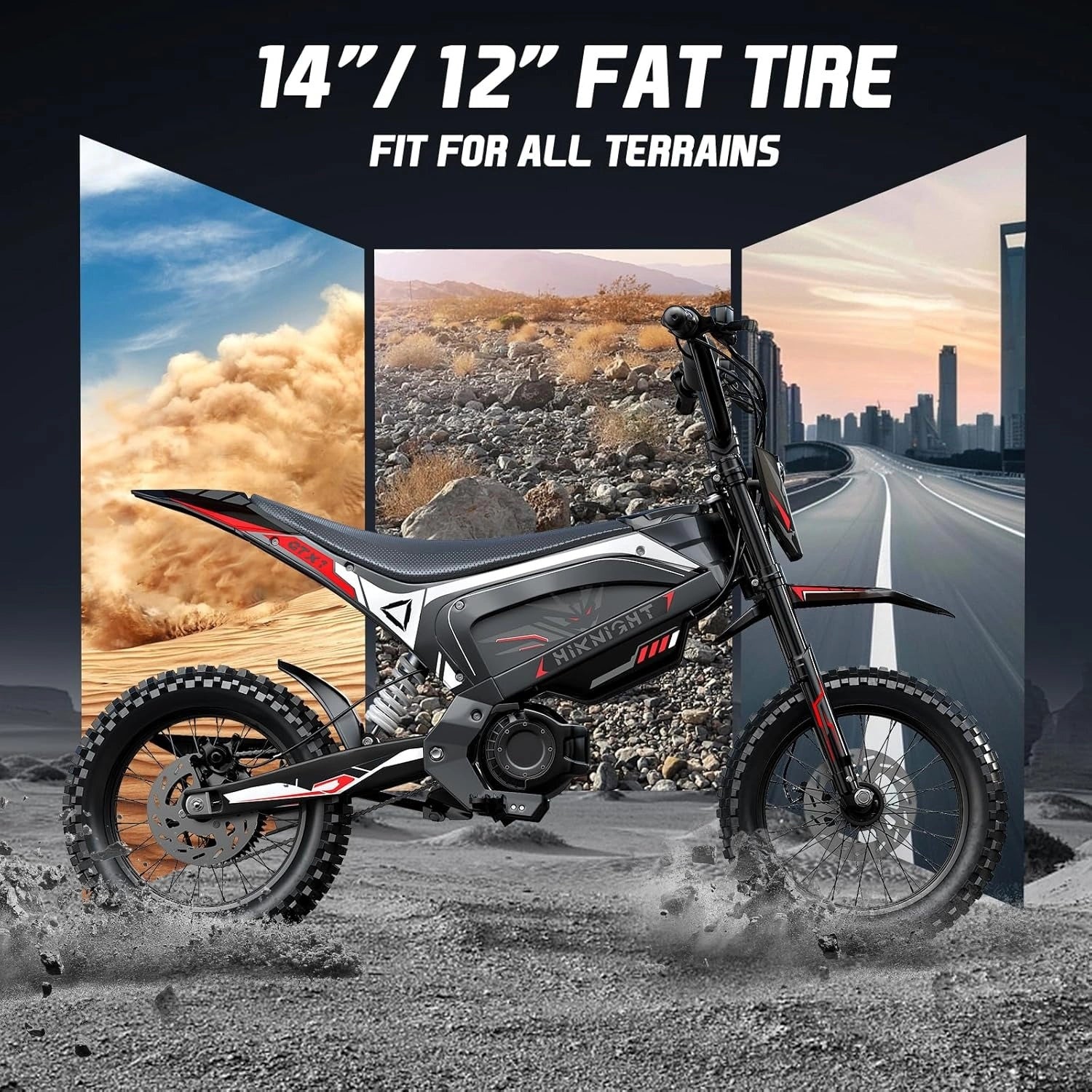
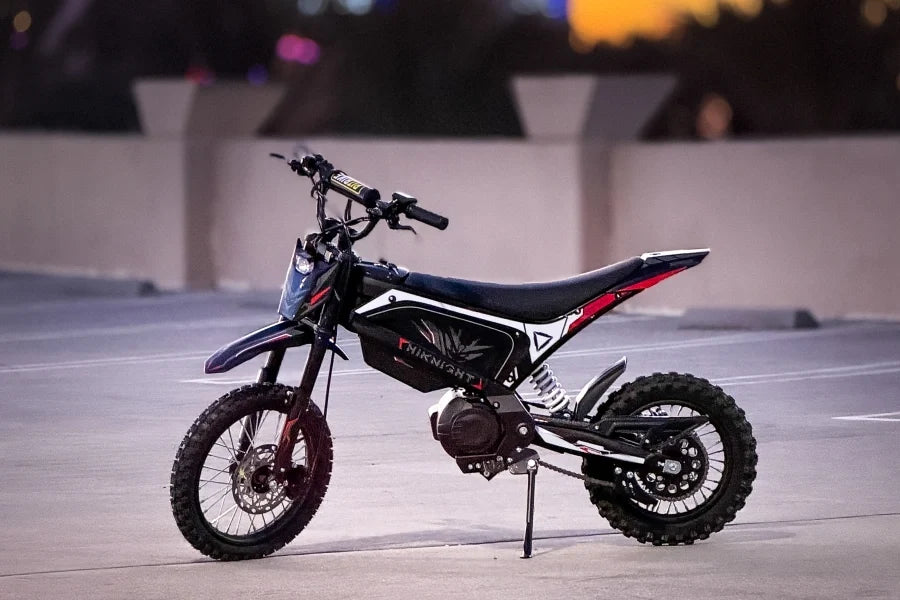
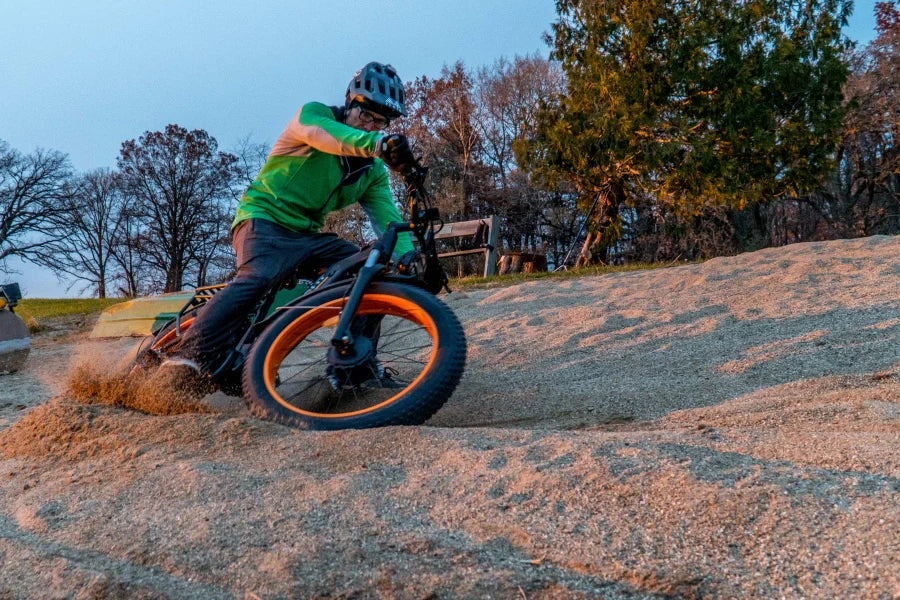
- But: loud, not street-legal in most configurations, higher maintenance, requires registration. If your teen is focused strictly on off-road riding on private land, purpose-built electric pit bikes like the HiKNiGHT GTX1 electric dirt bike offer clean, quiet performance without gas engine hassle.
Safety First: What to Look For Before You Buy
1. Hydraulic or Mechanical Disc Brakes
Electric bikes are heavier and faster than regular bicycles. Look for hydraulic disc brakes on any youth ebike over 500W or capable of 20+ mph. Mechanical disc brakes are acceptable for lower-speed models.
2. Speed Limiting / Parental Controls
Many quality youth ebikes allow you to set a maximum speed via the display or a companion app. This is one of the most important features for riders under 15. If a bike doesn't offer this, factor in whether you trust your child to self-regulate at full speed.
3. Frame Geometry & Standover Height
Your child should be able to touch the ground flat-footed or near-flat-footed when seated. A bike that's too tall creates a dangerous situation when stopping suddenly. Always check the manufacturer's recommended rider height range.
4. Integrated Lights
If your teen will ride at dusk or in low-light conditions, integrated front and rear lights are essential. Many youth ebikes include these; some don't. Don't assume — verify.
5. Helmet & Protective Gear
Non-negotiable. At minimum: a properly fitted bicycle helmet. For riders going 20+ mph or riding off-road, a full-face helmet, knee pads, and gloves are strongly recommended. The bike purchase isn't complete without the gear budget.
6. Weight Capacity
Most youth ebikes support 220–265 lbs. If your teen is on the heavier side, verify the limit — exceeding it affects braking distance and frame integrity.
Use Cases: Which Youth Ebike Fits Your Child?
Neighborhood & School Commuter (Ages 13–17)
Your teen wants to ride to school or a friend's house on paved roads. Distance is 2–8 miles each way.
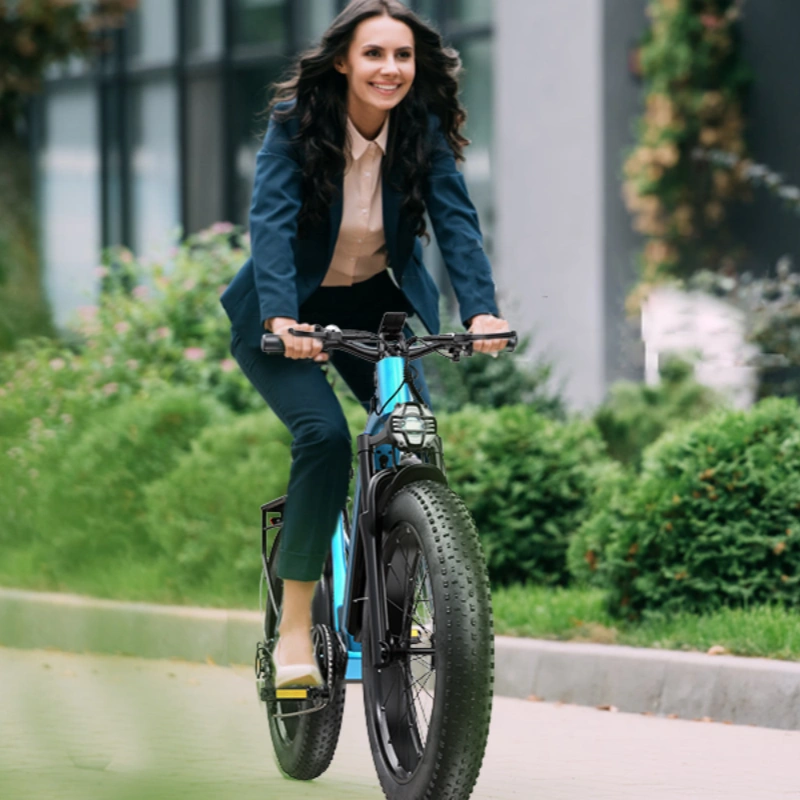
Best fit: 24"–26" commuter-style ebike, 350W–500W, Class 2 (20 mph max). Prioritize integrated lights, fenders, and a rear rack.
Trail & Adventure Rider (Ages 15–18)
Your teen is an experienced cyclist who wants to explore trails and mixed terrain. They're physically mature with solid bike-handling skills.
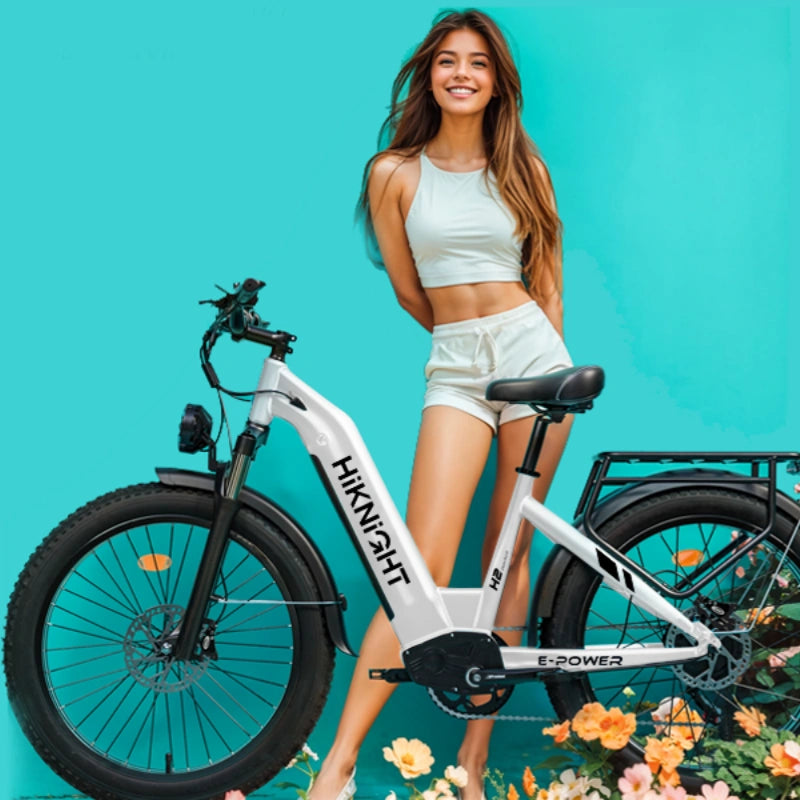
Best fit: 26" fat tire ebike, 500W–750W. A model like the HiKNiGHT H2 Pro fat tire electric bike — with 26" fat tires, suspension fork, and powerful dual motors — is a genuine option for older teens ready for adult-level capability with appropriate supervision.
Family Riding (Ages 12–16, Riding with Parents)
You want a bike your child can ride alongside you on family outings on mixed terrain.
Best fit: 24"–26" fat tire ebike with 5-level assist. Dialing down to Level 1 or 2 keeps pace manageable for younger riders.
Casual / Recreational Rider (Ages 10–14)
Your child wants to ride around the neighborhood and explore local paths.
Best fit: 20"–24" purpose-built youth ebike, 250W–350W, speed-limited to 15 mph. Prioritize fit, weight, and parental controls over performance specs.

Buying Guide: 8 Questions Every Parent Should Ask
1. What is my child's inseam and height?
This determines frame and wheel size before anything else. Compare your child's inseam to the manufacturer's standover height. A 2–3" clearance is ideal. Buy a bike that fits now, not one they'll "grow into."
2. Where will they actually ride?
Pavement only → commuter-style. Mixed terrain → fat tire or hybrid. Trails → fat tire with suspension. Terrain determines tire width and suspension needs more than any other factor.
3. Does this bike have a speed limiter or parental control?
If your child is under 15, this is a must-have. Ask specifically — don't assume. Some brands advertise "youth" models with no speed-limiting capability whatsoever.
4. How heavy is the bike?
Have your child push and maneuver the bike without motor assistance before buying. If they can't, it's too heavy. This matters most when parking, carrying up stairs, or recovering from a tip-over.
5. What is the real-world range?
Apply the 60–70% rule to any claimed range figure. For a teen commuting 5 miles each way, a 20-mile real-world range is fine. For weekend adventures, aim for 30–40 miles.
6. What does the warranty cover?
Look for at minimum: 1-year frame, 1-year battery, 1-year motor warranty. Brands offering 2-year battery coverage are worth the premium — battery replacement is the biggest long-term cost.
7. Is there US-based customer support?
Youth ebikes get crashed and ridden hard. Verify the brand has US-based support and that replacement parts (especially batteries and displays) are available domestically.
8. What safety gear is included in your budget?
A $1,200 ebike budget should realistically be a $1,000 bike + $200 helmet and pads. A quality youth helmet runs $60–$150; full-face helmets for off-road use run $150–$400.
When Is a Child Ready for an Electric Bike?
- Can they ride a regular bicycle confidently? If not, start there. An ebike amplifies both capability and risk.
- Do they understand and follow traffic rules? Stopping at intersections, signaling turns, yielding to pedestrians — these habits must be established before adding motor assist.
- Can they handle the bike's weight? Have them push and maneuver the bike without motor assistance. If they can't, it's not the right bike yet.
- Are they emotionally ready for the responsibility? An ebike is not a toy. It requires the same level of responsibility as a moped or scooter.
- Have you established clear rules together? Helmet always, no riding after dark without lights, no passengers, speed limits in certain areas. Rules set before the first ride are far more effective than rules set after the first incident.
FAQ: Youth Electric Bike
Q: What age is appropriate for a youth electric bike?
A: Most manufacturers recommend a minimum age of 14 for pedal-assist ebikes and 16+ for throttle-equipped models. However, maturity, riding experience, and physical size matter more than age alone. Always prioritize fit and skill level over age.
Q: Do kids need a license to ride an electric bike?
A: In most US states, Class 1 and Class 2 ebikes (up to 20 mph) do not require a license, registration, or insurance for riders of any age. Class 3 ebikes (up to 28 mph) have more restrictions — some states require riders to be 16+. Always check your specific state and local regulations.
Q: How fast should a youth electric bike go?
A: For riders under 14, a maximum speed of 15 mph is generally appropriate. For teens 14–16, 20 mph (Class 2) is reasonable with proper gear and supervision. For older teens 16+, Class 3 speeds (28 mph) may be appropriate depending on skill level and environment.
Q: Can a 12-year-old ride an electric bike?
A: Yes, with the right bike. A 12-year-old who is a confident cyclist can safely ride a properly sized, speed-limited youth ebike (250W–350W, 15 mph max, 24" wheels). The key is matching the bike to their size and skill level.
Q: Are electric bikes safe for teenagers?
A: Yes, when properly matched to the rider's size and skill level, and when appropriate safety gear is worn consistently. The main risk factors are bikes that are too powerful for the rider's experience, riding without helmets, and riding in traffic before developing adequate road awareness.
Q: How long does a youth ebike battery last per charge?
A: Most youth ebikes deliver 20–40 miles of range per charge in pedal-assist mode. For a teen commuting 5 miles each way to school, this means charging every 2–4 days. Charge time is typically 3–5 hours from a standard outlet.
Q: Can my teen ride an electric bike to school?
A: In most cases, yes — Class 1 and Class 2 ebikes are treated as bicycles under US law and can use bike lanes and paths. However, some school districts have specific policies about ebikes on campus. Check with your school before the first day of riding.
Q: What's the difference between a youth electric bike and a regular adult ebike?
A: Primarily frame size, wheel size, motor power, and speed limits. Purpose-built youth models have lower standover heights, lighter frames, and often lower maximum speeds. Many older teens (15+) can comfortably ride entry-level adult ebikes or purpose-built off-road models like the HiKNiGHT GTX1 — the distinction becomes less meaningful as riders approach adult size and skill levels.




Leave a comment
All comments are moderated before being published.
This site is protected by hCaptcha and the hCaptcha Privacy Policy and Terms of Service apply.