






Fat tire bikes have moved far beyond their niche origins. What began as a solution for snow and sand has evolved into one of the most versatile categories in modern cycling—especially in the electric bike world.
Yet for many riders, fat tire bikes still come with confusion. Are they slower? Are they only for extreme terrain? Do the benefits outweigh the extra weight and rolling resistance?
This article cuts through assumptions and marketing noise. We’ll explore what fat tire bikes are actually designed to do, where they excel, where they don’t, and how modern high-performance electric platforms have reshaped their role 🚴♂️.
What Are Fat Tire Bikes, Exactly?
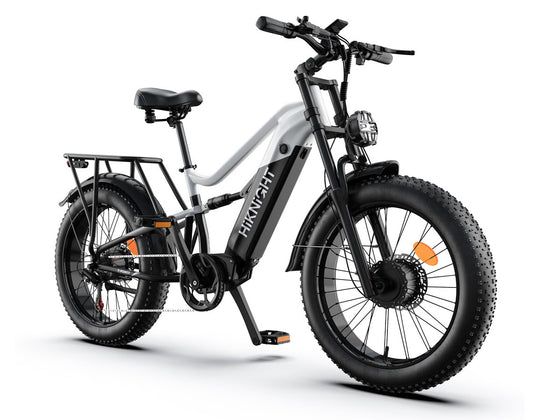
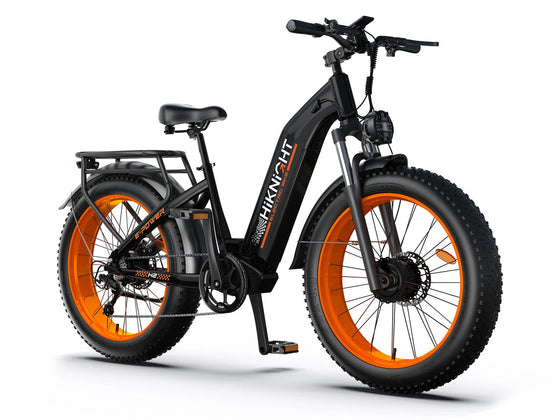
At the simplest level, fat tire bikes are bicycles equipped with extra-wide tires—typically 4 inches or wider—mounted on reinforced rims and frames designed to support them.
But tire width alone doesn’t explain their purpose.
Fat tires are about surface adaptation. By increasing the contact patch between the tire and the ground, these bikes distribute weight more evenly. The result is better traction, improved stability, and a noticeable reduction in how much the terrain “pushes back” against the rider.
This is why fat tire bikes feel so different from standard mountain or commuter bikes, especially when conditions are unpredictable.
Fat Tire Bikes vs. Fat Wheel Bikes: Is There a Difference?
You’ll often see the terms fat tire bikes and fat wheel bikes used interchangeably. Technically, they describe the same category.
However, some riders use fat wheel bikes to emphasize the complete wheel system—tires, rims, hubs, and spokes—rather than just tire width. This distinction matters more in electric bikes, where motor torque, wheel strength, and heat dissipation all interact.
In short:
- Fat tire bikes focus on tire width and terrain capability
- Fat wheel bikes focus on the entire load-bearing wheel system
High-performance e-bikes tend to prioritize the latter, even if the naming stays casual.
Why Riders Choose Fat Tire Bikes
Traction Where Other Bikes Struggle
Loose surfaces—snow, sand, mud, gravel—are where fat tire bikes shine. The wider tire footprint reduces sinking and slipping, allowing riders to maintain control where narrow tires would fail.
For electric bikes, this traction becomes even more valuable. High torque without grip is wasted power. Fat tires help convert motor output into forward motion instead of wheel spin.
Stability and Confidence
Fat tire bikes are inherently forgiving. The tires absorb vibrations, smooth out uneven ground, and reduce sudden jolts. This creates a more planted, predictable riding feel.
For adult riders, especially those new to high-power e-bikes, this added confidence is often more important than outright speed.
Year-Round Versatility
While fat tire bikes are often associated with winter, their real strength is adaptability. Riders who don’t want separate bikes for pavement, trails, and seasonal conditions often gravitate toward fat tire platforms.
The Common Criticisms—and When They’re Valid
Increased Rolling Resistance
On smooth pavement, wide tires require more energy to maintain speed. This is physics, not a design flaw.
However, modern electric fat tire bikes mitigate this through:
- High-capacity batteries
- Efficient motor tuning
- Intelligent power delivery systems
The result is that real-world performance often feels far less compromised than expected.
Added Weight
Fat tire bikes tend to be heavier due to reinforced components. For purely human-powered bikes, this matters. For electric bikes, weight becomes a secondary concern when balanced with torque and battery capacity.
How Electric Power Changes the Fat Tire Equation
Electric assistance fundamentally reshapes what fat tire bikes can be.
What used to be a trade-off—traction versus efficiency—now becomes a balanced system. High-output motors compensate for rolling resistance, while fat tires stabilize power delivery.
This is especially true for dual-motor designs, where power is distributed rather than concentrated.
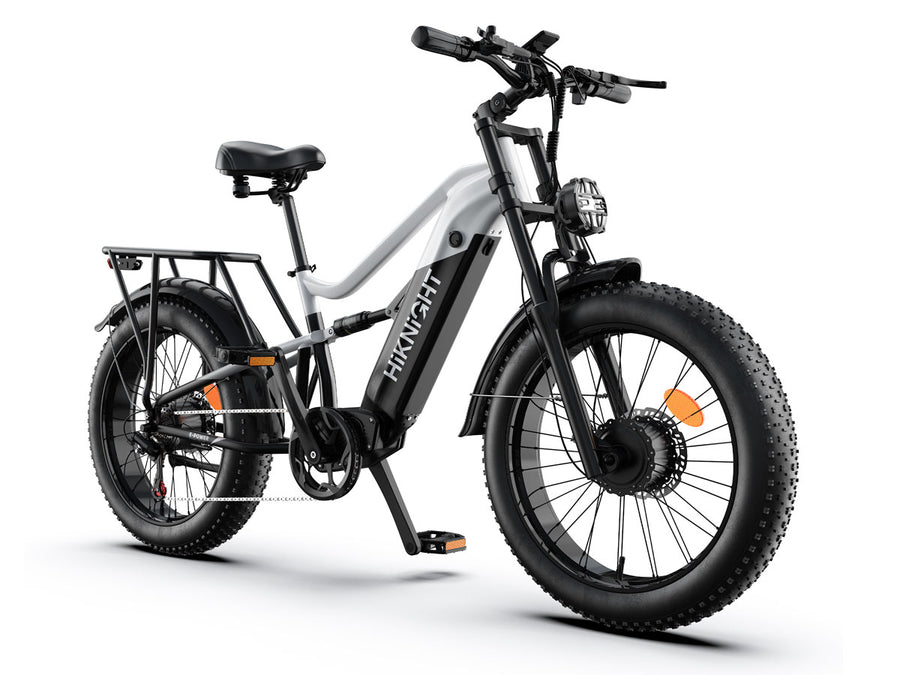
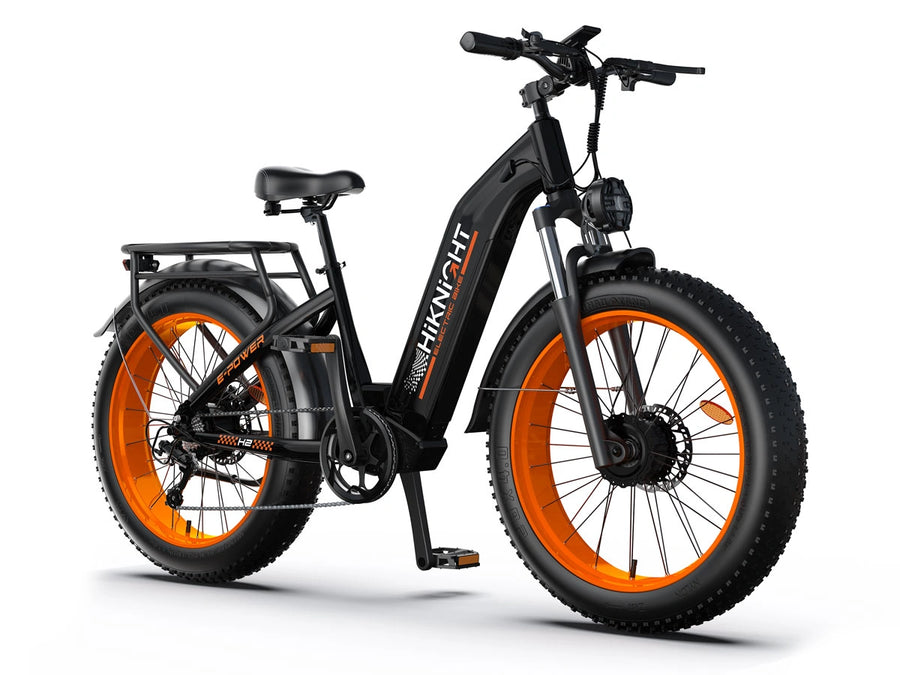
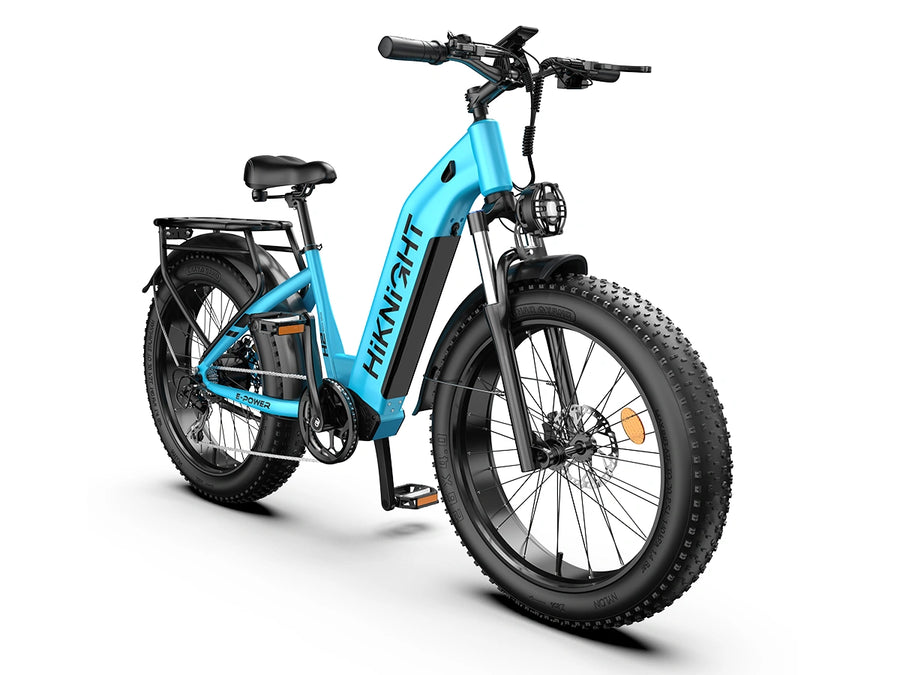
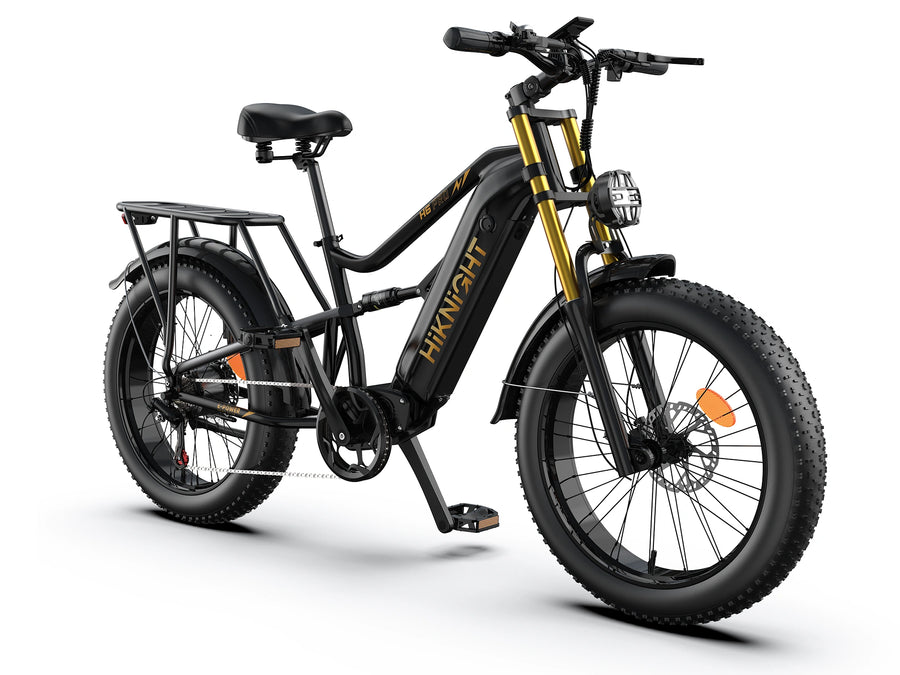
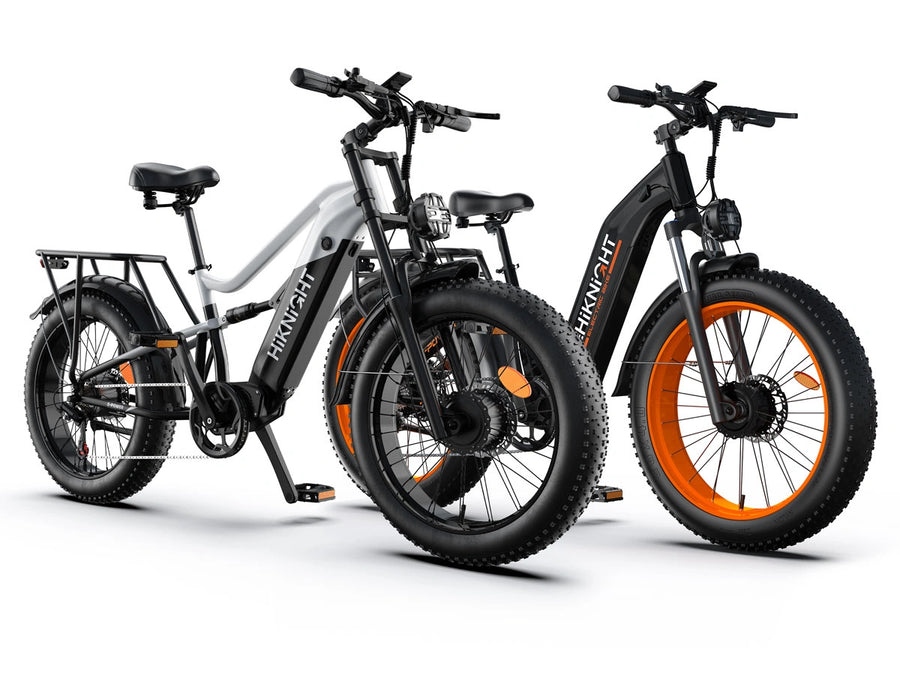
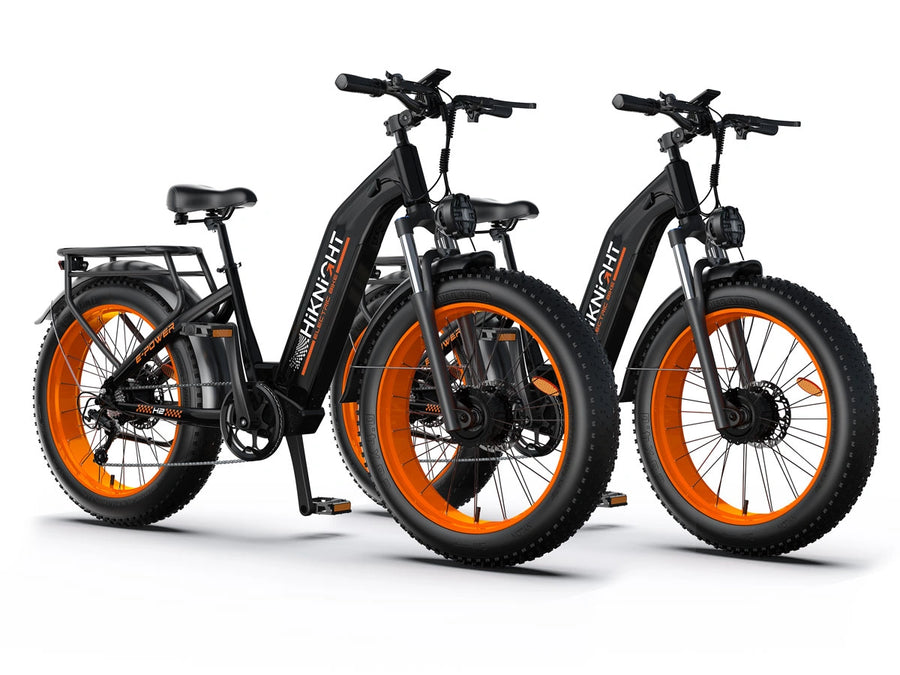
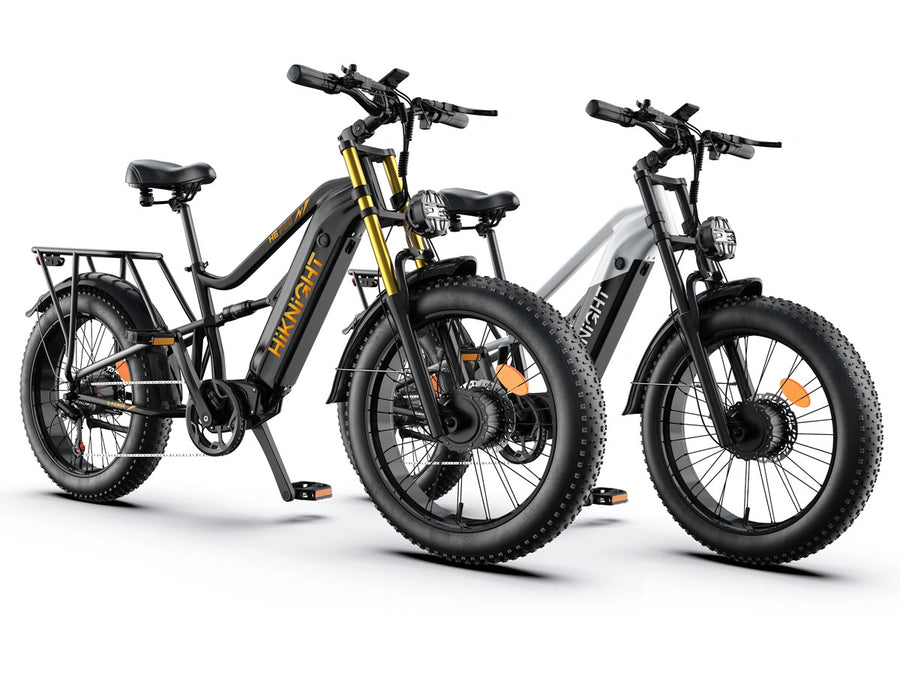
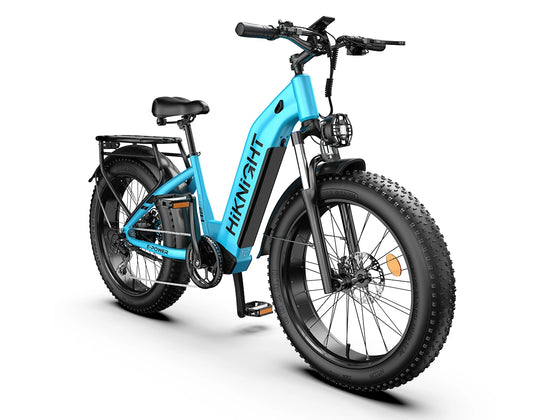
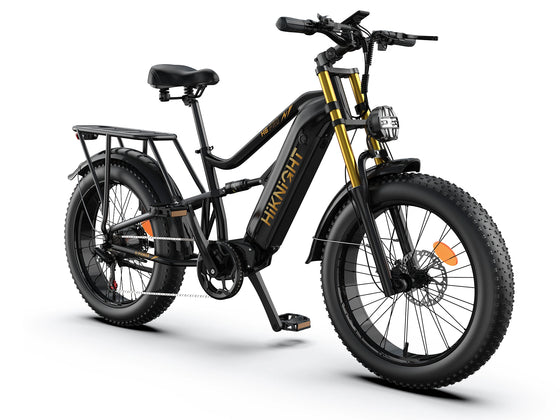
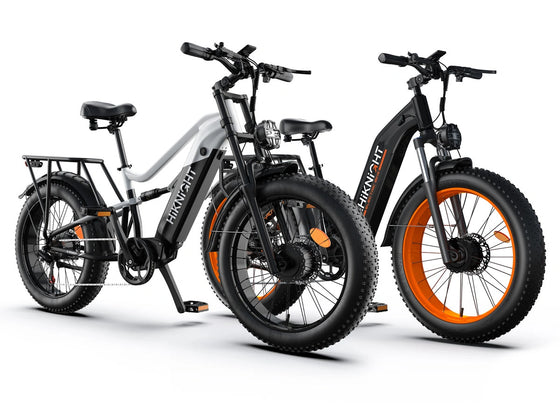
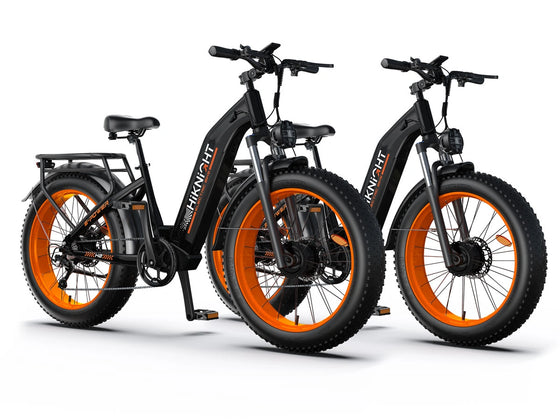
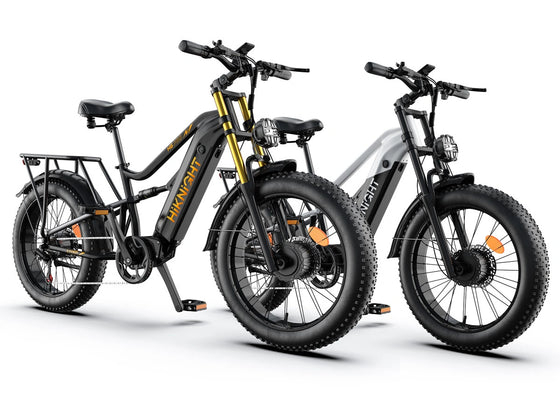
Bikes like the HiKNiGHT H2 Pro and H6 Pro are built around this philosophy, using fat tire platforms not as accessories, but as core performance components.
You can explore the full HiKNiGHT lineup at:
https://hiknightebike.com/
Who Should Consider Fat Tire Electric Bikes?
Fat tire e-bikes make the most sense for riders who:
- Ride on mixed or unpredictable terrain
- Value stability over minimal weight
- Use throttle or high assist levels
- Ride in colder or wetter conditions
- Prefer one bike that adapts rather than specializes
They’re less ideal for riders focused exclusively on lightweight urban commuting or racing efficiency.
Real-World Examples: H2 Pro and H6 Pro
HiKNiGHT H2 Pro
The H2 Pro is designed for riders who want power, traction, and range without committing exclusively to off-road riding. Its fat tire setup supports both pavement and trails, while the dual-motor system ensures consistent output under load.
HiKNiGHT H6 Pro
The H6 Pro pushes deeper into off-road territory. Its geometry and power delivery are optimized for riders who expect their bike to perform where conditions change quickly and surfaces are rarely ideal.
Are Fat Tire Bikes Slower?
On paper, yes—under very specific conditions.
In reality, the difference matters far less than most riders assume. Once terrain, rider weight, weather, and riding style are factored in, fat tire bikes often deliver more usable speed, not less.
Speed that can’t be controlled or maintained isn’t speed—it’s stress.
Buying Timing: Why Winter Is Underrated ❄️
If you’re considering a fat tire electric bike, winter can be one of the smartest times to buy.
Manufacturers often offer deeper discounts, inventory availability improves, and the bike is ready when peak riding season returns. HiKNiGHT is currently running a Winter Sale 2026 with discounts of up to 70% off.
Final Thoughts: Fat Tire Bikes Are About Capability, Not Extremes
Fat tire bikes aren’t just for snow or sand. They’re for riders who want consistency across conditions and confidence when the ride doesn’t go as planned.
When paired with modern electric systems, they become less about compromise and more about freedom—freedom to ride longer, farther, and with fewer limitations.
Share:
Long Range Electric Bikes: What “Real Range” Means and How to Choose One That Lasts
Are Electric Dirt Bikes Street Legal? What Adult Riders Really Need to Know