

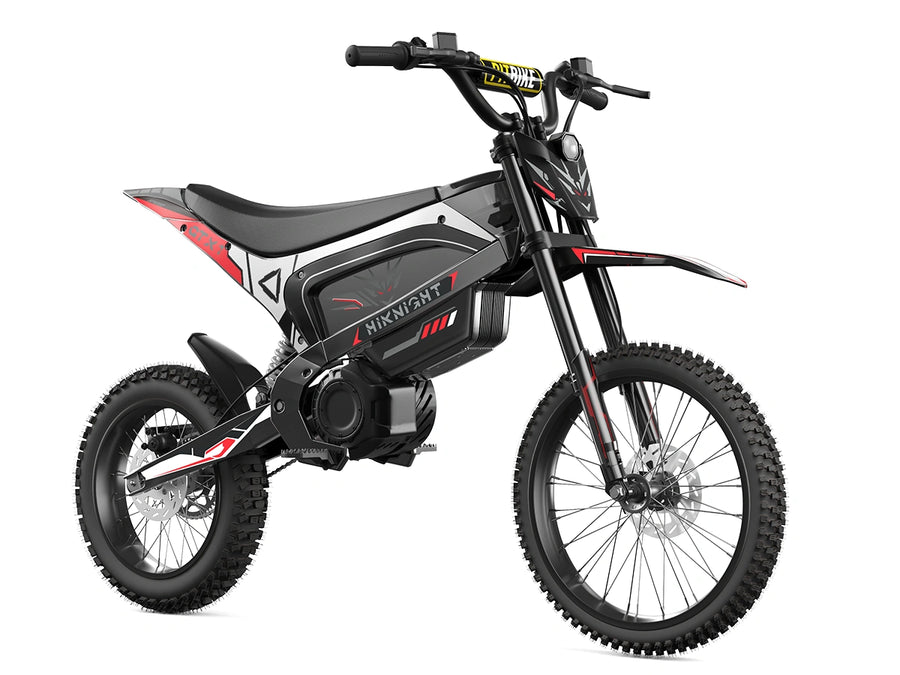
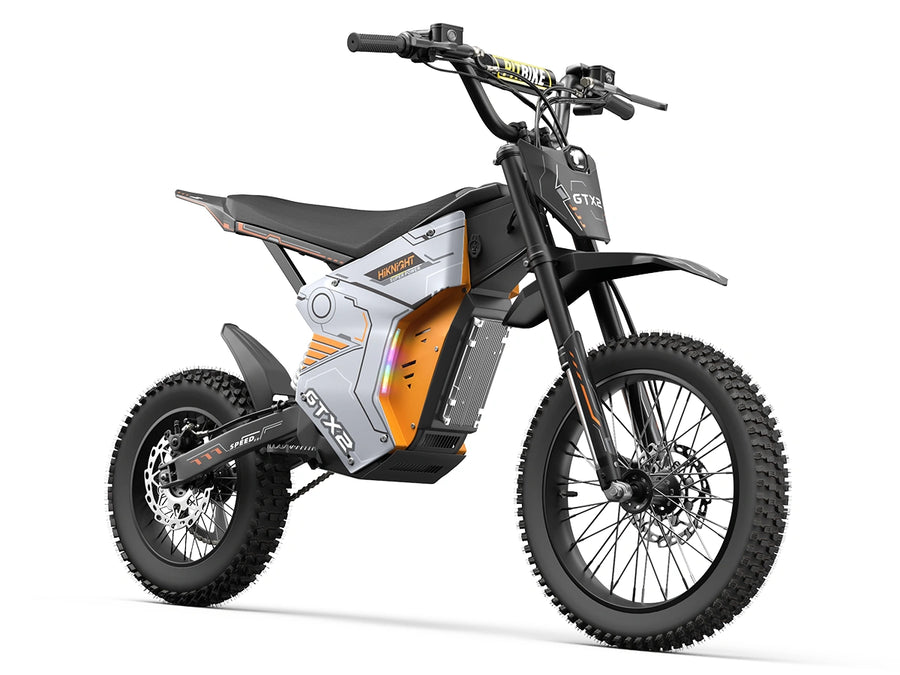

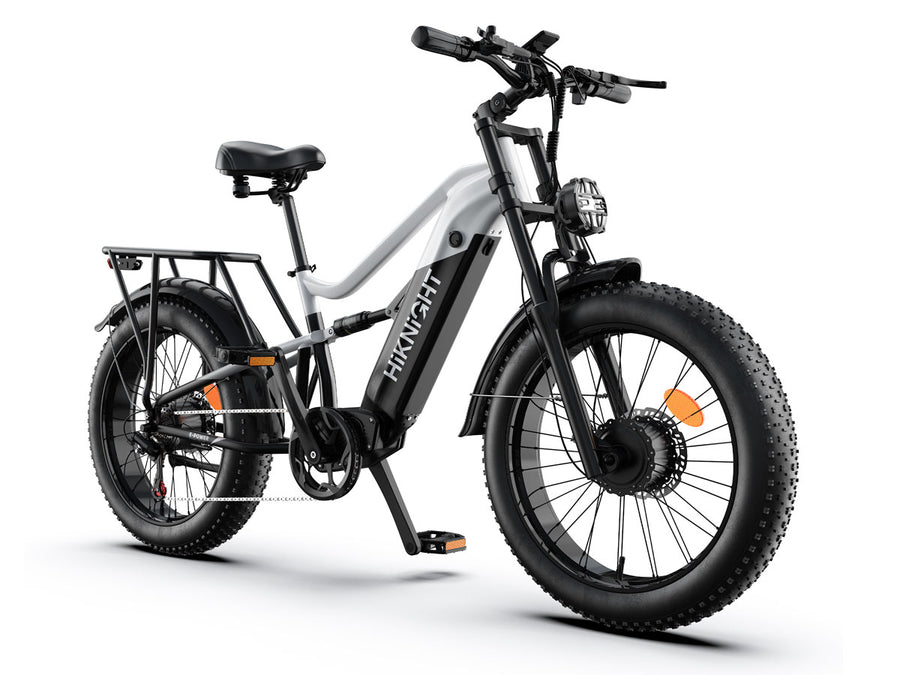
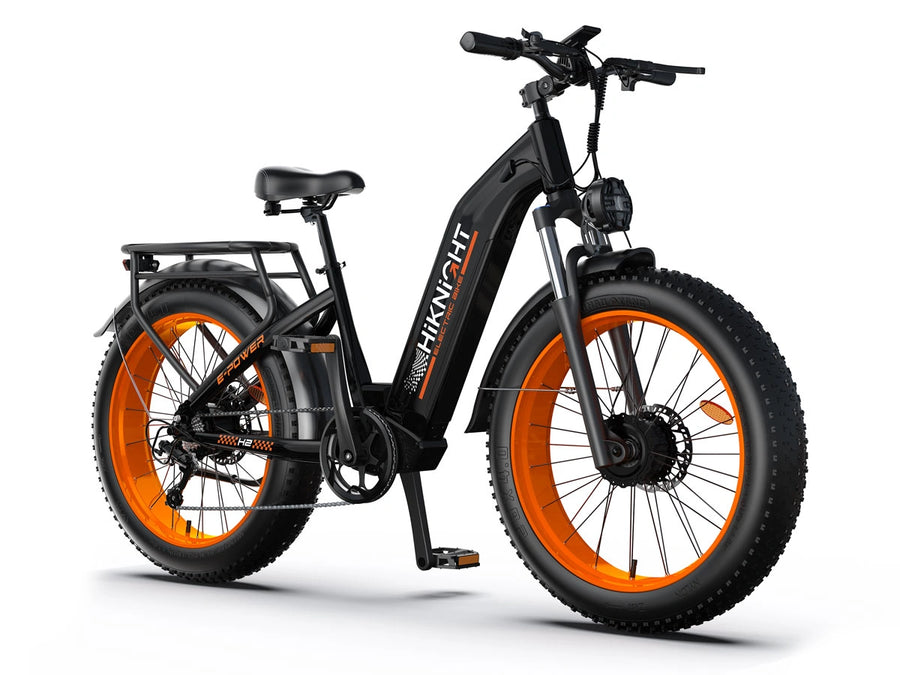

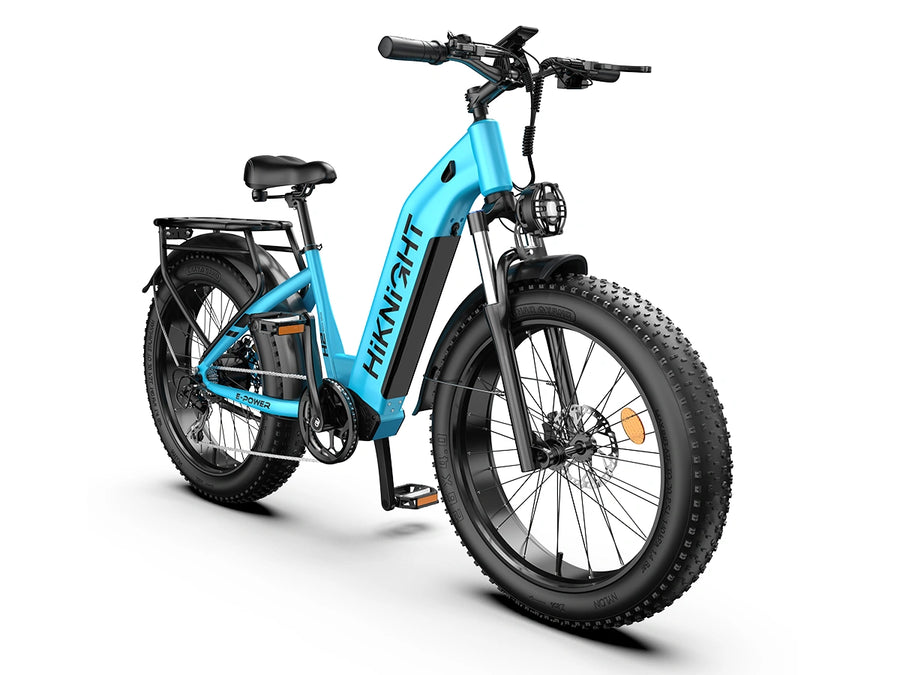
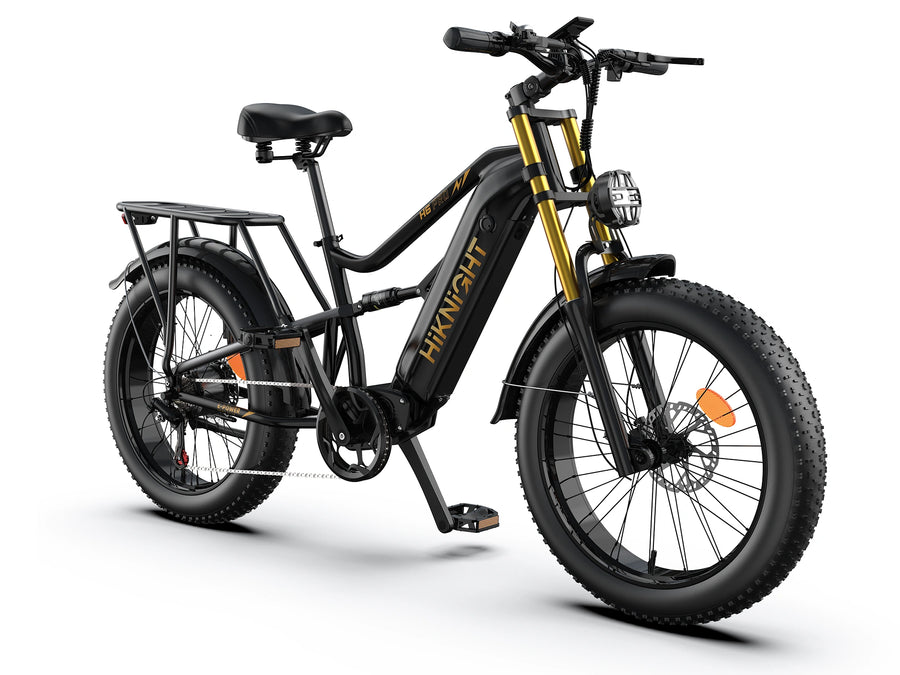

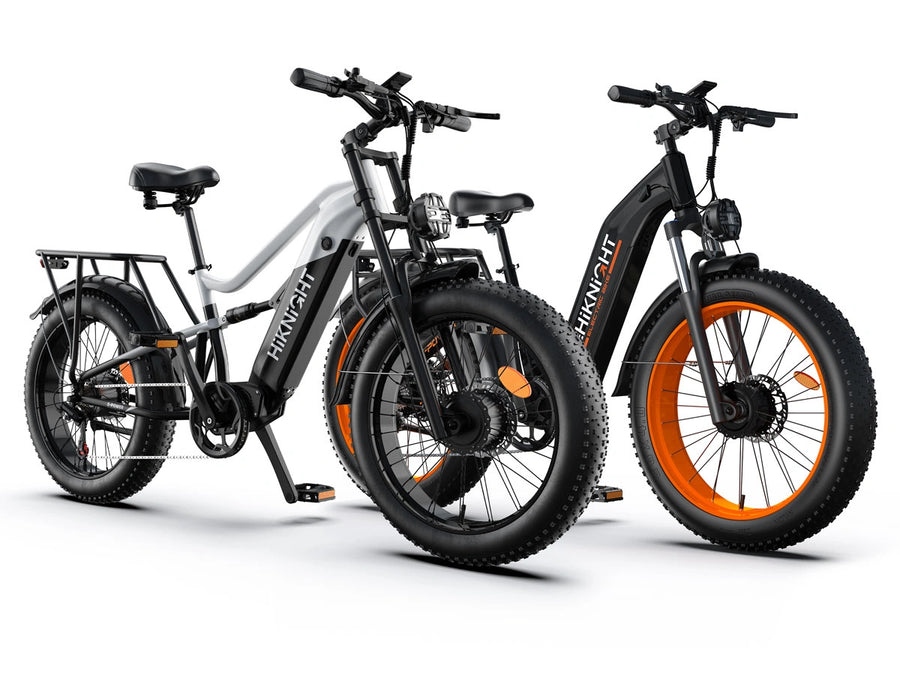
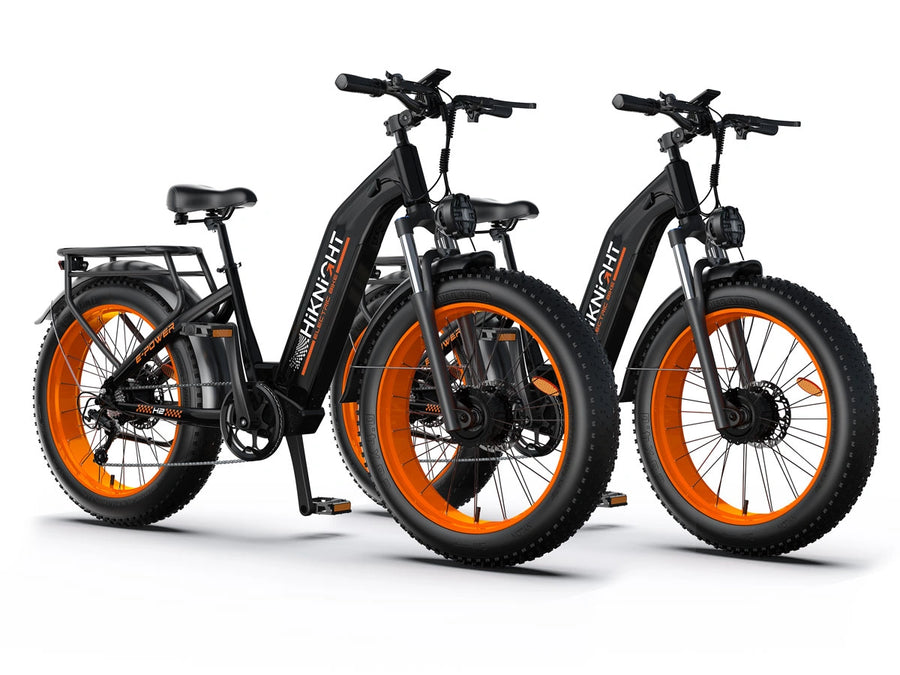
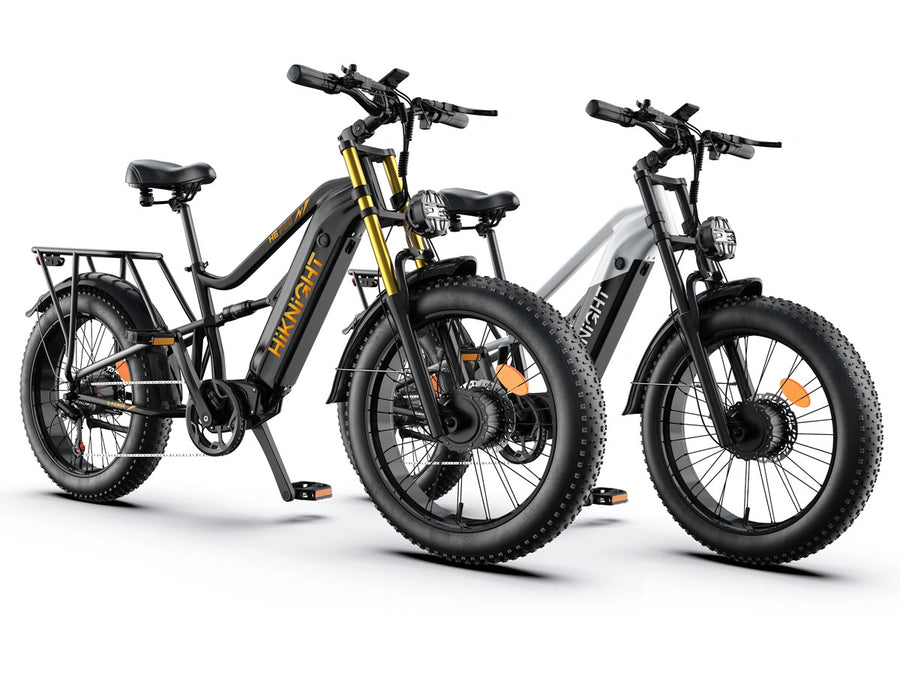
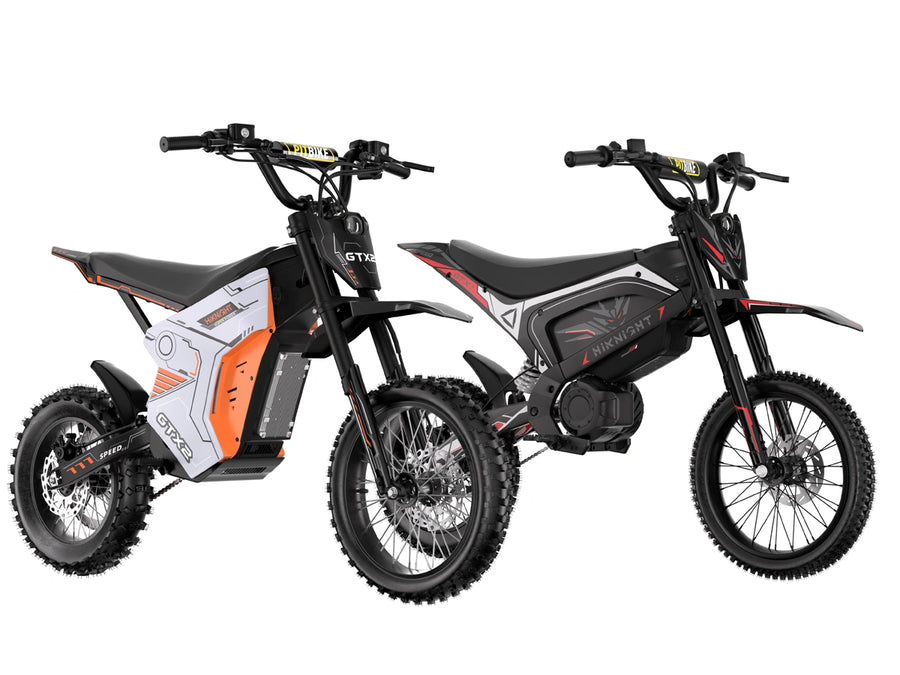
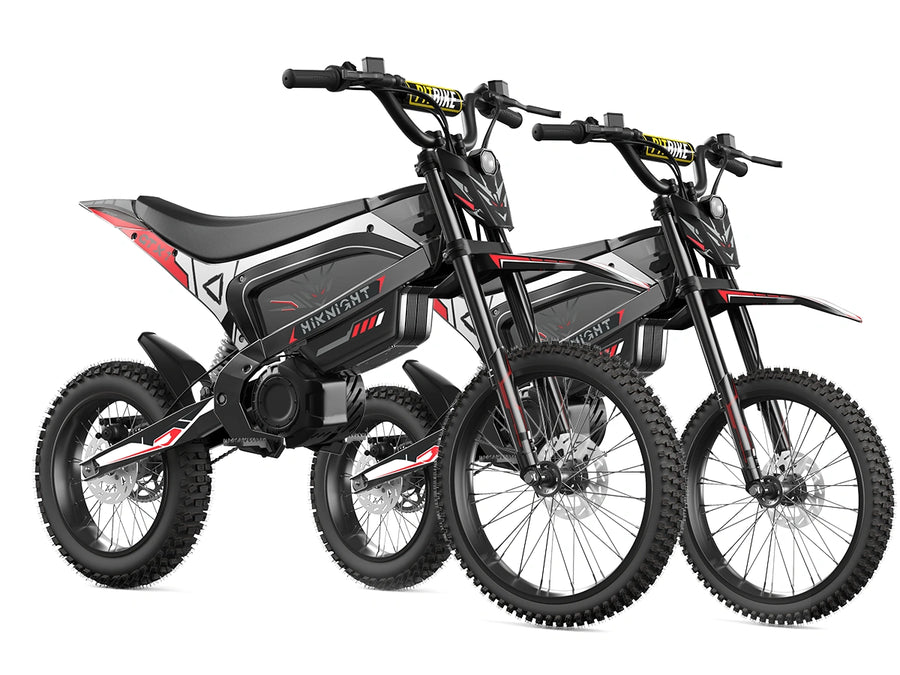
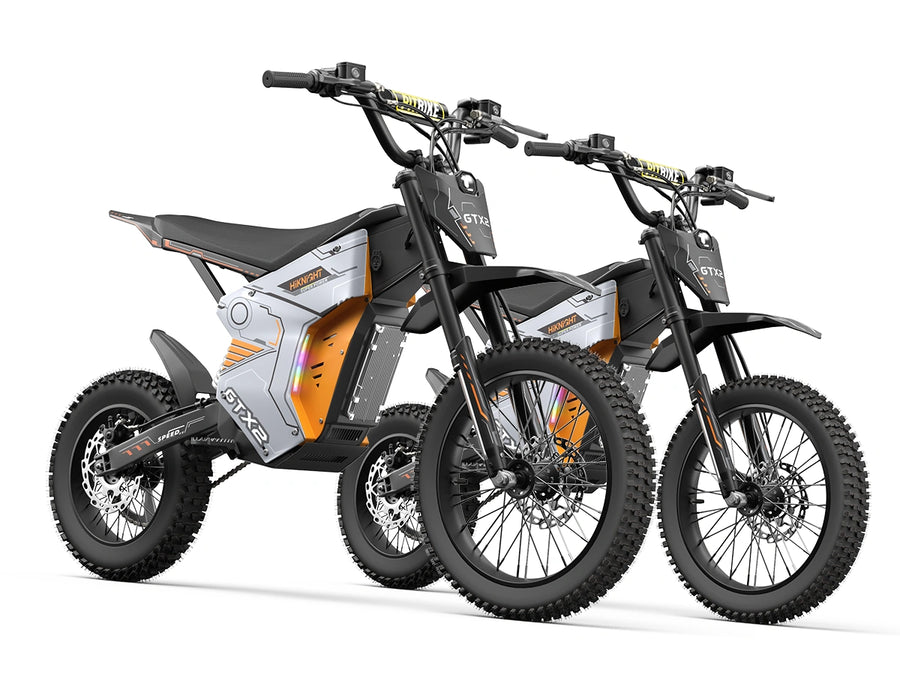

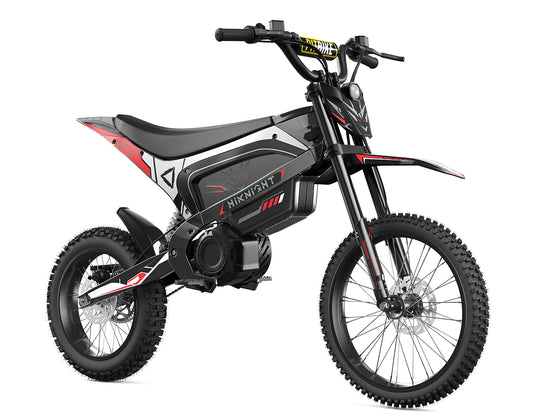
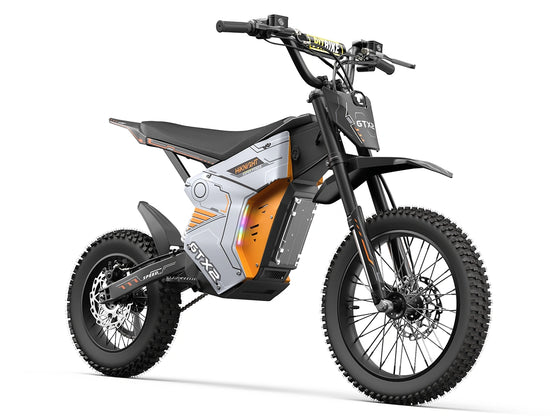
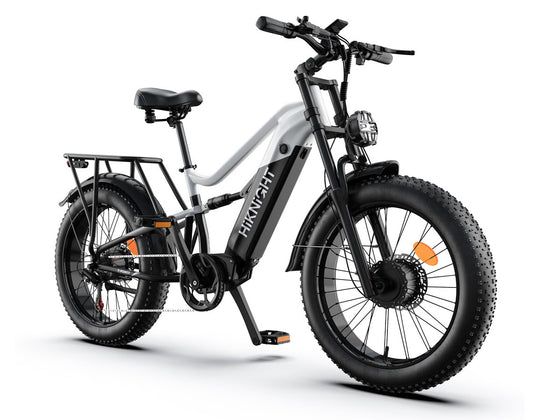
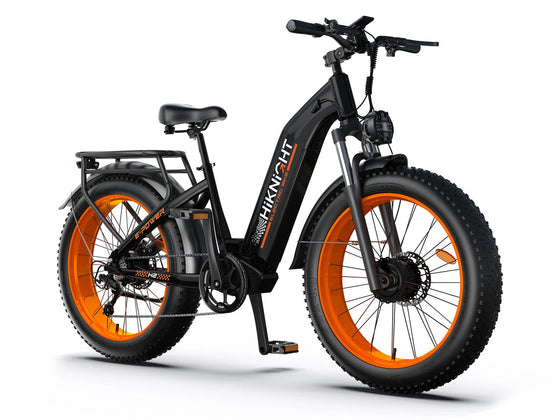
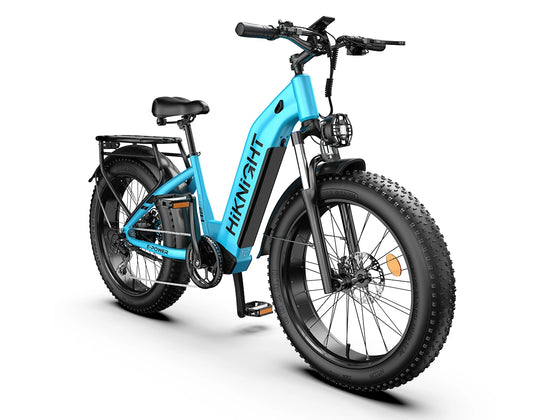
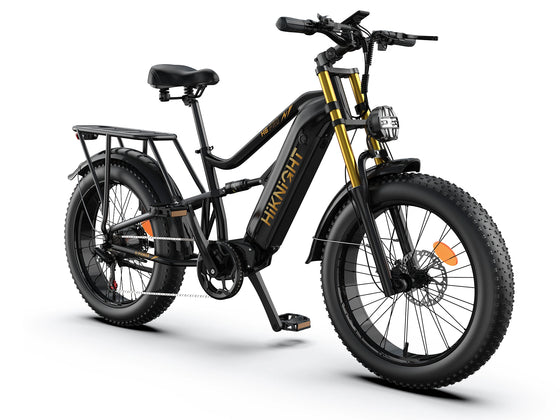
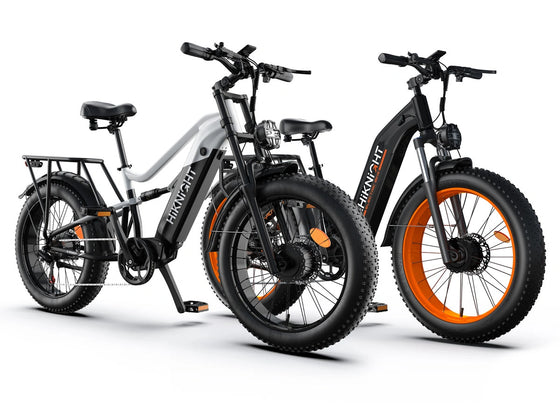
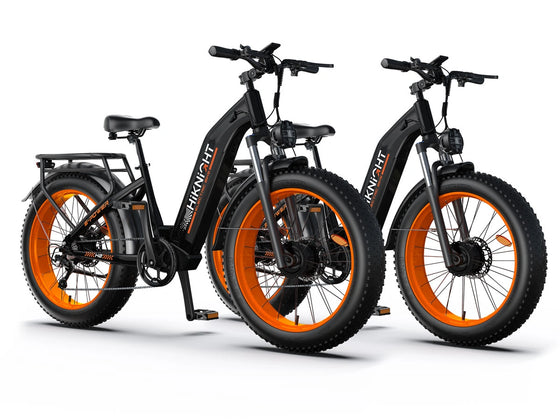
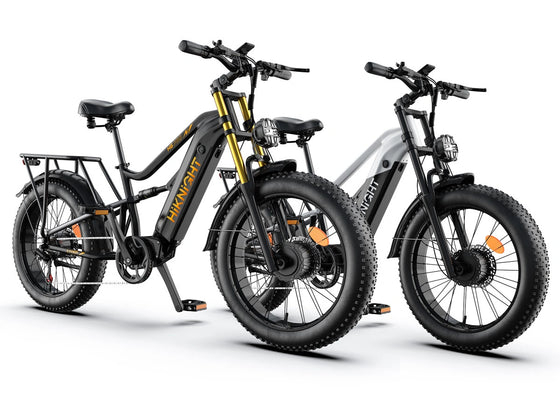
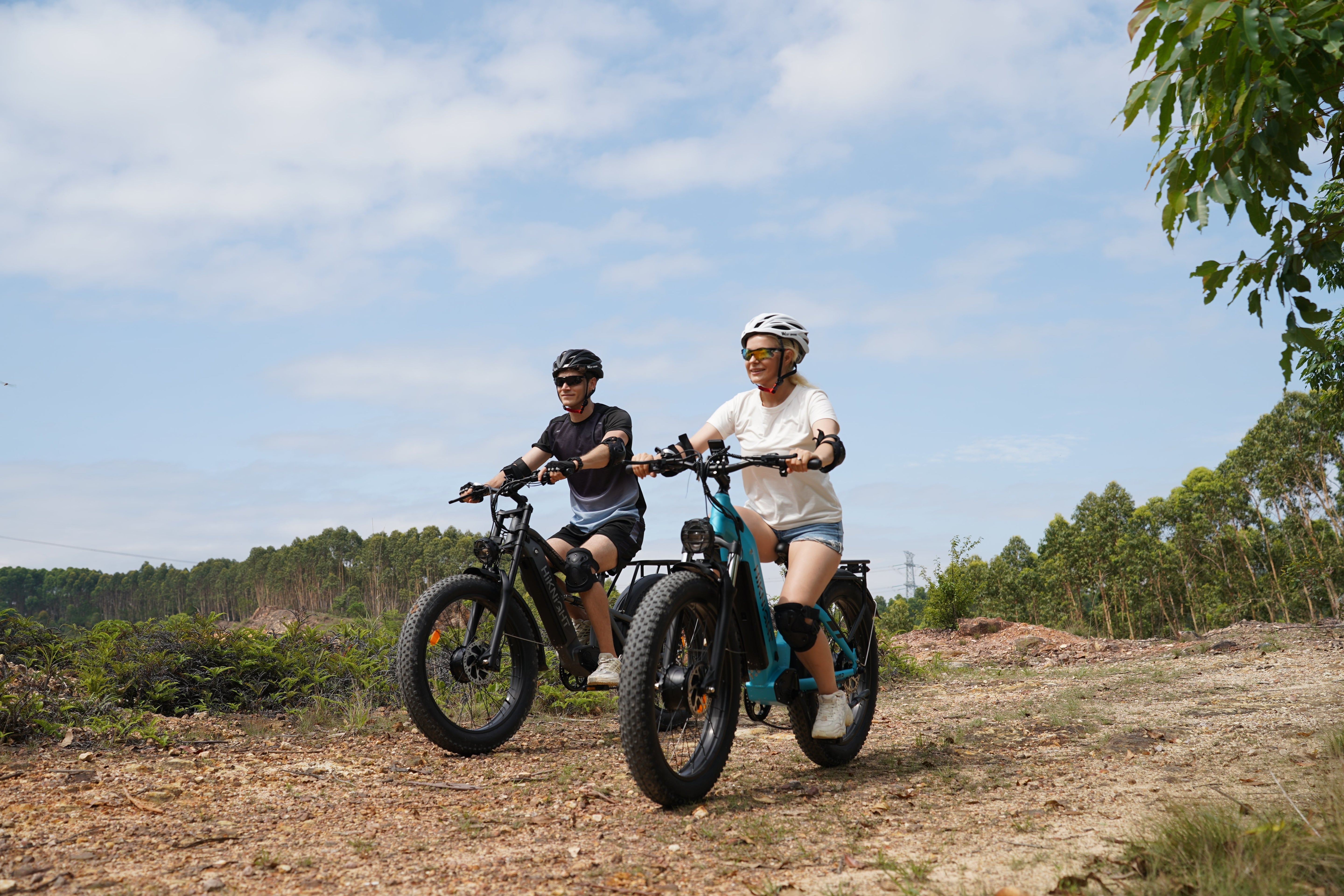
Electric bikes have swept across the United States, but the spec sheets can feel like alphabet soup—volts, watts, tire widths, speed classes. This rider-friendly guide strips away the jargon, compares the four Hiknight fat-tire models, and shows you how to match a bike to your daily terrain, budget, and range needs—quickly enough for a coffee break.
1. Start With Your Terrain—Then Choose Motor Layout
(low-competition keyword woven in: dual motor fat tire e-bike)
| Typical terrain | Best match | Why it matters |
|---|---|---|
| Paved streets, rail trails, light gravel | H6 ($1,149) or H2 ($1,298) — single 1,500 W rear hub | Lower price and weight, enough torque for everyday stop-and-go |
| Beach sand, snowy alleys, 15 % grades, cargo loads | H6 Pro ($1,699) or H2 Pro ($1,499) — dual 3,000 W hubs | All-wheel-drive grip pulls through loose ground and climbs without drama |
2. Decode the Battery Line—52 V / 20 Ah
A single removable 52-volt, 20-amp-hour pack (≈ 1 kWh) powers every model. Expect about 60 miles with light pedaling on mixed terrain; throttle-only cuts that roughly in half. Higher voltage keeps motor current—and heat—low, so acceleration stays snappy even on mile 50.
Range-boost tip: 15 psi on sand, 20–22 psi on pavement, and keep cadence above 60 rpm.
3. Fat Tires Deliver Instant Confidence
A 26″ × 4″ casing is basically suspension you never service. It floats over potholes, cobbles, and beach ruts while giving first-time riders a “rails” feeling at low speed. Paired with hydraulic brakes, you stop as surely as you roll.
4. Speed & Safety—No Unlocking Needed
Factory programming caps every Hiknight at 38 mph; throttled Class 3 (≤ 28 mph) is a menu choice, not a side-loaded file. A CPSC-certified helmet and bright daytime running lights round out the kit—and keep you legal in 46 states.
5. Fit First, Upgrades Later
One 26-inch step-over frame fits riders 5′ 4″–6′ 4″. An adjustable stem lets shorter riders pull the bars closer; saddle rails mean you can swap in a favorite seat in five minutes. Add a suspension-seat-post later if you rack up century weekends.
6. Price Snapshot & $100 Coupon
Model |
Motor layout |
Peak power |
MSRP (July 2025) |
Best for |
|---|---|---|---|---|
H6 |
Rear hub | 1,500 W | $1,149 | Budget commuting, campus loops |
| H2 | Rear hub | 1,500 W | $1,298 | Taller riders, cargo builds |
| H2 Pro | Dual hubs | 3,000 W | $1,499 | Hilly suburbs, winter traction |
| H6 Pro | Dual hubs | 3,000 W | $1,699 | Back-country touring, beach hunting |
Launch deal: Enter BG50 at checkout to save $50 on any bike—free U.S. shipping and two-year warranty included. (keyword: affordable e-bike deal)
Budget another $120 for a hardened chain lock and schedule one annual tune-up—preventive wrenching costs less than a roadside rescue.
7. Three-Minute Parking-Lot Test
Smooth launch: PAS 1 should glide, not lurch.
Hill throttle: If speed dips under 10 mph on your steepest block, step up to a Pro.
Brake check: From 25 mph, hydraulic discs should stop you within three sedan lengths.
Sprint & listen: Stand and mash; the frame should stay silent.
Battery pull: Nine pounds—make sure you can carry it to the charger you actually use.
Pass those checks, and mile 500 will feel as good as mile 5.
8. Quick-Hit Buyer Checklist
Motor count = terrain. Flat cities: single; mixed or loose ground: dual.
Range reality. ~60 miles with pedaling; pure throttle halves it.
Legal speeds. Stick to built-in Class 2/3 on public roads—no mods needed.
Security. Good lock, serial-number photo, optional e-bike insurance.
Service safety net. Know a shop that stocks 52 V chargers and 4″ tubes.
Ready to Ride?
Browse ride videos, compare specs, and claim BG50 for instant savings. Whether you choose the wallet-friendly H6 or the muscle-bound H6 Pro, you’ll roll away with American-ready power, range, and factory support—so your first e-bike ride won’t be your last.
Share:
Electric Bicycles: Unveiling the Dynamic U.S. Market and the Rise of Hiknight