








What's the Fastest Electric Bike? A Complete Guide to E-Bike Speeds (2026)
If you've ever wondered what's the fastest electric bike and what actually determines e-bike speed, you're in the right place. This guide covers everything — from motor wattage and battery voltage to legal speed classes and real-world terrain performance — so you can make a smarter, safer choice in 2026.

📌 Article Outline
- What Is E-Bike Speed — and Why Does It Matter?
- E-Bike Speed Classes Explained (Class 1, 2, 3)
- What Actually Makes an Electric Bike Fast?
- Legal Speed Limits: What You Need to Know Before You Ride
- How Terrain Affects Real-World Speed
- Off-Road vs. Road E-Bikes: Speed Priorities Are Different
- How to Choose the Right Speed for Your Riding Style
- When Does Top Speed Actually Matter?
- FAQ
What Is E-Bike Speed — and Why Does It Matter?
Speed is one of the most searched specs when people shop for electric bikes — but it's also one of the most misunderstood. The number on a spec sheet rarely tells the full story.
E-bike speed is determined by a combination of factors: motor power, battery voltage, controller settings, rider weight, and terrain. A bike rated at 28 mph on flat pavement might only hit 18 mph on a gravel trail with a headwind. Understanding this gap between rated speed and real-world speed is the first step to making a smart buying decision.
More importantly, speed isn't always the goal. For trail riders, torque and traction matter more than top-end velocity. For commuters, consistent cruising speed matters more than peak sprint capability. Knowing why you want speed helps you find the right bike — not just the fastest one on paper.
E-Bike Speed Classes Explained (Class 1, 2, 3)
In the United States, e-bikes are regulated under a three-class system that determines where you can legally ride and how fast the motor will assist you:
- Class 1: Pedal-assist only, motor cuts off at 20 mph. Allowed on most bike paths and trails.
- Class 2: Throttle-assisted, motor cuts off at 20 mph. Broader access than Class 3 in many states.
- Class 3: Pedal-assist only, motor cuts off at 28 mph. Often restricted from shared bike paths; requires helmet in most states.
Off-road electric bikes — sometimes called electric dirt bikes or e-moto bikes — operate outside this classification system entirely. They're designed for private land, trails, and off-road use, and are not street-legal in most jurisdictions. These bikes can exceed 30, 40, or even 50+ mph depending on motor configuration.
Quick Reference: If you're riding on public roads or shared paths, Class 1–3 rules apply. If you're on private land or dedicated off-road trails, the rules are different — and the speed potential is much higher.
What Actually Makes an Electric Bike Fast?
This is where most buyers get confused. Let's break it down clearly.
1. Motor Wattage (Continuous vs. Peak)
Motor wattage is the most cited spec — but the difference between continuous and peak power is critical. A motor rated at 750W continuous might deliver 1,500W peak for short bursts. Peak power determines acceleration and hill-climbing ability; continuous power determines sustained speed.
For off-road riding, peak power matters enormously. A 4,000W peak or high-output off-road motor can feel dramatically stronger than a 750W motor, especially when climbing or accelerating on loose terrain.
2. Battery Voltage
Higher voltage = higher potential speed. A 52V system will generally push more speed out of the same motor than a 48V system. This is why serious off-road e-bikes often run 52V or higher battery packs.
3. Controller & Throttle Response
The controller is the brain between the battery and motor. A high-quality controller with smooth throttle mapping delivers better acceleration feel and more consistent speed — even if the peak numbers are similar to a cheaper setup.
4. Tire Type & Rolling Resistance
Fat tires (4.0"+) provide superior traction on loose terrain but create more rolling resistance on pavement. Narrower tires roll faster on hard surfaces. This is why the "fastest" bike depends heavily on where you're riding.
5. Rider Weight & Aerodynamics
A 150 lb rider will always go faster than a 220 lb rider on the same bike. Wind resistance increases exponentially with speed, so aerodynamic position matters more at higher speeds.
Legal Speed Limits: What You Need to Know Before You Ride
Speed regulations for e-bikes vary significantly by country, state, and even city. Here's a practical overview for U.S. riders:
- Federal baseline: The Consumer Product Safety Commission defines e-bikes as having motors ≤750W and top assisted speed ≤20 mph (Class 1 & 2) or ≤28 mph (Class 3).
- State variation: Some states like California, New York, and Colorado have adopted the three-class system. Others have their own rules. Always check your local DMV or transportation authority.
- Trail access: Many national parks and protected trails restrict motorized vehicles entirely. Even Class 1 e-bikes are banned in some wilderness areas.
- Off-road bikes: Electric dirt bikes and high-power e-motos are typically classified as motor vehicles if used on public roads. They require registration, insurance, and a license in most states.
Bottom line: Before you buy based on top speed, understand where you plan to ride. A 45 mph off-road e-bike is thrilling on private trails — and illegal on a city bike path.
How Terrain Affects Real-World Speed
Spec sheet speed is measured on flat, smooth pavement under ideal conditions. Real-world riding is rarely ideal. Here's how terrain changes the equation:
- Flat pavement: Closest to rated speed. A Class 3 bike will reliably hit 25–28 mph.
- Gravel/dirt roads: Expect 15–20% speed reduction due to rolling resistance and surface irregularity.
- Singletrack trails: Speed becomes irrelevant — torque, suspension, and control matter far more.
- Steep climbs: Motor torque (Nm) is the key metric, not top speed. A high-torque motor at lower speed will outperform a high-speed motor with poor torque on hills.
- Sand & mud: Fat tires and torque-focused motors are essential. Speed drops significantly, but traction and momentum are what keep you moving.

Off-Road vs. Road E-Bikes: Speed Priorities Are Different
This distinction is often overlooked in "fastest e-bike" comparisons. Road e-bikes and off-road e-bikes are optimized for completely different performance profiles.
Road E-Bikes
Optimized for sustained cruising speed, efficiency, and range. A good road e-bike will maintain a consistent cruising speed comfortably over long distances. Battery range is a priority, especially for commuters and long-distance riders.
Off-Road E-Bikes
Optimized for torque, traction, and durability. Top speed matters less than the ability to power through obstacles, climb steep grades, and absorb rough terrain. Suspension quality, tire width, and motor torque are the defining specs.
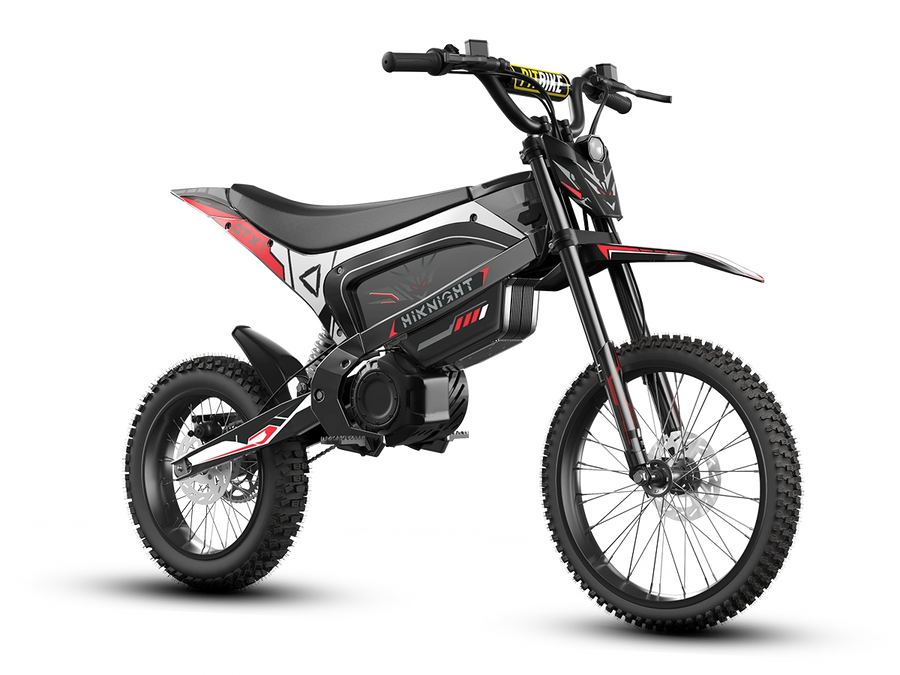
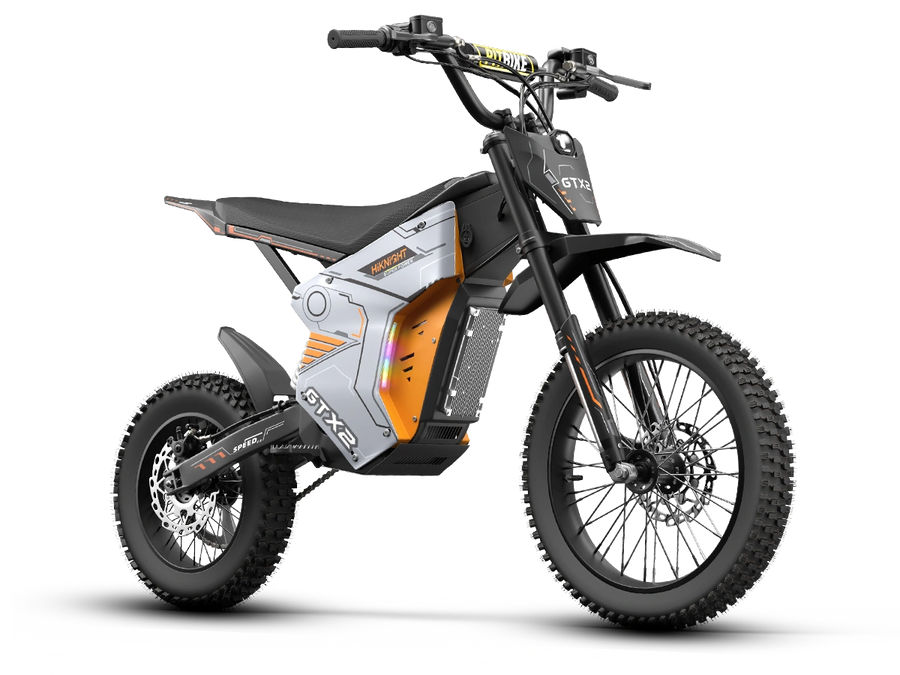
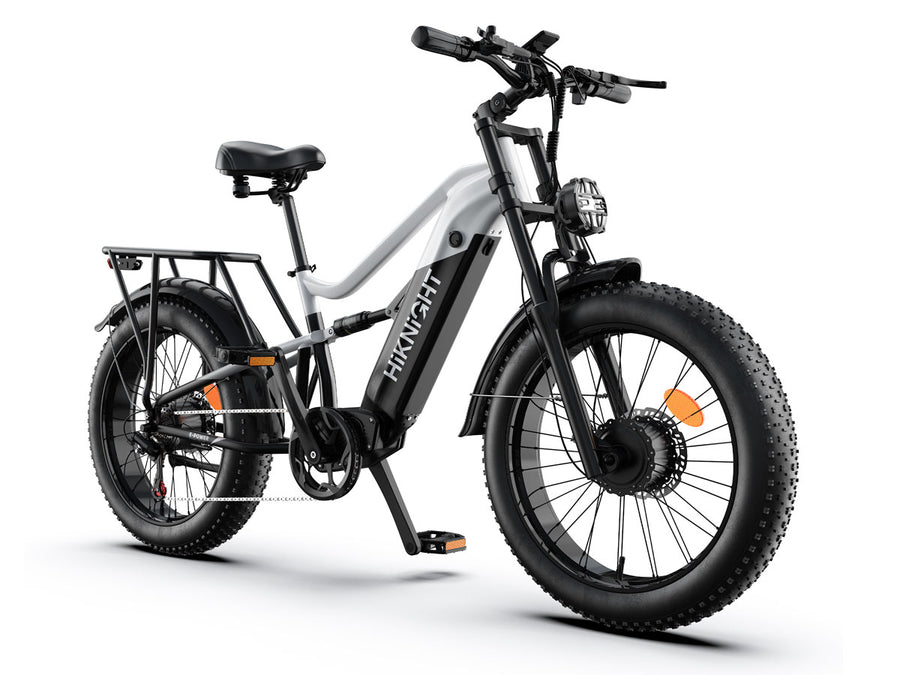
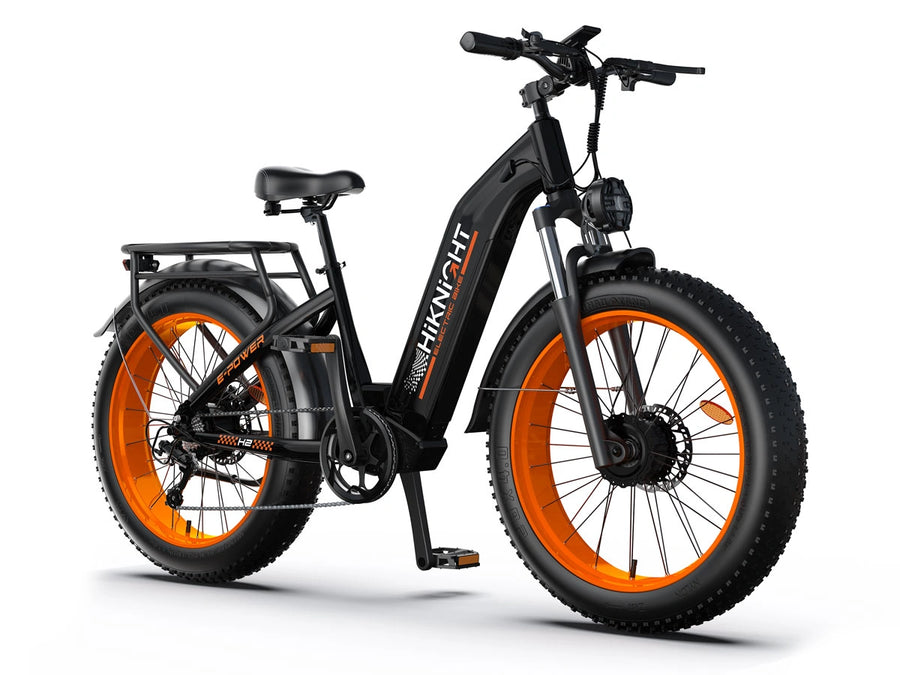
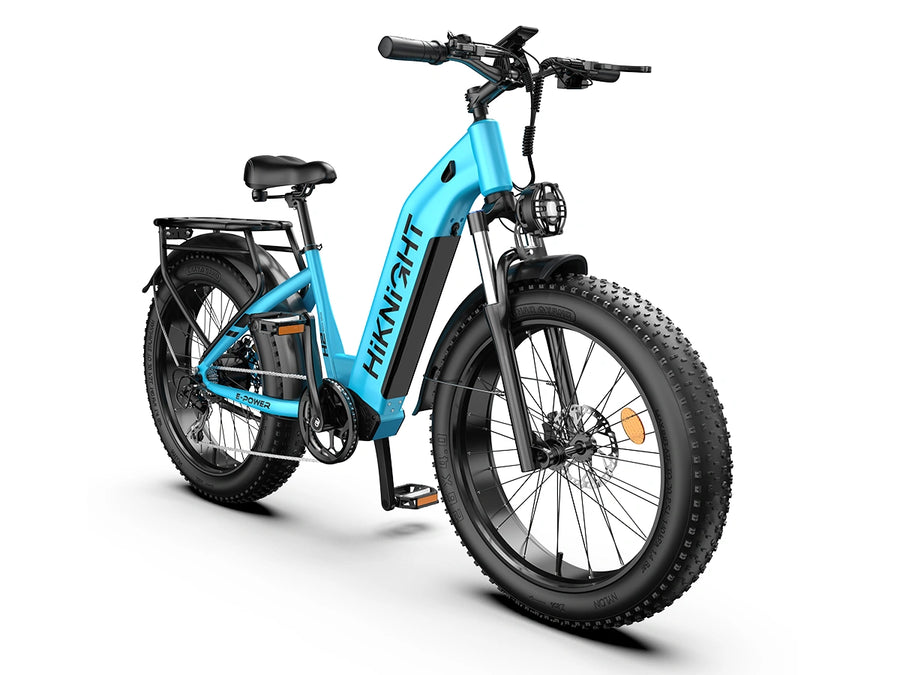
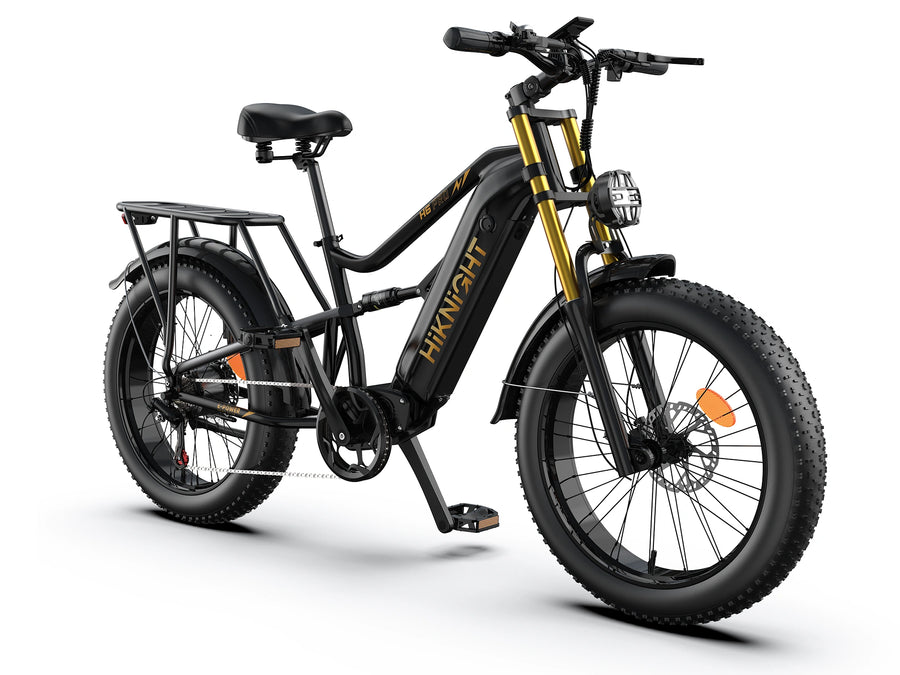
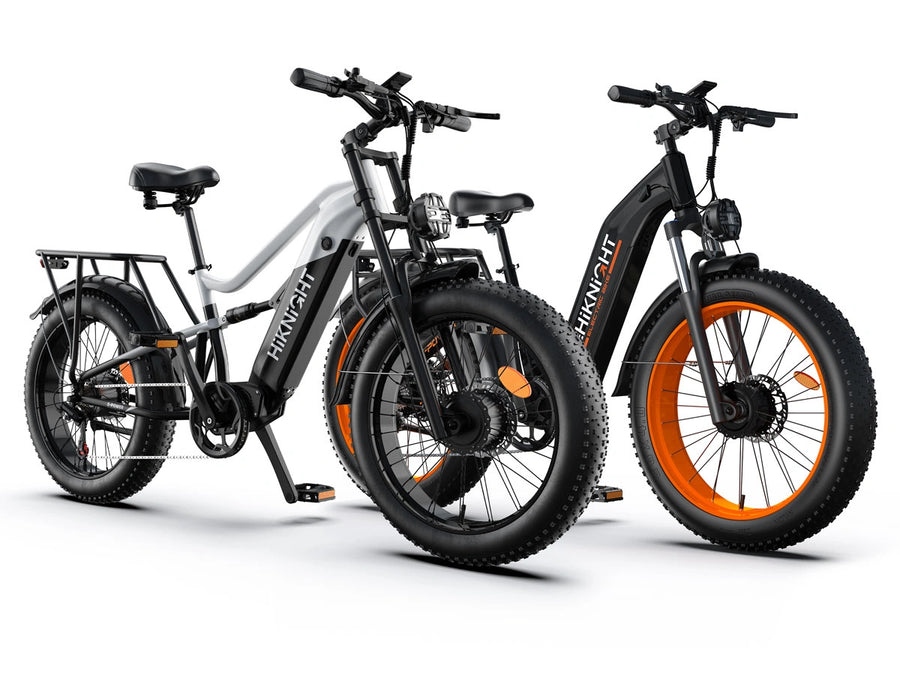
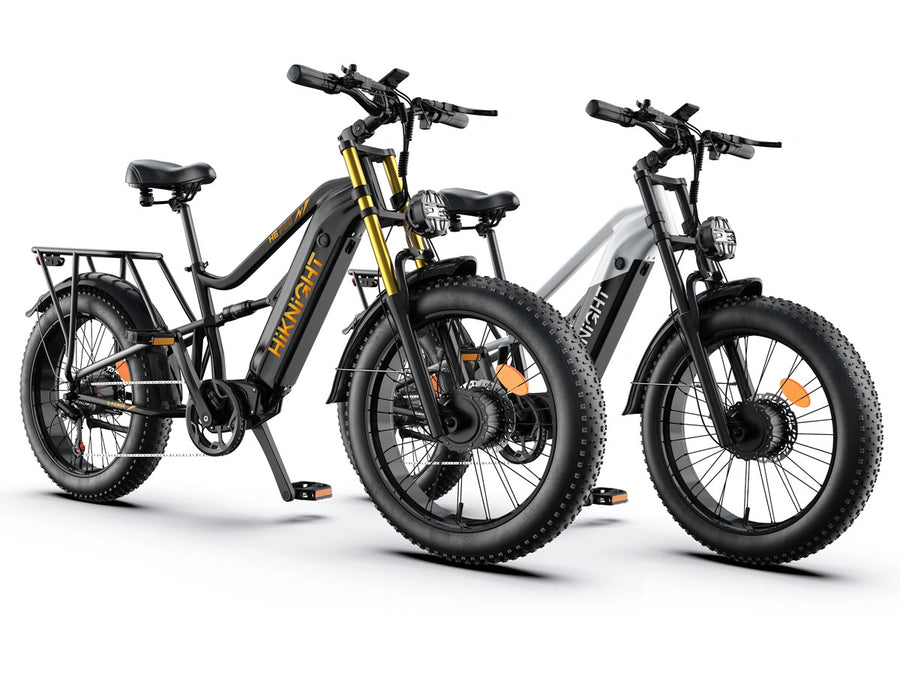
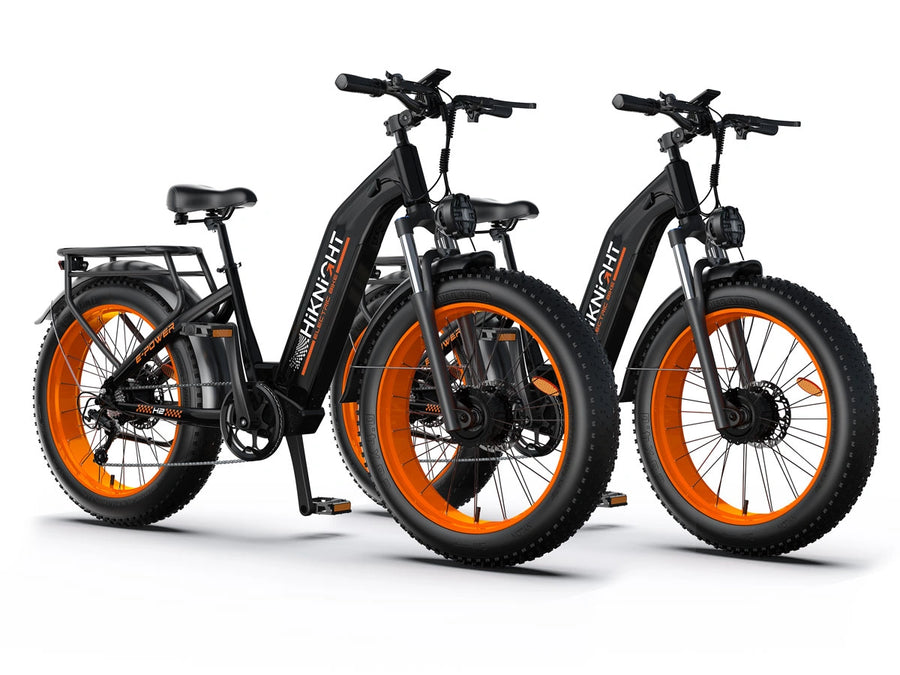
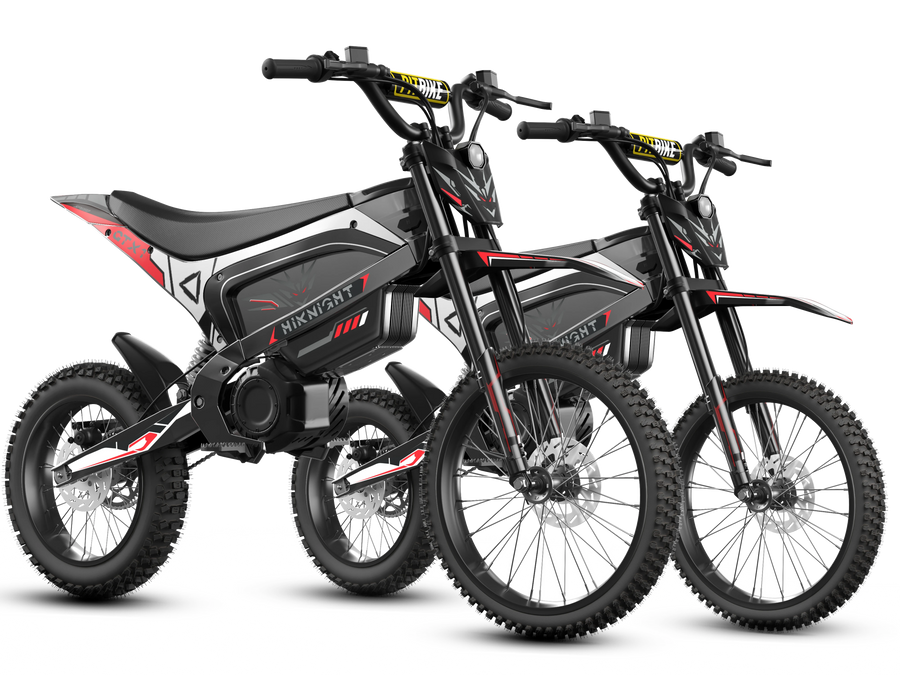
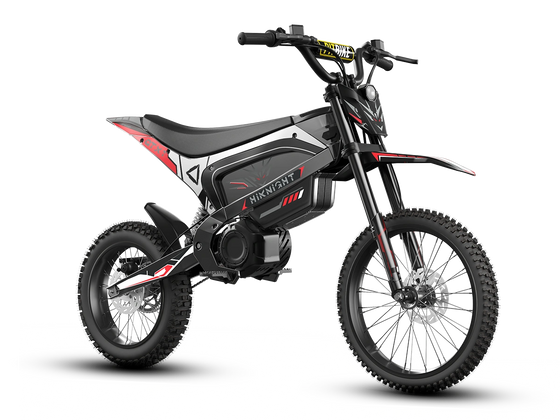
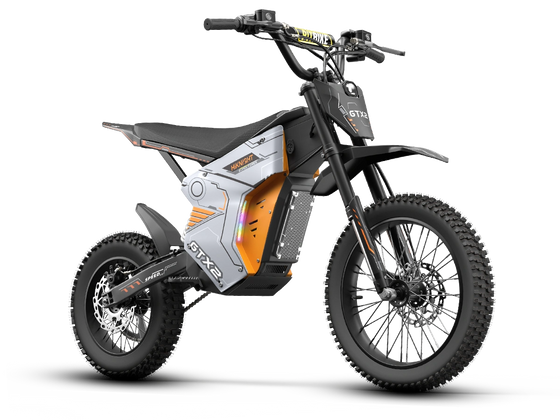
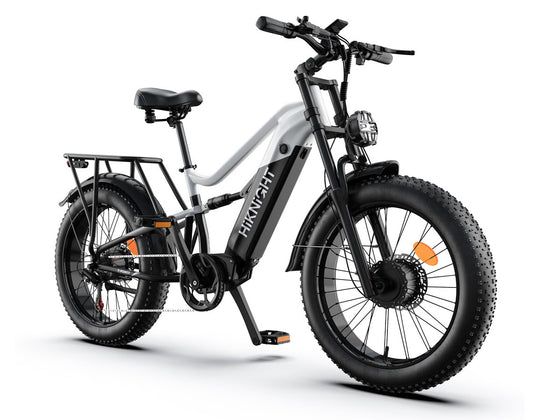
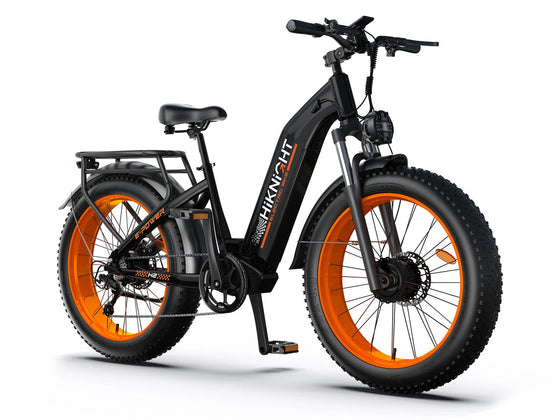
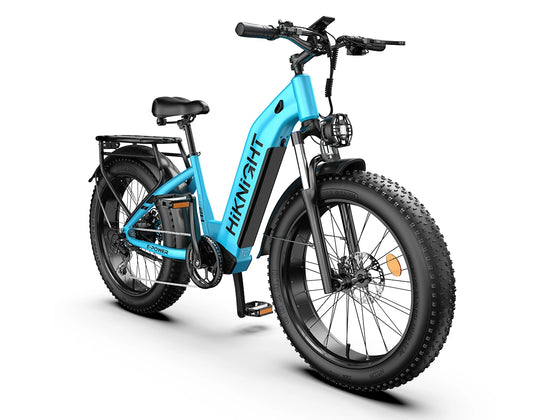
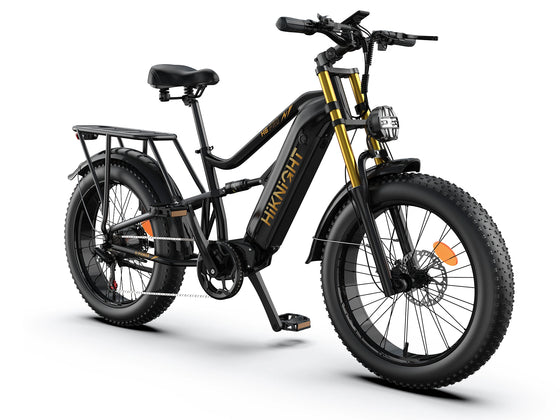
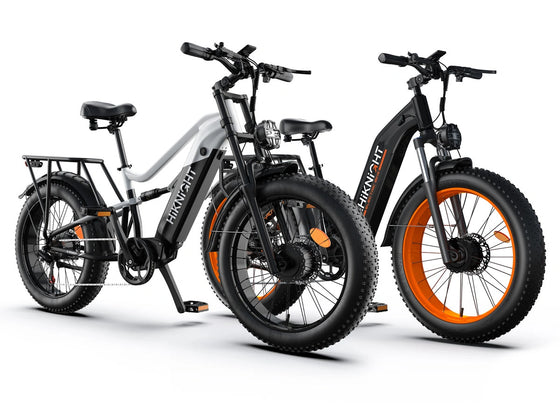
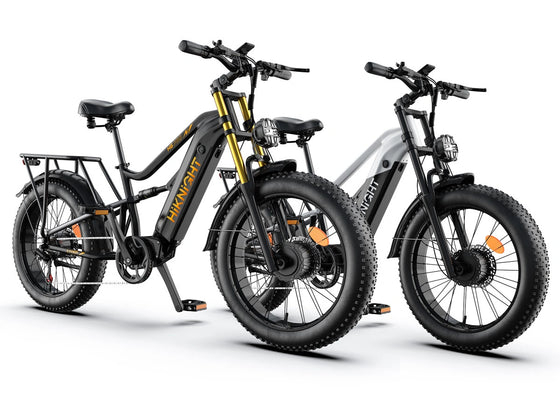
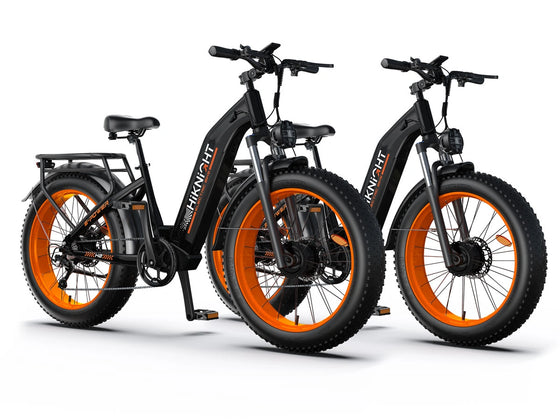
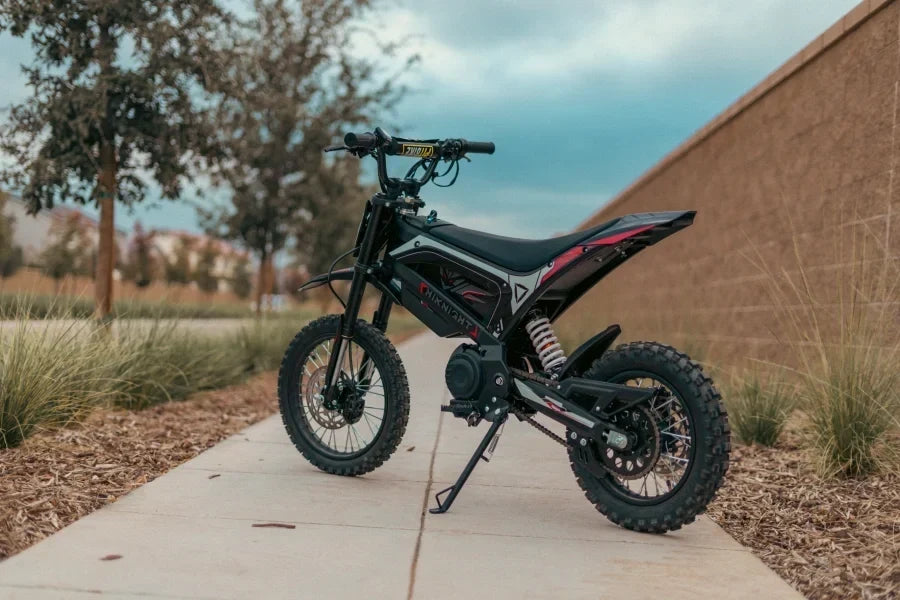
For example, the HiKNiGHT GTX1 electric dirt bike combines a 4,000W mid-drive motor with 220Nm of torque, making it well suited to demanding off-road terrain. The H2 Pro fat tire e-bike uses dual 2,000W motors with a 52V 20Ah battery, while the H6 Pro off-road e-bike uses the same dual-motor and battery configuration with 24×4-inch tires. All three are built around different riding priorities, so the best choice depends on terrain, rider size, and how much torque or traction you need.
HiKNiGHT Fast E-Bike & Off-Road Model Specs
For a quick product-level comparison, the following specifications reflect the model information provided for the H2 Pro, H6 Pro, and GTX1.
| Specification | H2 Pro | H6 Pro | GTX1 |
|---|---|---|---|
| Motor | 2,000W × 2, 4,000W peak | 2,000W × 2, 4,000W peak | 4,000W mid-drive motor |
| Battery | 52V 20Ah | 52V 20Ah | 48V 21Ah |
| Top Speed | 40 MPH | 40 MPH | 40 MPH |
| Range | 60–90 miles | 60–90 miles | 48 miles |
| Max Load | 380 lbs | 380 lbs | 330 lbs |
| Torque | 140 Nm | 140 Nm | 220 Nm |
| Max Slope | 35° | 35° | 45° |
| Water Resistance | IPX6 | IPX6 | IPX6 |
| Tire / Wheel | 26 × 4.0 in | 24 × 4.0 in | 14 in front / 12 in rear |
| Rider Height | 165–195 cm | 165–195 cm | 120–185 cm |
For riders who want a high-speed fat tire platform, explore the H2 Pro 40 MPH electric bike or the H6 Pro 40 MPH off-road e-bike. For a dirt-bike-style platform with higher torque, the GTX1 4,000W electric dirt bike is the more specialized option.
How to Choose the Right Speed for Your Riding Style
Here's a practical framework based on use case:
| Riding Style | Priority | Recommended Speed Range |
|---|---|---|
| Urban commuting | Consistent 20–28 mph, range | Class 2 or Class 3 |
| Trail riding / MTB | Torque, suspension, traction | 20–35 mph off-road capable |
| Off-road / dirt | Peak power, durability | 30–50+ mph (private land) |
| Casual recreation | Comfort, ease of use | 15–20 mph |
| Adventure / bikepacking | Range, versatility, reliability | 20–28 mph with long range |
The key insight: faster isn't always better. The right speed is the one that matches your terrain, your legal environment, and your actual riding goals.
When Does Top Speed Actually Matter?
Top speed matters most in three specific scenarios:
- Keeping pace with traffic: On roads where cars travel 30–35 mph, a Class 3 e-bike at 28 mph is genuinely safer than a Class 1 at 20 mph — you're less of an obstacle.
- Long-distance time savings: On a 10-mile commute, the difference between 20 mph and 28 mph saves roughly 10–12 minutes each way. Over a year, that adds up.
- Off-road momentum: On technical terrain, speed isn't about going fast — it's about carrying enough momentum to clear obstacles without stalling. A powerful motor that can surge quickly is more valuable than a high top speed.
In most recreational riding scenarios, the difference between 28 mph and 35 mph is barely noticeable — but the difference between good suspension and bad suspension, or a reliable motor and an unreliable one, is felt on every ride.
FAQ — Frequently Asked Questions
What is the fastest electric bike you can legally ride on the road?
In the U.S., the fastest street-legal e-bike class is Class 3, with a maximum assisted speed of 28 mph. Some states allow higher speeds with registration and licensing, effectively reclassifying the bike as a moped or motorcycle.
Can electric bikes go faster than 28 mph?
Yes — many e-bikes are capable of exceeding 28 mph, especially off-road models. However, the motor assist legally cuts off at 28 mph for Class 3 bikes on public roads. You can still pedal faster under your own power, but the motor won't help beyond that threshold.
What's the difference between a fast e-bike and a powerful e-bike?
Speed and power are related but not the same. A powerful motor (high wattage, high torque) accelerates faster and climbs hills better. A fast e-bike has a high top speed. Off-road bikes prioritize power; road bikes often prioritize sustained speed efficiency.
Does battery voltage affect e-bike speed?
Yes. Higher voltage systems (52V vs. 48V) generally produce higher top speeds with the same motor, because voltage directly influences the motor's RPM ceiling. It also affects range and overall system efficiency.
Are fat tire e-bikes slower than regular e-bikes?
On pavement, yes — fat tires create more rolling resistance, which reduces top speed slightly. On off-road terrain, fat tires provide traction and stability that allow you to maintain speed where a narrow-tire bike would slow down or lose control.
What should I look for if I want the fastest off-road electric bike?
Focus on: peak motor wattage, battery voltage (52V+), controller quality, suspension travel, and tire width appropriate for your terrain. Top speed on a spec sheet means little if the bike can't handle the terrain you're riding.
Do I need a license to ride a fast electric bike?
For Class 1–3 e-bikes (up to 28 mph), no license is required in most U.S. states. For higher-powered bikes that exceed these thresholds, they may be classified as mopeds or motorcycles, requiring registration, insurance, and a valid license. Always check your local regulations.
How does rider weight affect e-bike speed?
Heavier riders will experience lower top speeds and reduced range, as the motor works harder to maintain speed. Most e-bike specs are tested at a standard rider weight (typically 165–180 lbs). If you're significantly above or below that, adjust your expectations accordingly.
Share:
All-Terrain vs Off-Road vs Fat Tire Electric Bikes: Which One Is Right for You?
Electric Bike Wheel Size Guide: How to Choose the Right Wheels for Your Ride