








Quick Answer: How Far Can an Electric Motorcycle Go?
There is no single range figure that applies to every electric motorcycle. At the most basic level, electric motorcycle range depends on how much usable energy is stored in the battery pack and how much energy the bike consumes per mile.
Basic range formula:
Estimated Range = Usable Battery Energy ÷ Average Energy Consumption
Two electric dirt bikes with similar battery capacities can deliver very different real-world range. A bike ridden at moderate speed on level pavement may travel considerably farther than the same bike ridden aggressively at high speed over steep off-road terrain.
For this reason, a manufacturer-listed range should generally be viewed as a claimed or estimated range under specific test conditions, rather than a guaranteed mileage figure for every rider.
Instead of asking only, “What is the range of this electric motorcycle?”, a more useful question is: “How far can this electric motorcycle travel under the conditions I actually ride in?”
1. What Does Electric Motorcycle Range Mean?
Electric motorcycle range refers to the distance a motorcycle can travel on a single battery charge. When comparing electric motorcycles or electric dirt bikes, it is important to distinguish between claimed range and real-world range.
Claimed Range
Claimed range is the mileage reported by a manufacturer based on a particular test procedure or set of riding conditions. A product page, for example, may state: Up to 52 miles of range.
Pay attention to the phrase “up to.” It means the rated mileage may be achievable under favorable operating conditions, but it does not mean every rider will consistently achieve 52 miles per charge.
Real-World Range
Real-world range is the distance riders actually achieve during normal use. Unlike controlled range testing, real-world riding introduces many variables that directly affect energy consumption.
- Rider weight and total payload
- Average riding speed
- Throttle input and acceleration frequency
- Elevation gain and grade
- Pavement, gravel, dirt, mud, or sand
- Tire construction and tire pressure
- Ambient temperature
- Headwinds and weather conditions
- Riding mode and power delivery
Because these conditions vary from rider to rider, two people riding the same electric dirt bike can achieve noticeably different range.
2. What Affects Electric Motorcycle Range?
At a fundamental level, electric motorcycle range comes down to two things: how much energy the battery stores and how quickly the motorcycle consumes that energy.
Battery Capacity
Battery capacity is one of the primary factors that determines potential range. Electric motorcycle battery packs are commonly specified using Voltage (V), Amp-hours (Ah), and Watt-hours (Wh).
When comparing the total amount of stored energy, watt-hours are generally more useful than amp-hours alone.
52V × 27Ah = 1,404Wh
All other factors being equal, a battery pack with more usable watt-hours has greater range potential. However, a larger battery does not automatically translate into a proportional increase in mileage because motor output, vehicle weight, speed, tire setup, and terrain also affect energy consumption.
Riding Speed
Speed has a major effect on electric motorcycle range. As road speed increases, aerodynamic drag rises substantially, requiring the powertrain to draw more energy to maintain speed.
An electric dirt bike cruising at moderate speed may therefore travel much farther than the same bike operated continuously near its top speed.
A range figure without information about the test speed provides limited context. Instead of asking only whether a bike can travel 50 miles, ask: At what average speed was that 50-mile range achieved?
Rider Weight and Payload
Rider weight, riding gear, luggage, and additional payload all increase the total mass the motor must move. Higher total vehicle load generally requires more energy during acceleration, hill climbing, and repeated stop-and-go riding.
Terrain and Elevation
Level pavement and off-road terrain create very different energy demands. Loose surfaces, steep grades, rocks, gravel, mud, and sand can substantially increase rolling resistance and drivetrain load.
Typical increase in riding resistance:
Level Pavement → Hills → Gravel → Dirt → Mud → Sand
Long climbs are particularly energy-intensive because the motor must continuously move the combined mass of the bike and rider against gravity.
Throttle Input and Riding Style
Smooth throttle application generally consumes less energy than repeated hard acceleration. Frequent full-throttle launches, rapid acceleration, heavy braking, and repeated re-acceleration force the powertrain to operate at higher output more often.
Aggressive off-road riding will therefore typically consume more watt-hours per mile than steady cruising.
Ambient Temperature
Lithium-ion battery performance is temperature-sensitive. Cold temperatures can increase internal resistance and reduce the amount of usable energy available from the battery pack.
As a result, riders may notice reduced real-world range during winter or in cold-weather riding conditions.
Tires and Tire Pressure
Tire construction, tread pattern, width, compound, and inflation pressure all affect rolling resistance. Aggressive off-road tires are designed to improve traction on loose terrain, but increased traction and deformation can also increase energy consumption.
Underinflated tires can further increase rolling resistance and reduce riding efficiency.
Wind and Weather
Strong headwinds increase aerodynamic drag and can noticeably reduce range, especially at higher speeds. Wet, soft, muddy, or unstable riding surfaces may also require more power to maintain forward motion.
3. How to Calculate Electric Motorcycle Range
A practical way to estimate electric motorcycle range is to divide usable battery energy by average energy consumption.
Step 1: Calculate Battery Energy
Suppose an electric dirt bike uses a 52V 27Ah battery pack.
52V × 27Ah = 1,404Wh
The battery therefore stores approximately 1,404 watt-hours of nominal energy.
Step 2: Estimate Energy Consumption
The next variable is energy consumption, normally expressed as Wh/mi, or watt-hours per mile.
If the bike averages 27Wh/mi, the estimated range would be:
1,404Wh ÷ 27Wh/mi = 52 miles
If energy consumption rises to 40Wh/mi, estimated range becomes:
1,404Wh ÷ 40Wh/mi ≈ 35.1 miles
This example shows why the same battery pack can produce very different range depending on riding conditions.
Electric Motorcycle Range Calculator
Enter battery voltage, battery capacity, and estimated energy consumption to calculate nominal battery energy and theoretical riding range.
*This calculator provides a theoretical range estimate based on nominal battery energy and average energy consumption. Actual riding range varies with speed, rider and payload weight, terrain, elevation, temperature, tire pressure, throttle input, riding mode, wind conditions, and battery condition.
4. Claimed Range vs. Real-World Range
A common rider question is: “Why does my electric motorcycle not always reach the manufacturer-listed range?”
In many cases, the difference comes from the gap between controlled range-testing conditions and real-world operating conditions.
Favorable Range-Test Conditions May Include
- Moderate and consistent riding speed
- Relatively level terrain
- Moderate ambient temperature
- Proper tire inflation
- Limited hard acceleration
- A standardized rider and payload
Real-World Riding May Include
- High-speed riding
- Heavier rider or additional payload
- Long uphill grades
- Cold temperatures
- Repeated hard acceleration
- Gravel, dirt, mud, or sand
- Strong headwinds
- Aggressive off-road riding
Bottom line: Manufacturer-listed range is best used as a reference point under defined or favorable operating conditions, not as a guaranteed mileage figure in every riding scenario.
5. How Much Electric Motorcycle Range Do You Actually Need?
Choosing the right electric motorcycle is not simply about finding the bike with the largest range number. The better approach is to calculate how far you normally ride and then leave an appropriate range reserve for real-world conditions.
Short Commutes
Riders using an electric motorcycle for short daily trips may not need an extremely large battery pack. Vehicle weight, maneuverability, charging convenience, and overall efficiency may be equally important.
Daily Commuting
Commuters should compare their total daily round-trip distance with realistic range rather than maximum advertised range.
For example, if your normal commute requires 25 miles per day, choosing a bike with a theoretical maximum of exactly 25 miles leaves little reserve for cold weather, headwinds, detours, hills, battery aging, or aggressive riding.
Long-Distance Riding
Long-distance riders should evaluate more than range alone. Important specifications include:
- Battery capacity in Wh
- Real-world range
- Charging time
- Charger output
- Charging access
- Battery serviceability
Off-Road Riding
Off-road riding typically requires a larger range reserve because loose terrain, steep grades, repeated acceleration, lower-speed high-torque operation, and aggressive throttle input can increase energy consumption.
If you plan a 30-mile trail ride, choosing an electric dirt bike with a claimed range of exactly 30 miles may not provide sufficient margin.
6. How to Maximize Electric Motorcycle Range
Improving electric motorcycle range does not always require installing a larger battery pack. Riding technique and vehicle condition can also have a meaningful effect on efficiency.
- Maintain the manufacturer-recommended tire pressure.
- Use smooth throttle application instead of repeated full-throttle launches.
- Avoid sustained top-speed riding when maximum range is the priority.
- Reduce unnecessary payload.
- Plan routes to avoid unnecessary elevation gain or detours.
- Keep tires and drivetrain components in proper condition.
- Charge and store the battery according to manufacturer recommendations.
- Avoid exposing the battery pack to extreme temperatures for extended periods.
Why Battery Care Matters for Long-Term Range
Lithium-ion batteries do not retain their original usable capacity indefinitely. Battery aging occurs gradually through calendar aging, charge-discharge cycling, thermal exposure, and operating conditions.
As usable battery capacity decreases, the same electric motorcycle may travel fewer miles under otherwise identical riding conditions.
Important: Proper battery care does not create additional capacity in a new battery. Its purpose is to help maintain battery health and reduce unnecessary capacity degradation over time.
Good battery-care practices include avoiding severe physical impacts, following recommended charging procedures, storing the battery correctly during extended periods of non-use, avoiding prolonged extreme temperatures, and inspecting the battery if abnormal heat, swelling, physical damage, or other unusual conditions appear.
7. How to Compare Electric Motorcycles by Range
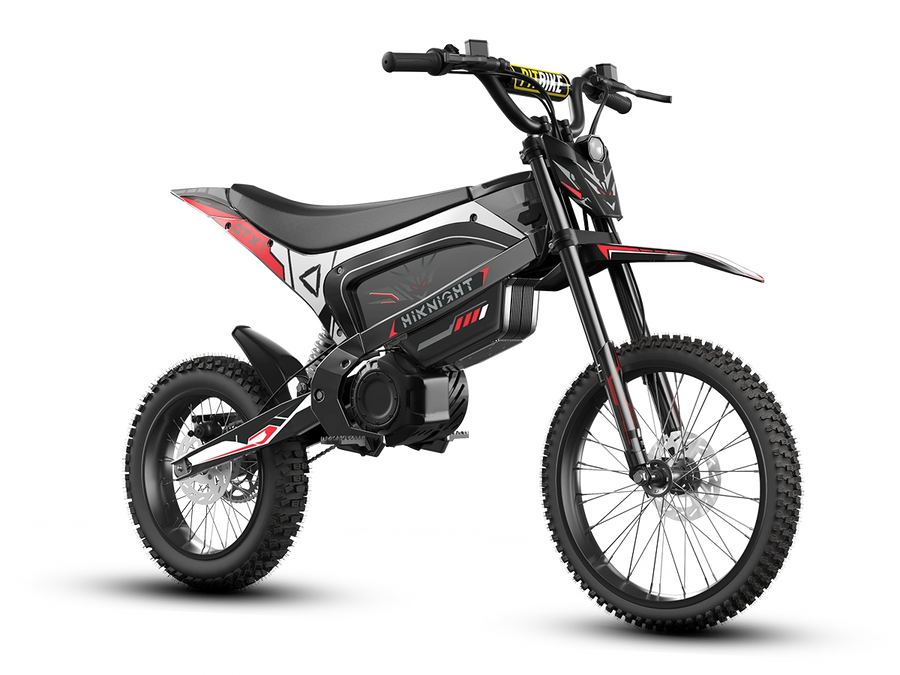
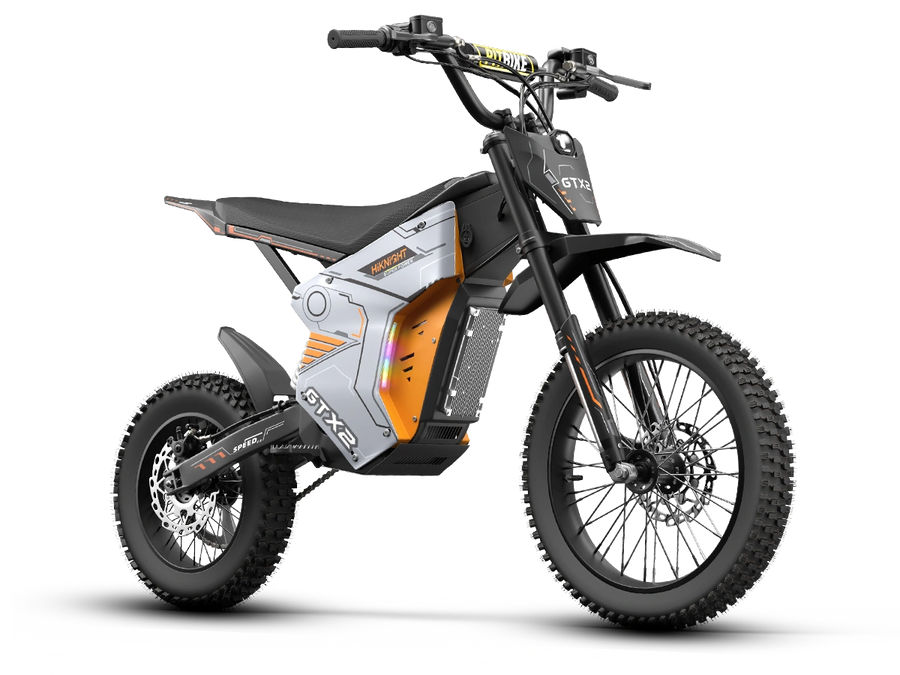
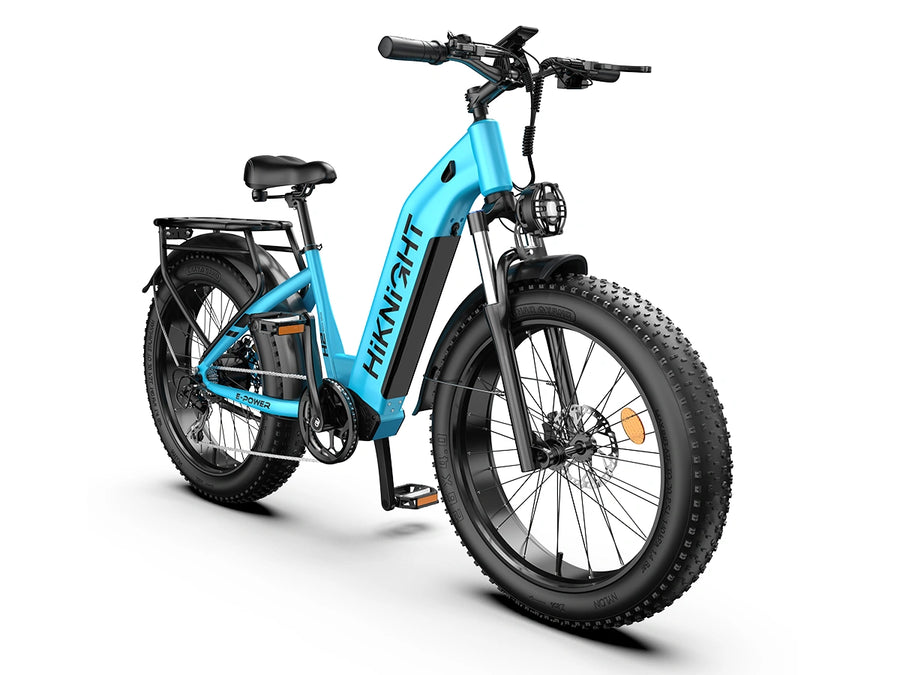
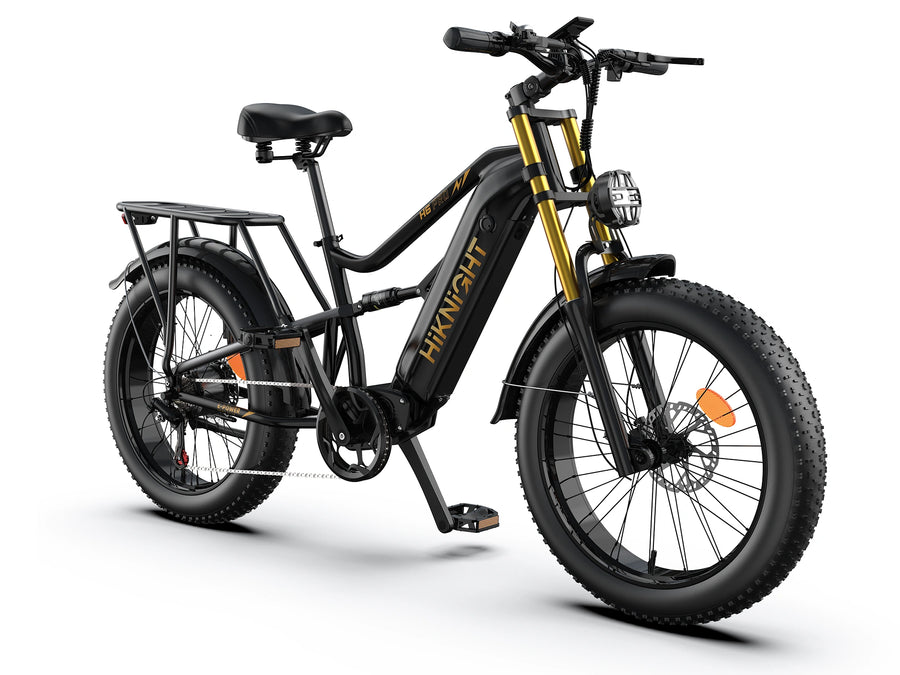
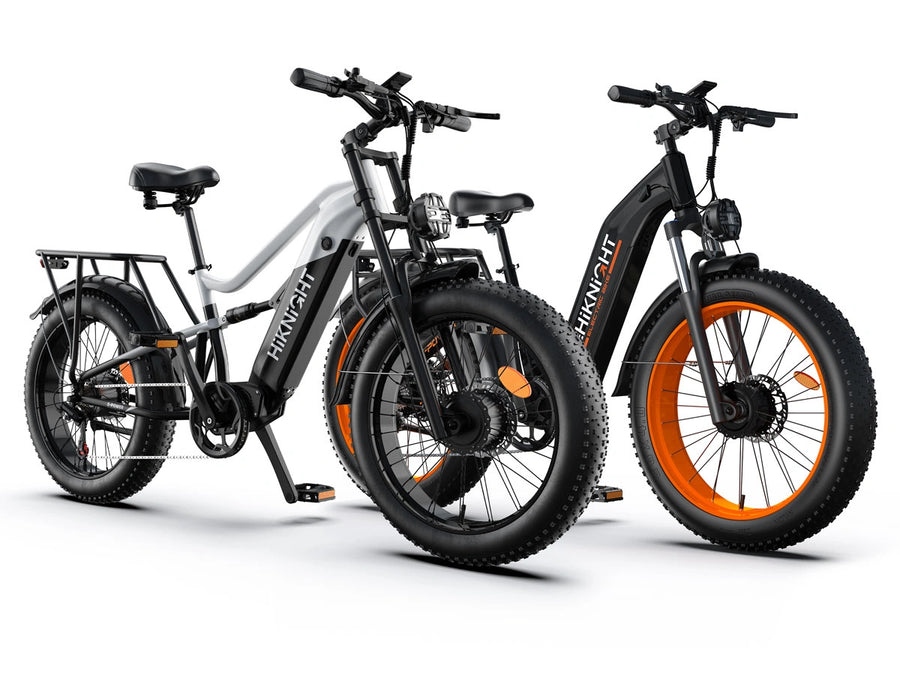
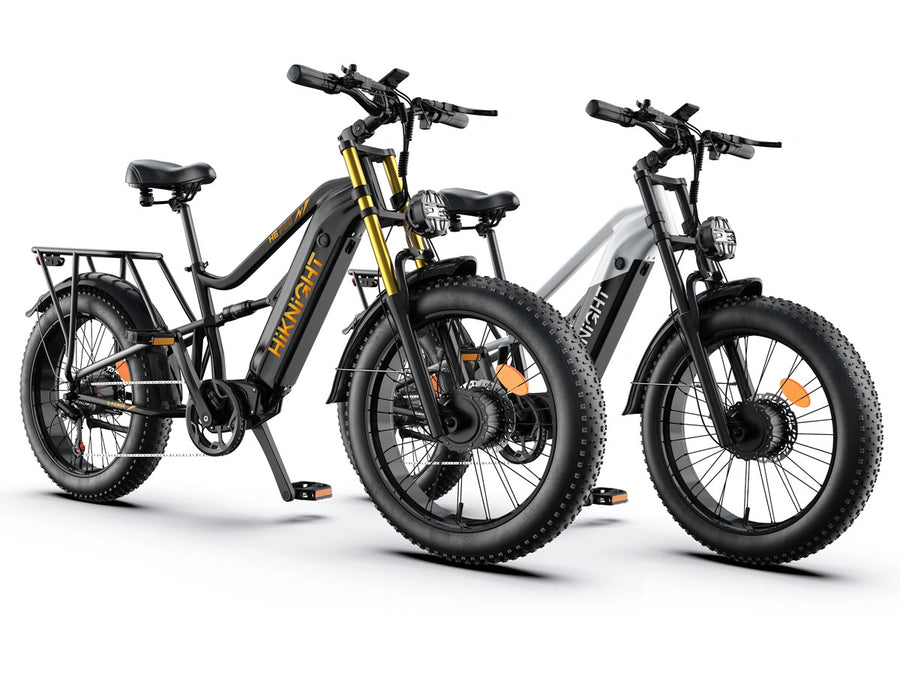
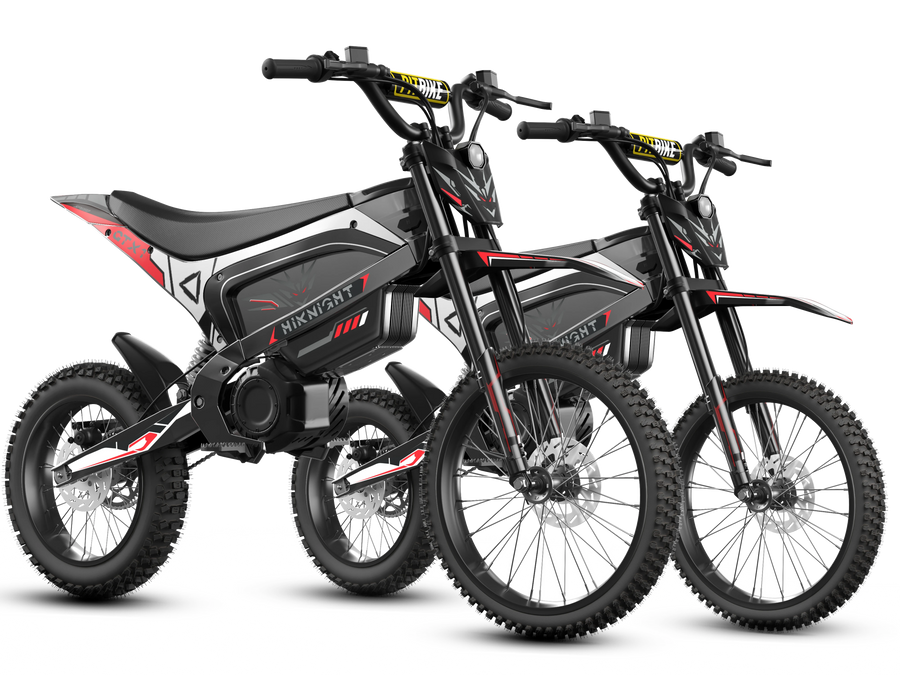
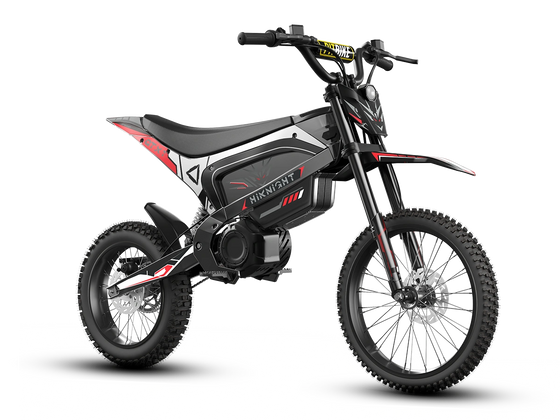
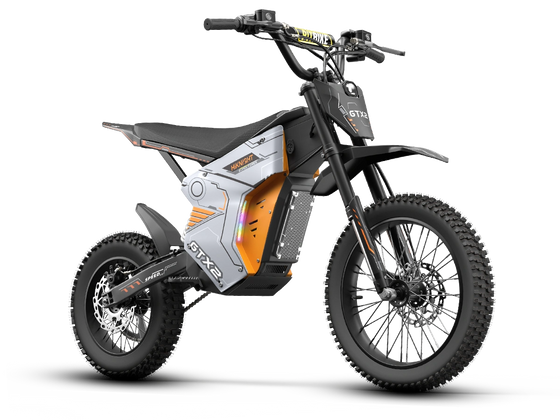
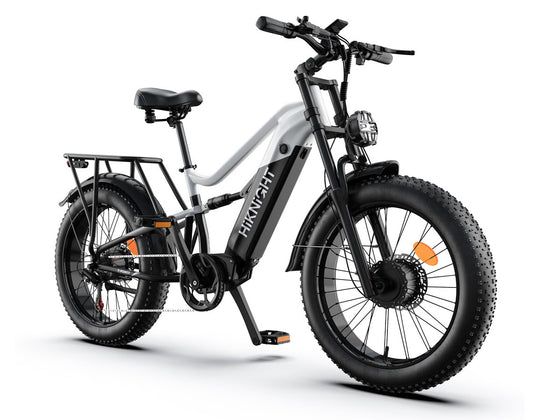
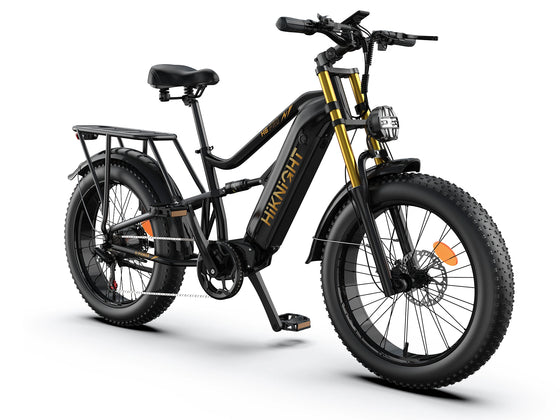
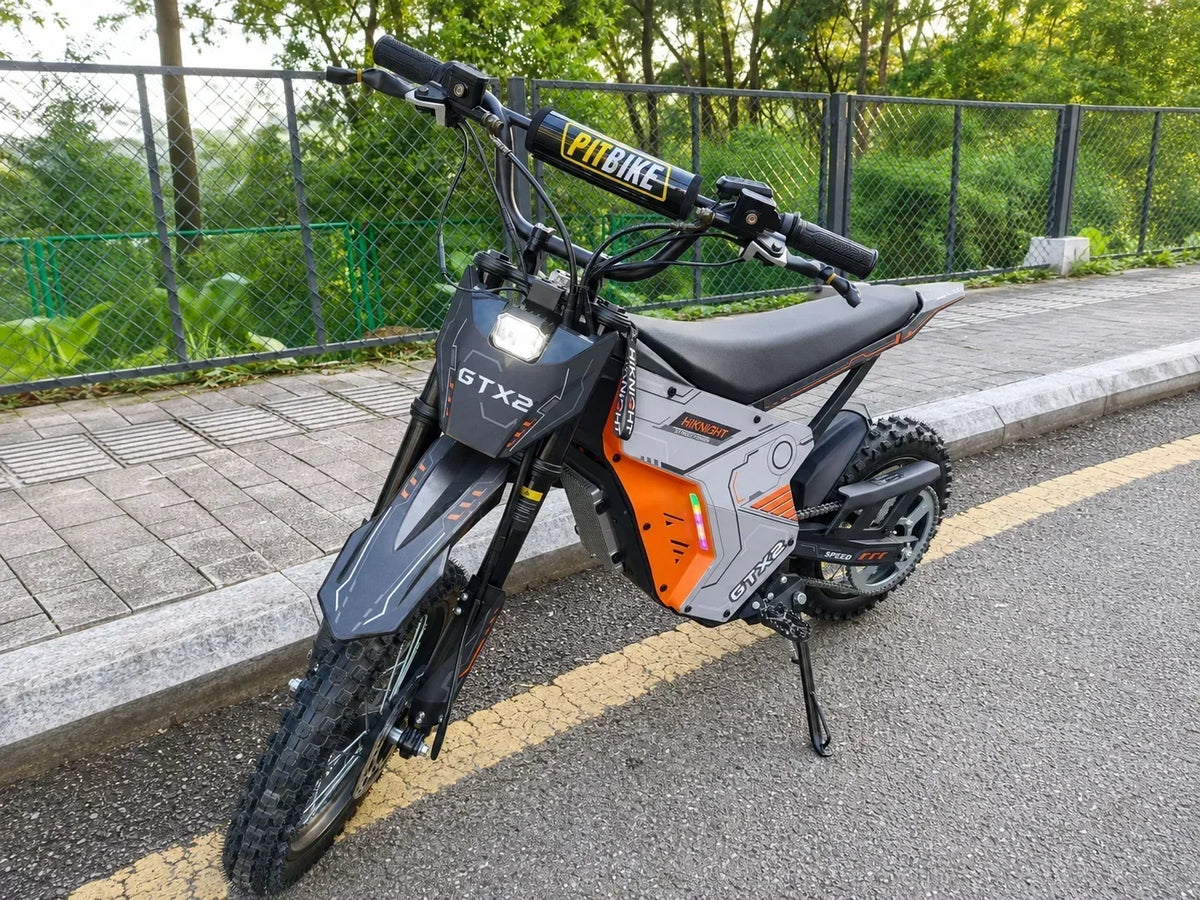
Comparing electric motorcycle range requires more than looking at two mileage figures. The HiKNiGHT GTX1 and GTX2 provide a useful example.
| Specification | HiKNiGHT GTX1 | HiKNiGHT GTX2 |
|---|---|---|
| Battery | 48V 23Ah | 52V 27Ah |
| Nominal Battery Energy | 1,104Wh | 1,404Wh |
| Peak Motor Power | 4,000W | 5,000W |
| Top Speed | 40 MPH | 45 MPH |
| Claimed / Estimated Range | 48 Miles | 52 Miles |
| Implied Average Energy Use | ≈23 Wh/mi | ≈27 Wh/mi |
The GTX1 uses a 48V 23Ah battery pack, which corresponds to approximately 1,104Wh of nominal energy.
The GTX2 uses a 52V 27Ah battery pack, corresponding to approximately 1,404Wh.
Although the GTX2 has 300Wh more nominal battery energy, its listed range increases from 48 miles to 52 miles rather than increasing in direct proportion to battery capacity.
That relationship is reasonable because the GTX2 also has a higher peak motor output and higher top speed. A more powerful electric dirt bike can deliver stronger acceleration and higher performance, but using that performance can also increase energy consumption.
A proper electric dirt bike range comparison should consider:
Battery Capacity + Motor Power + Riding Speed + Vehicle Weight + Rider Load + Terrain + Tires + Charging + Intended Use
Using the listed battery capacity and range figures, the GTX1 corresponds to roughly 23Wh/mi, while the GTX2 corresponds to roughly 27Wh/mi.
These figures demonstrate that the manufacturer-listed range is mathematically plausible, but they should not be interpreted as guaranteed real-world consumption rates.
For a meaningful range comparison, both electric dirt bikes should ideally be tested under the same rider weight, average speed, tire pressure, ambient temperature, terrain, elevation profile, and throttle strategy.
8. Electric Motorcycle Range FAQ
Final Takeaway
The most important thing to understand about electric motorcycle range is that range is not a fixed number independent of riding conditions.
Battery capacity determines how much energy the motorcycle carries, while riding speed, rider load, terrain, temperature, tire setup, aerodynamic drag, and throttle input determine how quickly that energy is consumed.
When comparing electric motorcycles or electric dirt bikes, do not look only at the largest advertised range number. Compare battery energy, test conditions, motor output, riding environment, and expected energy consumption to determine which bike better matches your actual riding needs.
Share:
How to Remove & Install GTX1 Battery: Battery Replacement Guide