








1. What Is Electric Dirt Bike Range?
Electric Dirt Bike Range refers to the distance an electric dirt bike can travel on a single full charge.
Product pages often display range figures such as 48 miles, 52 miles, or up to 60 miles. These figures are useful reference points, but they should not be interpreted as a guaranteed distance for every rider.
The reason is simple: an electric dirt bike does not consume the same amount of energy for every mile it travels.
Electric Dirt Bike Range is not a fixed number. It is the result of the relationship between available battery energy and the amount of energy the bike consumes while riding.
A rider traveling on dry, level pavement at a moderate speed may achieve considerably different range from another rider using the same electric dirt bike in cold weather, loose sand, steep terrain, and frequent full-throttle acceleration.
A simple way to understand the relationship is:
In practical terms:
- More available battery energy provides greater range potential.
- Higher rider and payload weight can increase energy consumption.
- Higher riding speeds generally increase energy consumption.
- Steep or technically demanding terrain increases motor load.
- Loose surfaces can increase rolling resistance.
- Cold temperatures can affect battery performance.
Therefore, the range shown on a product page is best understood as a reference value under particular operating conditions, rather than an absolute mileage guarantee.
If you want to explore specific real-world scenarios and estimate how far an electric dirt bike can travel with different rider weights, speeds, temperatures, and terrain conditions, see: Electric Dirt Bike Range: How Far Can an Electric Dirt Bike Go?
2. How Does Battery Capacity Affect Electric Dirt Bike Range?
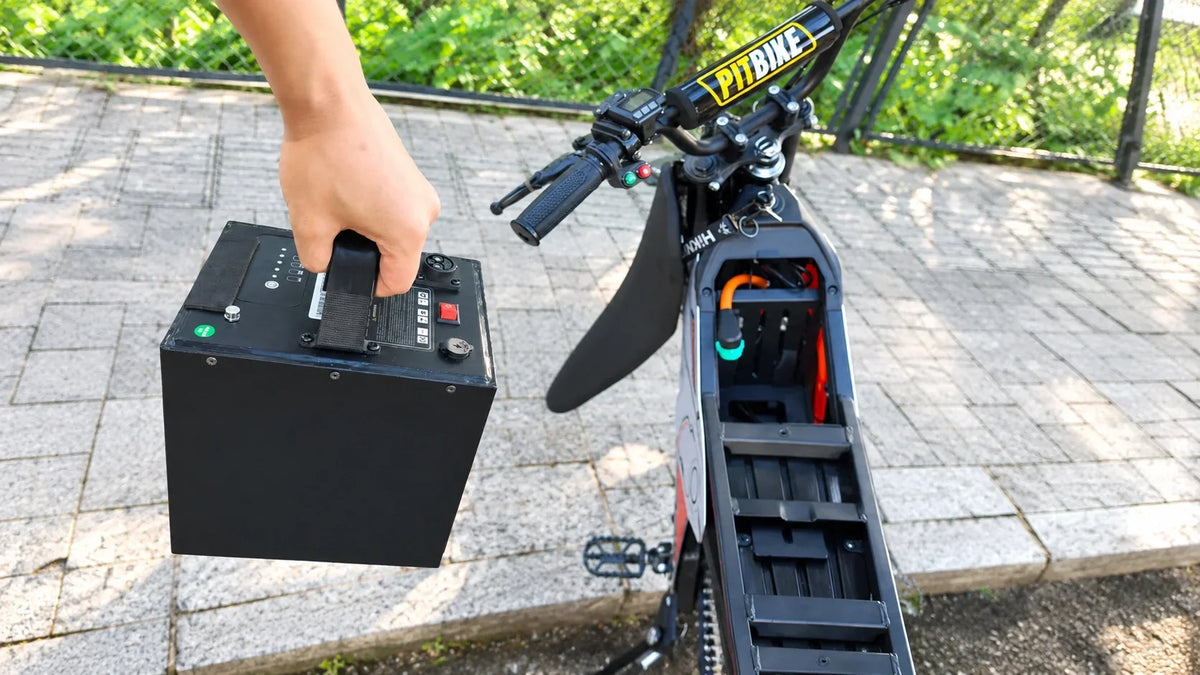
The battery is the primary source of energy for an electric dirt bike. Battery specifications are commonly expressed using voltage (V), amp-hours (Ah), and watt-hours (Wh).
When comparing how much energy different battery packs can store, watt-hours are particularly useful because they account for both voltage and capacity.
52V × 27Ah = 1,404Wh
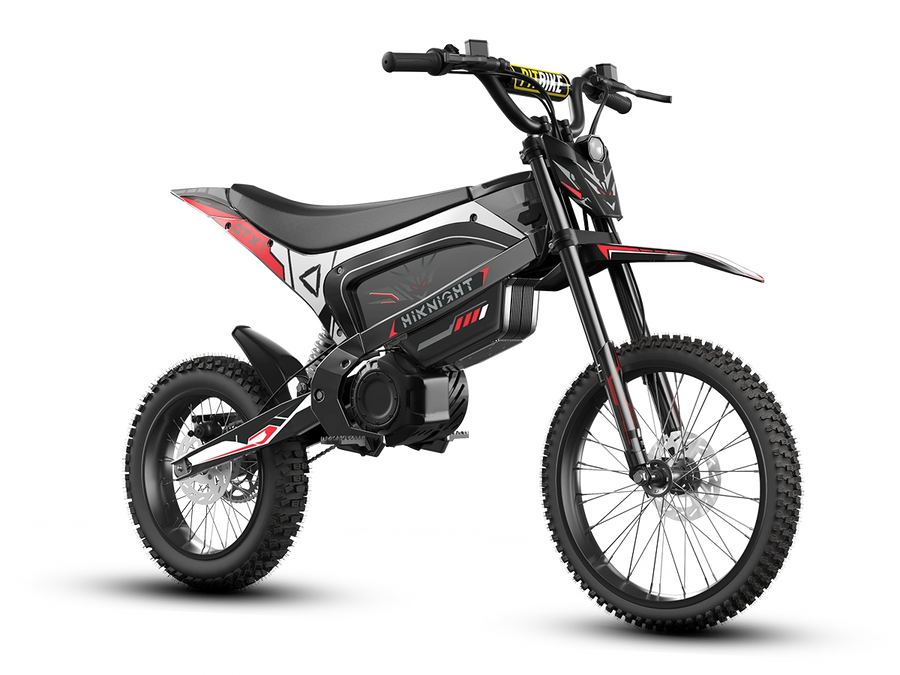
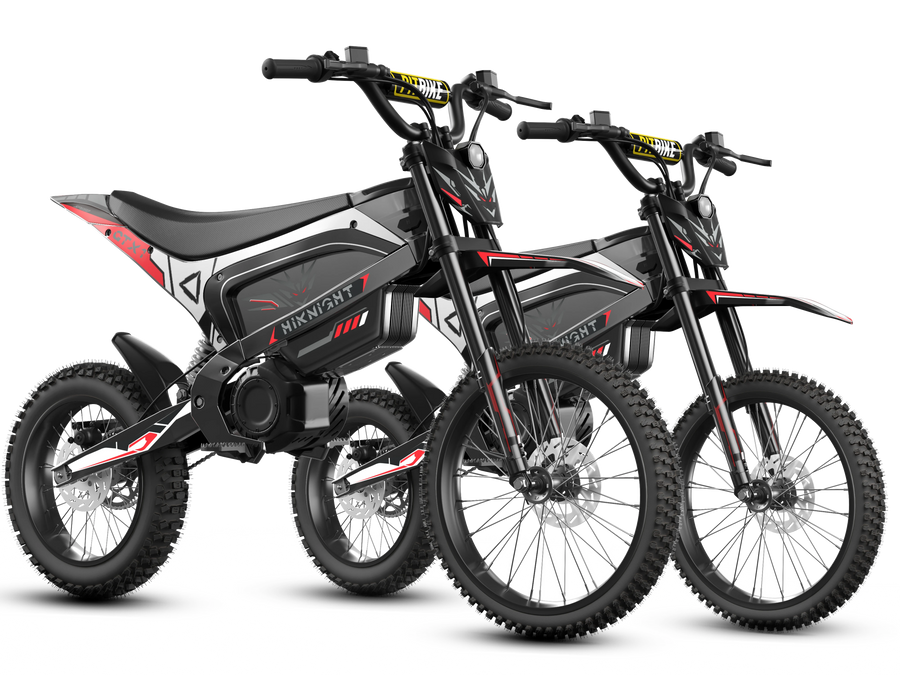
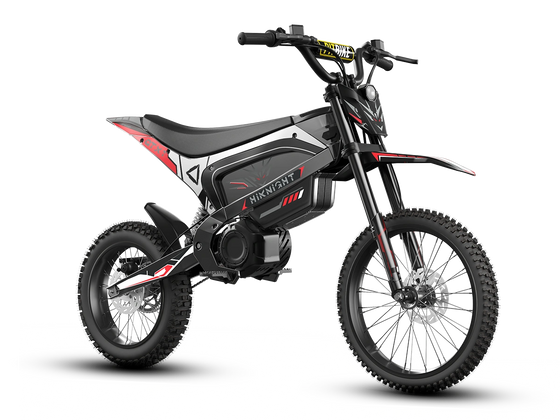
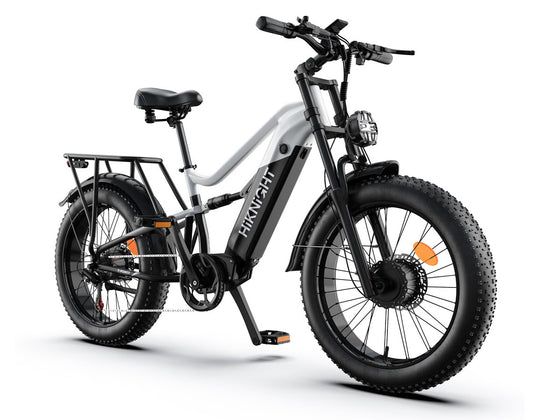
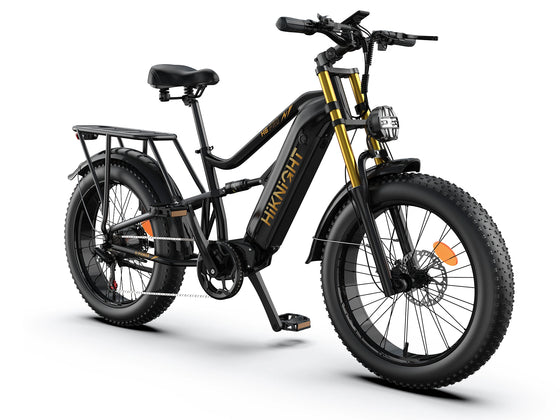
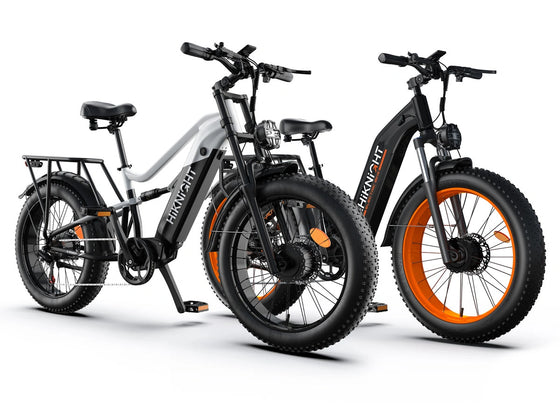
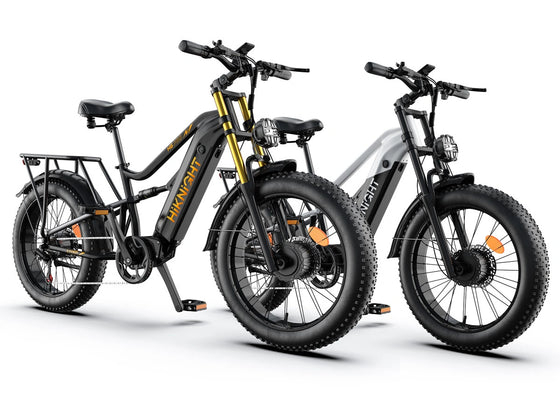
For example, the HiKNiGHT GTX1 uses a 48V 23Ah battery, which corresponds to approximately 1,104Wh of nominal energy.
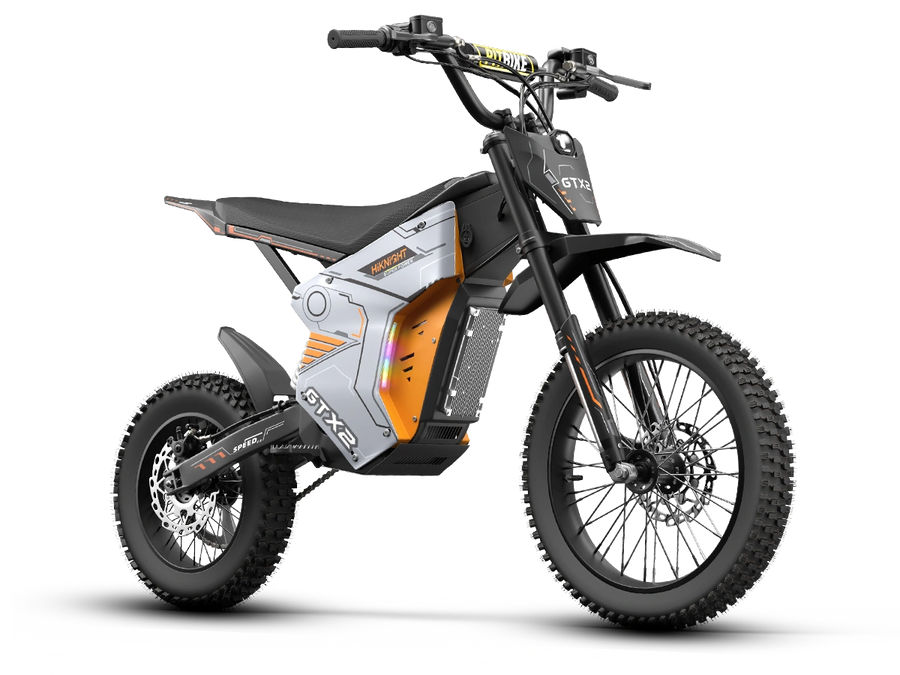
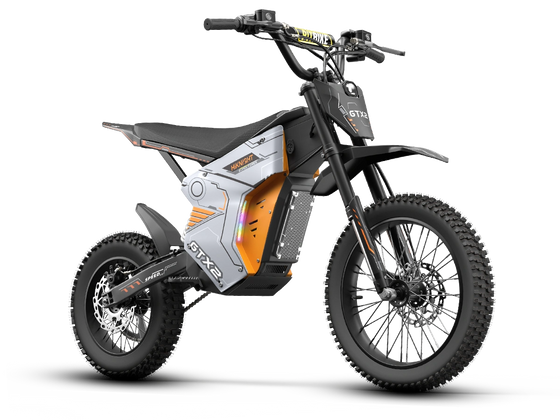
The GTX2 uses a 52V 27Ah battery, corresponding to approximately 1,404Wh of nominal energy.
| Model | Battery | Nominal Energy | Claimed Range |
|---|---|---|---|
| GTX1 | 48V 23Ah | ≈1,104Wh | 48 Miles |
| GTX2 | 52V 27Ah | ≈1,404Wh | 52 Miles |
The GTX2 therefore has approximately 27% more nominal battery energy than the GTX1. However, its listed range does not increase by the same percentage.
This is because range depends on both the amount of energy stored and the rate at which that energy is consumed.
More battery energy does not automatically mean proportionally more range. Motor output, vehicle weight, riding speed, terrain, tires, and riding behavior all influence energy consumption.
In other words, a battery tells you how much energy is available, while riding conditions determine how quickly that energy is used.
3. How Do Rider Weight and Riding Speed Affect Range?
Rider Weight and Total Payload
An electric dirt bike does not only move its own weight. The motor must move the combined mass of the bike, rider, riding gear, luggage, and other payload.
A higher total load generally increases energy demand, particularly during:
- Acceleration
- Hill climbing
- Repeated stop-and-go riding
- Technical off-road riding
Research involving real-world electric motorcycle riding has also identified rider weight as an important variable associated with electricity consumption under the tested conditions.
However, it would be misleading to assume that adding a specific amount of weight will always reduce range by a fixed percentage. The effect depends on the riding environment and how the additional mass changes acceleration and climbing demands.
For example, an 80 kg rider traveling on flat pavement may experience very different energy consumption from the same rider traveling through sand or climbing steep trails.
Riding Speed
Riding speed is another major factor affecting Electric Dirt Bike Range.
One important reason is aerodynamic drag. As speed increases, aerodynamic resistance rises rapidly, which means the powertrain must deliver more energy to maintain higher speeds.
Top speed and maximum range are usually not achieved at the same time.
A bike capable of reaching 45 MPH does not necessarily achieve its maximum advertised range when ridden continuously at 45 MPH.
Moderate, consistent riding generally places less demand on the battery than sustained high-speed riding combined with frequent hard acceleration.
4. Why Do Terrain and Road Surface Affect Electric Dirt Bike Range?
Electric dirt bikes are designed to operate across a wide range of surfaces, and different surfaces can require significantly different amounts of energy.
Examples include:
- Asphalt and paved roads
- Hard-packed dirt
- Gravel
- Mountain trails
- Loose dirt
- Sand
- Mud
On relatively level pavement, the powertrain primarily needs to overcome rolling resistance, aerodynamic drag, and mechanical losses.
During an uphill climb, the bike must also overcome gravity. The additional gravitational potential energy can be described using:
This means two rides covering the same distance can consume very different amounts of battery energy.
Example: A 10-mile ride on flat pavement and a 10-mile ride containing repeated steep climbs should not be expected to produce the same battery consumption.
Road surface also matters. Sand, mud, loose dirt, and other soft surfaces can increase rolling resistance and require greater wheel torque to maintain forward motion.
This is one reason why a published range figure should not automatically be interpreted as a guaranteed off-road range.
5. How Do Temperature and Weather Affect Electric Dirt Bike Range?
Temperature
Temperature is another factor that can influence battery performance.
Lithium-ion batteries are temperature-sensitive, and their electrical performance can change as ambient conditions become significantly colder or hotter.
At lower temperatures, internal battery resistance can increase and usable battery performance may decrease. As a result, riders may notice reduced real-world range in cold-weather conditions.
Research on electric two-wheelers has examined the effect of ambient temperature on energy consumption. In one tested system, temperatures in the moderate range produced more favorable efficiency than some colder or hotter conditions.
However, battery chemistry, thermal management, vehicle design, riding conditions, and measurement methods all affect the result, so a specific temperature-to-range reduction should not be generalized to every electric dirt bike.
Wind and Weather
Wind can also change energy consumption, particularly at higher speeds.
A strong headwind increases the relative air speed over the motorcycle and therefore increases aerodynamic drag.
For example: Riding at 30 MPH into a strong headwind can require substantially more energy than riding at the same indicated speed with little or no wind.
Wet, muddy, or unstable surfaces can also increase rolling resistance and require additional motor output.
Therefore, the same route can produce different range results depending on temperature, wind, precipitation, and surface conditions.
6. How Do Riding Style and Bike Condition Affect Range?
Even when the rider, route, and weather remain the same, riding technique can significantly change energy consumption.
More Efficient Riding Habits
- Accelerate smoothly.
- Maintain a relatively consistent cruising speed.
- Avoid unnecessary full-throttle acceleration.
- Anticipate stops and reduce speed progressively.
- Avoid repeated rapid acceleration and braking when maximum range is the priority.
Higher-Consumption Riding Habits
- Frequent full-throttle launches
- Sustained high-speed riding
- Repeated hard acceleration
- Rapid acceleration followed by heavy braking
- Frequent stop-and-go riding
Smooth and consistent power delivery will generally use less energy than repeatedly demanding peak output from the motor.
Tire Pressure
Tire pressure can affect rolling resistance. Underinflated tires generally deform more as they rotate, which can increase rolling resistance and reduce efficiency.
Riders should follow the tire pressure recommendations provided for their specific bike and tire setup.
Tire Construction
Off-road tires are designed to provide traction on loose and uneven surfaces. Their tread pattern, casing construction, width, and rubber compound can influence rolling characteristics.
A tire optimized for aggressive off-road traction may consume energy differently from a tire designed primarily for hard pavement.
Battery Condition
Lithium-ion batteries gradually lose usable capacity over time due to normal aging, charge-discharge cycles, thermal exposure, and operating conditions.
As usable battery capacity decreases, the same electric dirt bike may deliver fewer miles under otherwise similar conditions.
Important: A properly maintained battery does not increase the original capacity of the battery pack. Proper care helps preserve battery health and reduce unnecessary degradation over time.
7. A Real-World Electric Dirt Bike Range Example
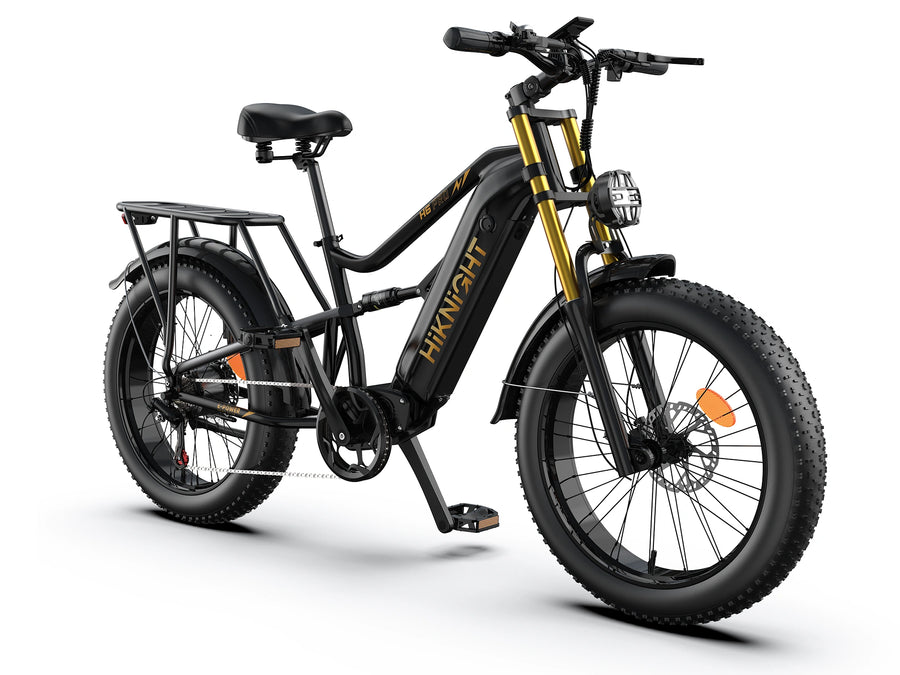
To understand how these variables work together, consider the HiKNiGHT GTX2 as a practical example.
The GTX2 is equipped with:
- 52V 27Ah battery
- Approximately 1,404Wh nominal battery energy
- 5,000W peak mid-drive motor
- 255 N·m torque
- 45 MPH top speed
- 52-mile claimed range
- Approximately 55 kg / 121 lb bike weight
Step 1: Calculate Nominal Battery Energy
The nominal battery energy can be calculated as:
If the listed 52-mile range is used only as a mathematical reference, the implied energy consumption is:
The resulting 27Wh/mile should be understood only as a mathematical reference derived from the listed battery energy and claimed range. It is not an independent measured GTX2 energy-consumption figure.
Step 2: Consider a Specific Riding Scenario
Imagine the following conditions:
| Condition | Example Scenario |
|---|---|
| Rider Weight | 176 lb / 80 kg |
| Bike Weight | 121 lb / 55 kg |
| Riding Gear | 11 lb / 5 kg |
| Total Moving Mass | ≈308 lb / 140 kg |
| Temperature | 77°F / 25°C |
| Wind | Light wind |
| Surface | Dry pavement |
| Terrain | Mostly flat |
| Average Speed | 20–25 MPH |
| Acceleration | Smooth |
| Tire Pressure | Manufacturer-recommended setting |
Under these relatively favorable conditions, if the theoretical reference consumption of 27Wh/mile is used:
1,404Wh ÷ 27Wh/mile ≈ 52 miles
However, consider a more demanding scenario:
- Temperature around 45°F / 7°C
- Average speed of 30–35 MPH
- Frequent hard acceleration
- Repeated hill climbs
- Gravel or loose dirt
- Occasional steep climbs
- Moderate headwind
If energy consumption increases, the theoretical range changes accordingly:
| Illustrative Energy Consumption | Calculated Range from 1,404Wh |
|---|---|
| 27Wh/mile | ≈52.0 miles |
| 32Wh/mile | ≈43.9 miles |
| 40Wh/mile | ≈35.1 miles |
| 50Wh/mile | ≈28.1 miles |
Important: The 32Wh/mile, 40Wh/mile, and 50Wh/mile figures above are illustrative energy-consumption assumptions used to demonstrate how changing riding conditions affect theoretical range. They are not official GTX2 measured range results.
This example demonstrates the central principle behind Electric Dirt Bike Range: the same battery can deliver very different mileage when energy consumption changes.
For more detailed range scenarios involving rider weight, riding speed, temperature, terrain, pavement, dirt, hills, and other conditions, continue to: Electric Dirt Bike Range: How Far Can an Electric Dirt Bike Go?
Share:
Electric Dirt Bike Range: How Far Can an Electric Dirt Bike Go?